“Akili ni nywele, kila mtu ana zake” is a well-known Swahili proverb that is often shortened in everyday speech to “Akili ni nywele.”
It literally compares intelligence or the mind to hair, saying that just as every person has their own hair, every person has their own way of thinking.
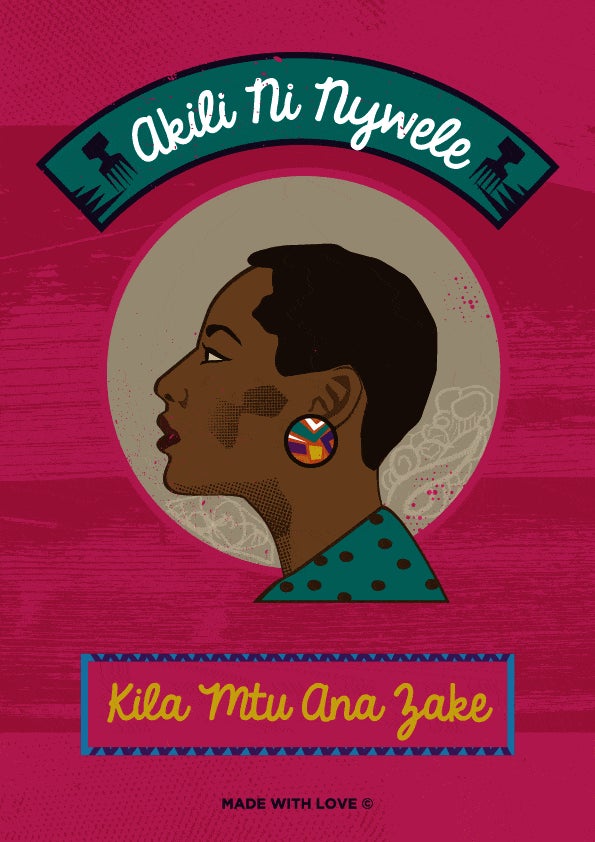
Table of Contents
Meaning of “Akili ni nywele”
The full proverb is:
Akili ni nywele, kila mtu ana zake.
A natural English translation is:
“Intelligence is like hair, everyone has their own.”
The proverb is not really making a statement about the physical appearance of someone’s hair. Instead, it points to the individuality of akili — a word that can refer to intelligence, understanding, reasoning, or one’s mental faculties.
The idea is that people do not all think in exactly the same way. Each person has their own understanding, opinions, ideas, and approach to life.
A collection of Swahili proverbs explains that the saying can be used to show respect for other people’s opinions and to acknowledge that individuals may follow their own reasoning.
Why Compare Akili to Hair?
The comparison is quite memorable because everybody’s hair is their own. Hair can differ in texture, thickness, length, colour, and appearance. In the same way, people’s minds and ways of reasoning differ.
So when someone says:
“Akili ni nywele, kila mtu ana zake,”
they may be making the point that you have your way of thinking and I have mine.
It can therefore be used when two people disagree without necessarily meaning that one person is completely foolish and the other is completely correct.
“Akili NI Nywele” and Different Opinions
One important use of the proverb is to acknowledge differences in opinion.
Imagine two people discussing how something should be done. One person strongly believes in one approach while the other prefers another.
Someone might respond:
“Akili ni nywele, kila mtu ana zake.”
In this context, the saying effectively means:
“People think differently. Everyone has their own way of looking at things.”
It can be a way of ending an argument without having to prove that the other person is wrong.
This interpretation is also reflected in Swahili linguistic literature, where the proverb is described as expressing the individual nature of akili and respect for other people’s opinions.
Is It “Akili Ni Nywele” or “Akili Si Nywele”?
The established proverb is:
Akili ni nywele, kila mtu ana zake.
There has occasionally been discussion among Swahili speakers about whether the phrase should be understood literally or whether saying “akili si nywele” would make more logical sense.
But “Akili ni nywele, kila mtu ana zake” is the documented proverb. It appears in collections of Swahili proverbs and in discussions of Swahili language and literature.
The apparent oddness of the comparison is actually part of what makes the proverb memorable.
What “kila mtu ana zake” adds
The second half is important:
kila mtu ana zake = everyone has their own.
Here, zake refers back to akili. So the complete thought is not simply “intelligence is hair.” The proverb’s point comes from the comparison between the individuality of hair and the individuality of people’s thinking.
A more explanatory translation would therefore be:
“The mind is like hair — everyone has their own way of thinking.”
A Kenyan connection
You will encounter “Akili ni nywele, kila mtu ana zake” in Kenyan Swahili contexts, but it is better understood as a Swahili proverb rather than a proverb that originated exclusively in Kenya. Swahili proverbs circulate across East Africa and particularly within the wider Swahili-speaking cultural world.
The saying has also appeared in Kenyan creative work. For example, Nairobi artist Wambui Kamiru used “Akili ni Nywele” as the title of a 2017 art series exploring perceptions of African beauty, hair, and social expectations.
The wisdom behind the saying
At its heart, “Akili ni nywele, kila mtu ana zake” recognizes individuality.
It can remind us that:
- people have different ways of reasoning
- people can reach different conclusions from the same situation
- disagreement does not necessarily mean that someone is unintelligent
- everyone has their own perspective
- another person’s way of thinking may differ from yours without automatically being meaningless
There is also a related Swahili proverb, “Akili yachotwa katika mkutano,” which conveys a complementary idea: ideas or intelligence can be gathered through discussion and collective thinking.
So these two ideas can sit alongside each other quite nicely: everyone has their own akili, but akili can also grow through interaction with other people.
A humorous side to the proverb
Because the saying compares akili with hair, Swahili speakers can also play with it humorously. There are examples of jokes built around the literal interpretation of the proverb, particularly the question of what happens to someone’s akili if they have no hair.
That kind of wordplay illustrates something interesting about Swahili proverbs. They can carry serious wisdom while also providing opportunities for humour.
“Akili ni nywele, kila mtu ana zake” is therefore a compact way of saying that human beings are individual thinkers.
It encourages recognition of differences in thought rather than assuming that everybody should see things exactly as you do.
Kenyan sayings in Swahili capture the wisdom, humor, and life lessons passed down through generations.
While some of these proverbs are known across East Africa, many hold a special place in Kenya, reflecting local values, experiences, and ways of seeing the world.
In this post, I’ll explore some of the most meaningful sayings, their meanings, and what they reveal about Kenyan culture.
READ ALSO: Di Gio Meaning & More
READ ALSO: Shanga in English & More
Some Popular Kenyan Swahili Sayings
Kenyan Sayings in Swahili #1: “Makali Ya Jicho Yashinda Wembe.”
- Literal: The sharpness of the eye is stronger than the razor.
- Meaning: Observation or insight is more powerful than a physical tool. It suggests that being alert, perceptive, and paying attention matters more than force or blunt tools. This is a kanga‑saying used especially along the coast.
Kenyan Sayings in Swahili #2: “Mwenye Radhi Hasumbuki.”
- Literal: Whoever is content is not troubled.
- Meaning: Contentment brings peace. If you are satisfied with what you have, you will not always be worried or envious of what others have.
Kenyan Sayings in Swahili #3: “Subira Ina Malipo.”
- Literal: Patience has rewards / Patience pays.
- Meaning: Being patient yields good outcomes. This reflects a very common cultural value — sometimes, waiting and enduring hardship will bring better results.
- “Umekuja na lako, usichunguze la mwenzako.”
- Literal: You came with yours; don’t examine that of your neighbor.
- Meaning: Focus on your own possessions, problems, or path rather than comparing with others. It’s a gentle reminder not to be overly judgmental or envious — your journey is yours.
- “Kupotea njia ndiyo kujua njia.”
- Literal: To lose the way is how you come to know the way.
- Meaning: Sometimes you have to go wrong or get lost to learn what is right. It celebrates failure or detours as important parts of finding success or wisdom.
- “Haba na haba hujaza kibaba.”
- Literal: Little by little fills the container.
- Meaning: Small consistent efforts add up. It’s about being patient, persistent, and understanding that big things often start with small steps.
- “Maji yakimwagika hayazoleki.”
- Literal: Water that has been spilled cannot be gathered again.
- Meaning: Some mistakes are irreversible. This teaches about being careful with actions because once something is done, you can’t always go back.
- “Kila chombo huenda kwa mwendewe.”
- Literal: Every vessel moves by its own propulsion.
- Meaning: Everyone is responsible for their own journey. Your success, direction, and pace depend on you.
Some Common Swahili Idioms (Used in Kenya)
- “Kujenga nyumba bila msingi” — Building a house without a foundation. This means starting something without planning or a solid base; it’s likely to fail.
- “Kula kwa macho” — Literally, “eat with the eyes.” This expresses the idea of longing or desiring something just by seeing it, even if you can’t have it.
- “Kuosha mikono” — To wash one’s hands. This means to distance oneself from responsibility or to refuse involvement in a problem.
- “Upishi wa jiko moja” — Cooking on one stove. This symbolizes unity and cooperation — people working together harmoniously.
Why These Sayings Matter in Kenyan Culture
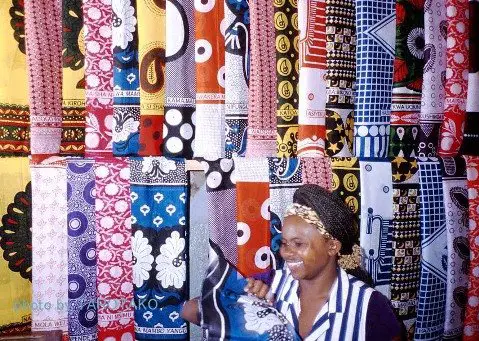
- Connection to Kanga Cloth: Many Swahili proverbs in Kenya appear on kangas (traditional cloth worn by women), carrying wisdom in a visually beautiful and portable form.
- Cultural Transmission: These sayings pass from generation to generation — from elders to youth — helping people reflect on values like patience, humility, and community.
- Everyday Use: These are not just “old sayings”; they’re used in daily conversations, in advice, in family discussions, and even in business contexts.
- Moral Guidance: Proverbs serve as moral and practical guidance. They are a way of encapsulating life lessons in a few words.
The Swahili saying kupotea njia ndiyo kujua njia translates to ‘to get lost is to know the way‘ in English.
It’s one of those proverbs that captures a deeply practical and philosophical truth at the same time.
Here’s what it means in context:

Literal Meaning
- When traveling, if you get lost once, you learn the correct path afterward.
- Making a mistake in navigation teaches you the route better than if you had never been lost.
Deeper Interpretation
- Learning Through Mistakes
- The proverb reflects the idea that failure or setbacks are part of growth. You cannot truly master something without first going wrong.
- For example, a student who makes errors while learning ends up understanding the subject more deeply than someone who never struggles.
- Resilience and Experience
- In life, wrong turns—bad choices, missed chances, even personal struggles—are not wasted. They teach lessons that eventually help you find the right way.
- Patience and Process
- It reminds people not to fear mistakes but to see them as stepping stones toward wisdom and clarity.
Cultural Context
- Proverbs like this are common across East Africa because they echo the values of resilience, humility, and experiential learning.
- Swahili sayings often come from everyday realities—like travel, farming, or community life—but they carry layered meanings about human behavior and relationships.
- In practice, an elder might use this phrase to comfort someone who has failed at a task, or to encourage youth that making errors is part of finding direction in life.
Modern Usage
Even today, you’ll hear it in conversations, classrooms, and even motivational talks in Kenya and Tanzania.
It’s sometimes used in workplaces when people are learning new systems or by parents guiding children through challenges.
So in short: “Kupotea njia ndiyo kujua njia” teaches that getting lost, failing, or making mistakes is not the end—it is the very process by which we gain true knowledge and direction.
Origin of the Swahili Saying Kijikaza Kisabuni
“Jikaza kisabuni” is a Swahili nahau (idiomatic expression), rather than a traditional methali (proverb). It is used to describe someone who perseveres, bears hardship, or pushes themselves to keep going despite difficult circumstances.
Swahili-language teaching materials classify it among nahau, and dictionaries give meanings such as “persevere despite major odds,” “grin and bear it,” and “take a grip on oneself.”
What Does “Jikaza Kisabuni” Mean?
The expression can be translated roughly as:
“Persevere despite the difficulties.”
“Hang in there.”
“Bear it and keep going.”
The verb jikaza comes from kaza, meaning to tighten, strengthen, or make firm. In its figurative use, jikaza means to brace yourself, summon your strength, or make a determined effort.
The interesting part is kisabuni.
Sabuni means soap. So, taken literally, jikaza kisabuni evokes the image of holding tightly onto a bar of soap. Soap is slippery, so maintaining your grip on it requires effort. The expression consequently conveys the idea of holding on firmly when circumstances make it difficult to do so.
This literal image is useful for understanding why the expression came to mean perseverance.
Where did “Jikaza kisabuni” originate?
There is an important distinction to make here. There does not appear to be a reliably documented single person, date, or historical event that can be identified as the origin of “Jikaza kisabuni.”
That is not unusual for Swahili idioms. Many nahau belong to the oral tradition of Swahili-speaking communities. They develop from familiar experiences, objects, actions, and metaphors and become established through repeated use.
The expression is now well established enough to appear in Swahili educational materials as an example of a nahau.
It is also included in dictionaries of Swahili.
So, rather than saying that “Jikaza kisabuni” originated in Kenya or originated in Tanzania, it is more accurate to describe it as a Swahili idiom whose precise historical origin is not clearly documented.
Why Soap?
The soap imagery makes the expression particularly vivid.
Imagine washing yourself with a traditional bar of soap.
Once it becomes wet, it can become difficult to hold. If it slips from your hand, you have to catch it or grip it more firmly.
That physical experience provides the metaphor behind the expression.
Jikaza kisabuni can therefore suggest:
- Hold on.
- Don’t give up.
- Strengthen yourself.
- Keep trying.
- Endure the difficulty.
- Don’t let difficult circumstances make you lose your grip.
The metaphor turns an ordinary household experience into advice about resilience.
“Jikaza Kisabuni” as Encouragement
Suppose someone has been working toward something for a long time but is exhausted and thinking of giving up.
A friend might tell them:
“Jikaza kisabuni!”
Here, the speaker is essentially saying:
“Hold on. Keep going. Don’t give up now.”
It can also be used when someone is going through an unpleasant situation that they simply have to endure.
For example:
“Mtihani ni mgumu, lakini jikaza kisabuni.”
This means roughly:
“The exam is difficult, but hang in there.”
The expression can therefore carry both physical and emotional ideas of endurance.
“Jikaza” Versus “Jikaza Kisabuni”
There is a small but useful distinction.
Jikaza on its own can mean to make an effort, exert yourself, brace yourself, or persevere.
Adding kisabuni gives the expression a much stronger figurative image.
It turns ordinary encouragement into an idiomatic expression associated with holding on despite difficulty.
A Swahili dictionary specifically defines jikaza kisabuni as persevering despite major odds, “grin and bear it,” or taking a grip on oneself.
The Deeper Idea Behind the Expression
What makes “Jikaza kisabuni” memorable is the way it transforms an ordinary object into a metaphor for perseverance.
Soap is slippery.
You have to hold on.
Life can also become difficult, uncertain, or uncomfortable. In those circumstances, the expression tells someone to strengthen their grip and keep going.
That makes jikaza kisabuni a particularly concise example of how Swahili idioms turn everyday experiences into expressions with much broader meanings.
Stahagfla Saying
“Stahagfla” is most likely a phonetic or informal spelling of “Astaghfirullah” (أَسْتَغْفِرُ اللهَ), an Arabic expression that is widely used in Swahili-speaking Muslim communities, including in Kenya and Tanzania.
What does “Stahagfla” mean?
The standard Arabic form is:
Astaghfirullah
It means:
“I seek forgiveness from Allah.”
The expression comes from the Arabic verb astaghfara, meaning to seek forgiveness, and Allah, meaning God.
“Stahagfla” is therefore not really a separate Swahili word. It is an informal rendering of a word that has entered everyday speech through Arabic and Islam.
Why does it sound like “Stahagfla”?
When people use Arabic religious expressions in everyday conversation, pronunciation can shift according to the speaker’s first language and local speech patterns.
Astaghfirullah contains sounds that are not pronounced identically across languages and regions. In rapid speech, the word can also become considerably shorter.
You may therefore encounter spellings or pronunciations such as:
- Astaghfirullah
- Astaghfirullah
- Astagfirullah
- Istaghfirullah
- Stahagfla
The spelling “Stahagfla” is best treated as a colloquial phonetic spelling rather than the standard written form.
When Do People Say “Stahagfla”?
In its original religious sense, a Muslim says Astaghfirullah when seeking Allah’s forgiveness.
For example, after realizing that they have done something wrong, someone might say:
“Astaghfirullah.”
The expression can also be used as part of dhikr, the remembrance of Allah.
Istighfar refers specifically to seeking forgiveness from Allah.
There is also a longer expression:
“Astaghfirullah wa atubu ilayh.”
This means:
“I seek forgiveness from Allah and I repent to Him.”
“Astaghfirullah” as an Expression of Shock
There is another interesting use.
In everyday speech, particularly outside strictly religious contexts, astaghfirullah can function as an exclamation when someone encounters something shocking, inappropriate, disturbing, surprising, or shameful.
Dictionaries record this broader use as an expression of disbelief, disapproval, surprise, or shock.
For example, someone might hear something particularly outrageous and respond:
“Astaghfirullah!”
Depending on the context, an English speaker might understand this as:
- “God forgive me.”
- “Oh my God!”
- “Good grief!”
- “What on earth?”
- “God forbid!”
The religious meaning remains connected to the expression, but its conversational use can be broader.
Is “Stahagfla” Swahili?
Not originally.
Astaghfirullah is Arabic, written:
أَسْتَغْفِرُ اللهَ
Its literal meaning is “I seek forgiveness from Allah.”
However, Arabic has had a particularly strong influence on Swahili because of centuries of contact between Arabic-speaking communities and the Swahili-speaking communities of the East African coast.
Religious vocabulary is one of the areas where Arabic influence is especially noticeable.
Consequently, an expression such as Astaghfirullah can sound completely natural in a Swahili conversation, particularly among Muslims.
“Stahagfla” in Kenyan and Tanzanian speech
If you have heard “Stahagfla” in East African conversation, the context is important.
Someone might use it after:
hearing gossip about somebody’s behaviour
or:
seeing something considered morally inappropriate
or simply:
reacting to something shocking.
It can therefore be more than a literal request for forgiveness in casual conversation.
For a Kenyan or Tanzanian Swahili speaker, the expression can be immediately recognizable even when pronounced much more informally than the Arabic Astaghfirullah.
This got me curious about what my own current collection of kangas had to offer in terms of sayings.
Checking when I got home, I found that my kangas say:
- Siri si umbeya (A secret isn’t gossip)
- Mungu ndiye kimbilio letu (God is our refuge)
- Nemekuja kutembea sikuja kwa umbea (I have come to visit, I didn’t come to gossip)
- Kuomba si kupata mungu akipenda atakupa (To ask is not to get; if God wishes, he will give you)
- Muumbaji ni mmoja njoo tuishi pamoja (The Creater is one; come let’s live together)
- Upendo ni nuru ya maisha (Love is the light of life)
- Maisha ni kutafuta siyo kutafutana (Life is about seeking not going after each other)
Tell me, do you have a favorite kanga saying?
If so, what is it, what does it mean, and why do you like it so much?
If you are an avid kanga wearer but never pay much attention to the words written on them, how about checking now (and sharing) what’s written on your favorite kanga?
Does this saying in any way reflect something that’s going on in your life?
Let me know by leaving a comment below.
If you would like to know more about kanga, its history, or kanga sayings in general, then check out the following links: List of 254 Sayings on Khangas.
Otherwise, that’s it from me.
I wish you a great weekend and, as always, look forward to hearing what you have to say.
Until the next time,
Biche