A recommended Korean Moisturiser can make a noticeable difference to how your skin feels and looks.
Korean skincare products have become popular for their thoughtful formulations, lightweight textures and emphasis on maintaining healthy skin hydration.
Whether you are dealing with dry patches, excess oil, uneven skin texture or a dull complexion, there is a Korean moisturiser worth considering.
One of the appealing aspects of Korean skincare is the variety of moisturising products available.
Some are designed to provide deep hydration for dry skin, while others use lightweight gel formulations that suit people who dislike the feeling of heavy creams on their faces.
Korean moisturisers also frequently contain ingredients such as hyaluronic acid, ceramides, centella asiatica, niacinamide and glycerin.
These ingredients serve different purposes, from attracting moisture to supporting the skin’s protective barrier.
However, choosing a moisturiser should not be about buying the most popular product.
Your skin type, individual concerns, climate and preferred texture all matter.
Here are three Korean moisturisers worth considering, together with their ingredients, benefits and suitability for different skin types.
Table of Contents
Recommended Korean Moisturiser #1. Aestura Atobarrier 365 Cream – Best Overall
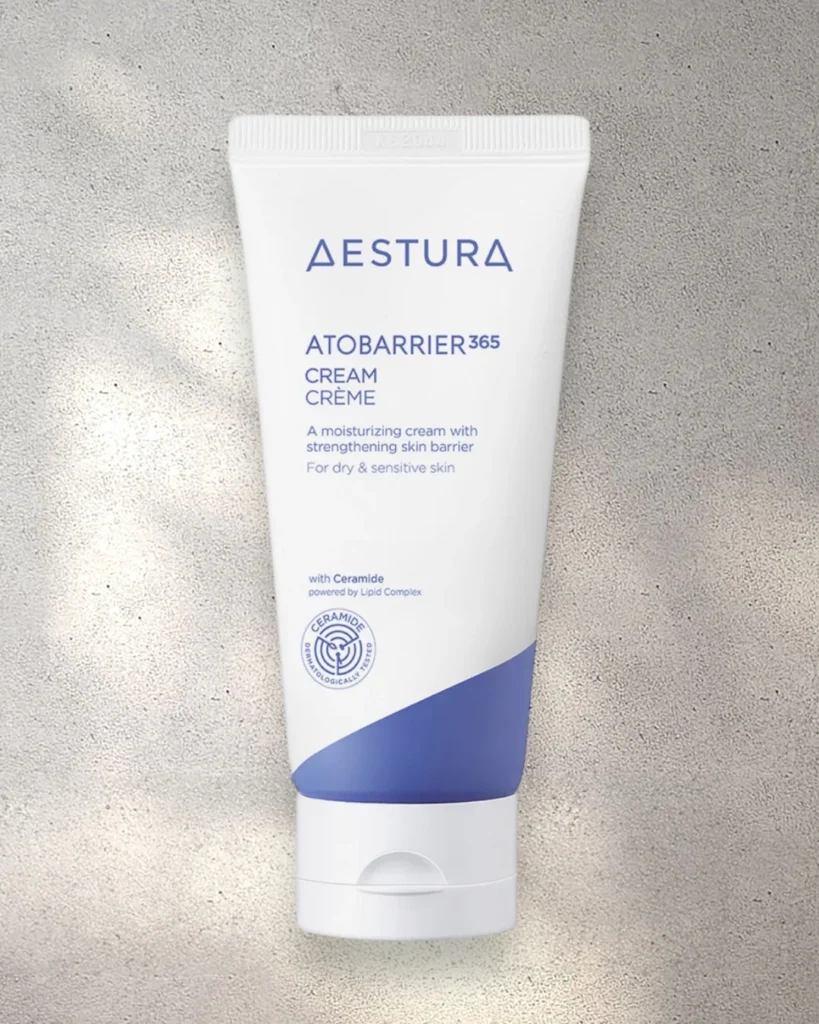
Aestura Atobarrier 365 Cream is one of the strongest choices for people looking for a moisturiser that supports the skin barrier while providing lasting hydration.
The formula contains ceramides, cholesterol, fatty acids and squalane.
These ingredients help replenish the lipids that form part of the skin’s natural protective barrier.
A healthy skin barrier helps reduce moisture loss and protects the skin against external irritants.
Why consider this moisturiser?
- Provides lasting hydration.
- Helps support the skin’s moisture barrier.
- Suitable for dry and sensitive skin.
- Does not contain artificial fragrance.
- Can help relieve the feeling of tightness associated with dryness.
The cream has a relatively rich consistency, although it is designed to absorb without leaving an excessively greasy finish.
It is particularly worth considering if your skin frequently feels dry, tight or uncomfortable after cleansing.
Recommended Korean Moisturiser #2. Beauty of Joseon Dynasty Cream – Best for a Dewy Finish
Beauty of Joseon Dynasty Cream is a popular option for people who want moisturised skin with a soft, dewy appearance.
The product combines ingredients such as rice bran water, ginseng root water, niacinamide and squalane.
Rice-derived ingredients are frequently used in Korean skincare formulations for their conditioning properties, while niacinamide can help improve the appearance of uneven skin tone and support the skin barrier.
Squalane helps soften the skin and reduce moisture loss.
Benefits include:
- Helps maintain skin hydration.
- Gives the complexion a moisturised appearance.
- Contains niacinamide, which can help improve uneven-looking skin tone.
- Provides conditioning benefits.
- Works well as part of a daily skincare routine.
The Dynasty Cream is particularly interesting for people who prefer a moisturiser that provides hydration without the consistency of an especially thick night cream.
It may suit normal, dry and combination skin, although people with very oily skin may prefer a lighter gel formulation.
Facial Moisturature Available in Korea #3. Illiyoon Ceramide Ato Concentrate Cream – Best for Very Dry Skin
If your main concern is dryness, Illiyoon Ceramide Ato Concentrate Cream deserves a place on your list.
This Korean moisturiser is formulated with ceramides and other skin-conditioning ingredients to help maintain the skin’s protective barrier.
Ceramides are naturally present in the skin.
They help hold skin cells together and reduce the loss of moisture.
When the skin barrier is weakened, the skin may become rough, flaky, tight or more easily irritated.
Body Moisturiser Site:ChickAboutTown.com
If you would like to learn more about a body moisturizer I discuss on this site, click here.
SPF 15, SPF 20, SPF 30 site:chickabouttown.com
SPF 15, SPF 20 and SPF 30 are three sun protection ratings commonly found on sunscreens, moisturisers and some makeup products.
If you have come across these numbers while shopping for skincare, you may wonder whether the difference between them is significant and whether paying more for a higher SPF is worthwhile.
The term SPF stands for Sun Protection Factor. It indicates how well a sunscreen protects the skin against ultraviolet B (UVB) radiation, which is primarily responsible for sunburn.
Although SPF 15, SPF 20 and SPF 30 all provide some protection against UVB rays, they do not offer exactly the same level of protection.
An important point is that SPF numbers do not tell you how many hours you can safely spend in the sun. SPF 30 does not mean you can stay outdoors twice as long as you could with SPF 15.
Protection depends on how much sunscreen you apply, whether it is water-resistant, how much you sweat and how often you reapply it.
SPF 15 vs SPF 20 vs SPF 30: Understanding the Differences
The easiest way to compare these three ratings is to look at the approximate percentage of UVB radiation each sunscreen filters under laboratory testing conditions.
SPF 15
93%
Approximately 7% of UVB radiation passes through.
SPF 20
95%
Approximately 5% of UVB radiation passes through.
SPF 30
97%
Approximately 3% of UVB radiation passes through.
Approximate UVB filtration, assuming correct application and laboratory testing conditions.
The percentages explain why even relatively small increases in SPF can matter.
SPF 30 allows approximately half as much UVB radiation through as SPF 15.
1. SPF 15
SPF 15 filters approximately 93% of UVB radiation.
It provides a degree of protection against sunburn and is better than using no sunscreen.
However, it offers less protection than SPF 20 or SPF 30.
SPF 15 is also found in some foundations, tinted moisturisers and daily facial moisturisers.
One consideration is that people frequently apply makeup and moisturiser in smaller quantities than the amount of sunscreen used in SPF testing.
Consequently, the actual protection they receive may be considerably lower than the labelled rating.
2. SPF 20
SPF 20 filters approximately 95% of UVB radiation.
It provides somewhat greater protection than SPF 15, although the improvement is not enormous.
SPF 20 appears in various facial moisturisers, sunscreens and cosmetic products.
It can provide some everyday sun protection, but I would generally recommend choosing SPF 30 or higher for regular outdoor exposure.
3. SPF 30
SPF 30 filters approximately 97% of UVB radiation.
It offers substantially better protection than SPF 15 and SPF 20, making it a more suitable everyday choice.
SPF 30 is particularly worth considering if you spend considerable time outdoors, have concerns about premature skin ageing or are trying to prevent existing dark spots from becoming more pronounced.
For everyday use, dermatologists generally recommend broad-spectrum SPF 30 or higher.
Is SPF 30 Enough for African Skin?
SPF 30 is a sensible minimum recommendation for everyday sunscreen use, including for people with darker skin.
Melanin provides some natural protection against UV radiation, but it does not make darker skin immune to sun damage.
People with darker skin can experience:
- Hyperpigmentation.
- Melasma.
- Dark spots following acne or skin irritation.
- Premature skin ageing.
- Sunburn and skin cancer.
For people concerned about hyperpigmentation, sunscreen is particularly important because UV exposure can worsen existing pigmentation.
A broad-spectrum sunscreen with SPF 30 or higher is a good starting point.
Tinted sunscreen containing iron oxides can offer additional protection against visible light, which is relevant to some pigmentation concerns.
Which SPF Should You Choose?
| Your needs | My recommendation |
|---|---|
| Occasional incidental exposure | SPF 30 |
| Everyday facial protection | SPF 30 or higher |
| Outdoor activities | SPF 30–50+, water-resistant |
| Preventing dark spots | Broad-spectrum SPF 30–50+ |
| Beach holidays | SPF 30–50+, water-resistant |
| Protection against premature ageing | Broad-spectrum SPF 30 or higher |
SPF 30 or Higher site:chickabouttown.com
SPF 30 or higher is the sunscreen recommendation worth paying attention to when choosing products for everyday sun protection. Whether you have oily, dry, sensitive or combination skin, using an appropriately formulated sunscreen can help protect your skin against sunburn, premature ageing and some of the damage associated with ultraviolet radiation.
SPF 30 is particularly important because it provides approximately 97% protection against UVB radiation when applied correctly under standard testing conditions. Higher SPF products can offer additional protection, although the improvement becomes progressively smaller as the SPF number increases.
However, choosing sunscreen involves more than looking at the number printed on the bottle. You should also consider UVA protection, water resistance, your skin type and how much time you spend outdoors.
What Does SPF 30 or Higher Mean?
SPF stands for Sun Protection Factor.
It measures how effectively sunscreen protects against UVB radiation, which is primarily responsible for sunburn.
The higher the SPF rating, the greater the protection against UVB radiation under controlled testing conditions.
Here is a comparison:
| SPF rating | Approximate UVB filtration |
|---|---|
| SPF 15 | 93% |
| SPF 20 | 95% |
| SPF 30 | 97% |
| SPF 50 | 98% |
| SPF 100 | 99% |
These figures illustrate why SPF 30 or higher is recommended rather than relying on lower SPF products.
It is important to understand that SPF does not measure UVA protection.
UVA radiation penetrates more deeply into the skin and contributes to premature ageing, pigmentation and other forms of skin damage.
For this reason, look for sunscreen labelled broad-spectrum, which means it protects against both UVA and UVB radiation.
Why Should You Use SPF 30 or Higher?
There are several reasons to make SPF 30 or higher part of your skincare routine.
1. Helps Prevent Sunburn
Sunburn occurs when excessive ultraviolet radiation damages skin cells.
Although people with lighter skin tones tend to burn more easily, darker skin is not immune to sunburn.
Using SPF 30 or higher helps reduce the amount of UVB radiation reaching your skin, lowering the likelihood of sunburn when the sunscreen is applied correctly.
2. Helps Prevent Premature Skin Ageing
Repeated exposure to ultraviolet radiation contributes to premature skin ageing.
Signs of sun-related ageing include:
- Fine lines and wrinkles.
- Uneven skin tone.
- Dark spots.
- Loss of skin elasticity.
- Rough skin texture.
UVA protection is particularly important when your goal is to reduce photoageing.
This is why broad-spectrum sunscreen is preferable to a product that only offers UVB protection.
3. Helps Prevent Hyperpigmentation
Hyperpigmentation refers to areas of skin that become darker than the surrounding complexion because of increased melanin production.
Sun exposure can worsen several forms of hyperpigmentation, including melasma and post-inflammatory hyperpigmentation.
For people with darker skin tones, tinted sunscreen containing iron oxides may offer an additional benefit because iron oxides help protect against visible light, which can contribute to skin darkening.
A broad-spectrum SPF 30 or higher sunscreen is a useful starting point for people concerned about dark spots.
4. Helps Reduce Skin Cancer Risk
Ultraviolet radiation damages DNA in skin cells. Accumulated damage can contribute to the development of skin cancer.
Regular sunscreen use, alongside protective clothing and shade, helps reduce exposure to harmful ultraviolet radiation.
Sunscreen is not a guarantee against skin cancer, but it is an important part of a comprehensive sun protection routine.
Is SPF 50 Better Than SPF 30?
Yes.
SPF 50 provides somewhat greater UVB protection than SPF 30.
However, the difference is smaller than many people expect.
SPF 30 filters approximately 97% of UVB radiation, while SPF 50 filters approximately 98%.
This does not mean SPF 50 is unnecessary.
People who spend extended periods outdoors, participate in outdoor sports or are particularly concerned about sun damage may prefer the additional protection.
The more important consideration is applying enough sunscreen and reapplying it as directed.
Who Should Use SPF 30 or Higher?
SPF 30 or higher is suitable for most people, regardless of skin colour or skin type.
People with darker skin: Melanin offers some natural protection, but darker skin can still experience sun damage, pigmentation and skin cancer.
People with lighter skin: People who burn easily should take particular care to use adequate sun protection.
People with oily skin: Look for lightweight, oil-free or non-comedogenic formulations.
People with dry skin: Cream-based sunscreens containing moisturising ingredients may be more comfortable.
People with sensitive skin: Fragrance-free formulations may be preferable.
Mineral sunscreens containing zinc oxide or titanium dioxide are another option worth considering.
Choosing SPF 30 or Higher for Different Skin Types
The best sunscreen is one that provides adequate protection while remaining comfortable enough for you to use consistently.
Oily Skin
Choose lightweight gels, fluids or mattifying sunscreens.
Oil-free and non-comedogenic labels may be helpful.
Dry Skin
Consider cream-based sunscreens with glycerin, ceramides or other moisturising ingredients.
Sensitive Skin
Consider fragrance-free products and mineral formulations containing zinc oxide or titanium dioxide.
Darker skin tones
Consider tinted broad-spectrum sunscreen containing iron oxides, particularly if pigmentation is a concern.
How Much SPF 30 or Higher Sunscreen Should You Apply?
Using a high-SPF sunscreen does not automatically guarantee adequate protection. Applying too little can significantly reduce the protection you actually receive.
For the face, approximately one teaspoon is a useful guide.
Apply sufficient sunscreen to cover your face and neck, and do not forget your ears and hairline.
For the entire exposed body, approximately one ounce (30 ml) is a commonly recommended amount for an average adult.
Follow these application guidelines:
- Apply sunscreen approximately 15 minutes before going outdoors, following the product instructions.
- Cover all exposed skin.
- Reapply every two hours when outdoors.
- Reapply immediately after swimming or heavy sweating, and after towel-drying.
- Use water-resistant sunscreen if you expect to swim or sweat.
Remember that water-resistant sunscreen is not waterproof.
Products are generally labelled as water-resistant for either 40 or 80 minutes of water exposure.
Is SPF 30 or Higher Necessary in Africa?
Africa receives considerable sunlight, and many parts of the continent experience high ultraviolet radiation levels.
For people living in tropical locations such as Tanzania, Kenya and Uganda, sun protection is particularly relevant.
However, the need for sun protection is not determined by temperature alone.
Even when the weather is cloudy, ultraviolet radiation can reach exposed skin.
People living in tropical climates should consider:
- Using broad-spectrum SPF 30 or higher daily.
- Wearing protective clothing when spending extended periods outdoors.
- Using a wide-brimmed hat.
- Wearing sunglasses with UV protection.
- Seeking shade when ultraviolet radiation is strongest.
The World Health Organization recommends taking sun protection measures when the UV Index reaches 3 or above.
Recommended SPF 30 or Higher Sunscreens
If you are looking for a suitable sunscreen, there are several products worth investigating.
1. Neutrogena Ultra Sheer Dry-Touch Sunscreen
A sunscreen range with higher-SPF options and lightweight formulations.
Worth considering if you prefer a less greasy finish.
2. La Roche-Posay Anthelios
Offers several broad-spectrum facial sunscreen formulations, including high-SPF options.
3. EltaMD UV Clear SPF 46
A facial sunscreen option containing niacinamide, particularly interesting for people with combination, oily or blemish-prone skin.
Always check the specific product’s label for its SPF rating, broad-spectrum coverage and water-resistance claims. Formulations can differ between markets.
Frequently Asked Questions About SPF 30 or Higher
1. Is SPF 30 enough for everyday use?
Yes. Broad-spectrum SPF 30 is a good everyday starting point for most people. It should be applied generously and reapplied regularly when outdoors.
2. Can I use SPF 30 under makeup?
Yes. Apply sunscreen after your moisturiser and before foundation or other makeup. Allow it to settle before applying makeup.
Remember that makeup containing SPF should not automatically replace your regular sunscreen because people rarely apply enough foundation to achieve its labelled SPF protection.
3. Should I use SPF 30 or SPF 50?
Both offer good protection when properly applied. SPF 50 provides slightly greater UVB protection, making it a reasonable choice for extended outdoor exposure.
4. Does SPF 30 prevent tanning?
No sunscreen blocks all ultraviolet radiation. You can still develop a tan while wearing SPF 30.
A tan is a response to UV exposure and indicates that your skin has experienced some ultraviolet-related stress.
5. Do I need SPF 30 on cloudy days?
Yes. Ultraviolet radiation can reach your skin even when the sky is overcast. Continue using sunscreen when spending time outdoors.
6. Does SPF 30 expire?
Yes. Sunscreens have expiry dates, and their effectiveness may decline after that date or if they have been stored improperly. Follow the manufacturer’s storage instructions.
7. Can I use SPF 30 moisturiser instead of sunscreen?
A moisturiser with SPF 30 can provide sun protection if it offers broad-spectrum coverage and is applied in sufficient quantities.
However, it needs to be reapplied like regular sunscreen, particularly when spending time outdoors.
Final Thoughts
Choosing SPF 30 or higher is a sensible way to protect your skin against the effects of ultraviolet radiation.
Although SPF 50 and higher products offer additional UVB protection, SPF 30 remains a useful everyday starting point.
What matters is selecting a broad-spectrum formulation, applying enough of it and maintaining consistent sun protection habits.
For people concerned about pigmentation, premature ageing or sun damage, sunscreen should be an essential part of their skincare routine.