What Is 4C Hair?
4C hair is a subtype of Type 4 hair, characterized by its tightly coiled, zig-zag pattern.
It is the most delicate and densely packed of all hair types, often appearing to shrink up to 70% or more of its actual length when dry.
This shrinkage is a sign of healthy, elastic curls, but it can make the hair appear much shorter than it truly is.
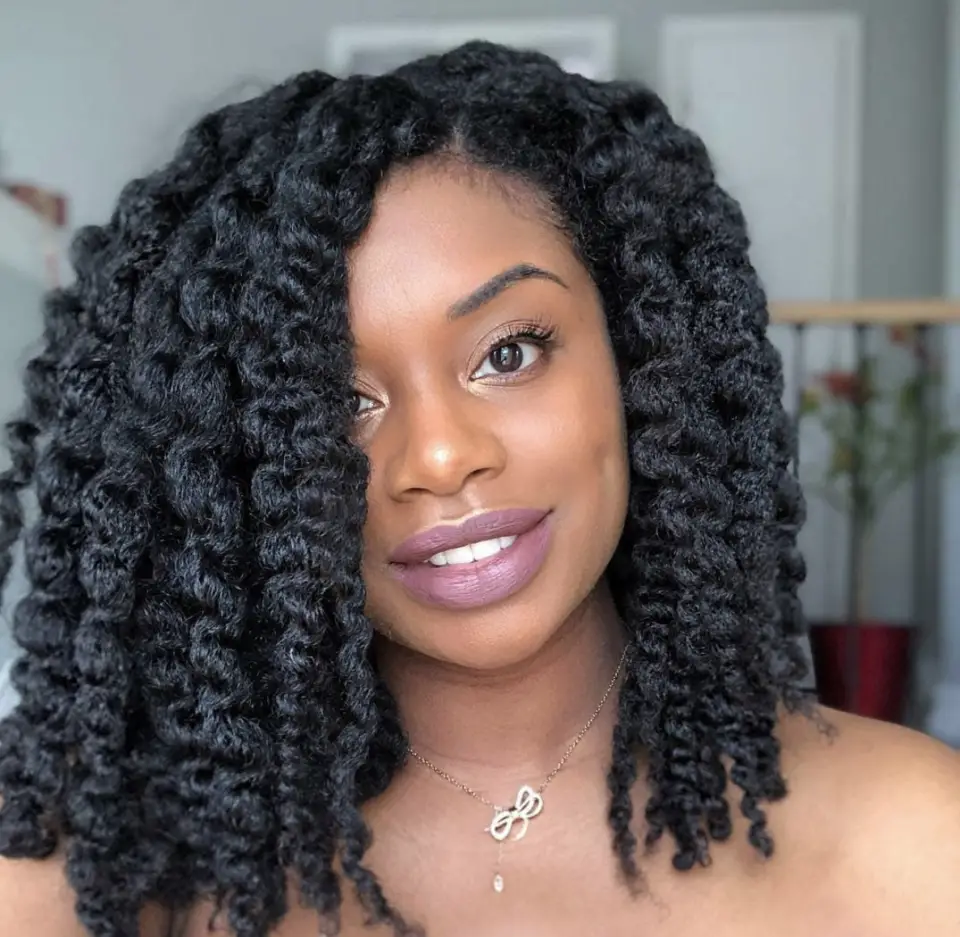
Table of Contents
Key Features of 4C Hair/Facts About 4C Ha8r
- Curl Pattern: Extremely tight coils with a zig-zag or “Z” shape, often lacking a defined curl pattern when dry.
- Texture: Ranges from fine to coarse; strands are densely packed, contributing to its voluminous appearance.
- Shrinkage: Significant shrinkage is common, making the hair appear shorter than its actual length.
- Fragility: Due to the tight curl pattern, 4C hair is more prone to dryness, tangling, and breakage.
How to Avoid Fried 4C Hair
Proper care is essential to maintain the health and appearance of 4C hair:
- Moisturization: Regularly hydrate the hair using leave-in conditioners, oils, and creams. The LOC (Liquid, Oil, Cream) or LCO (Liquid, Cream, Oil) method can be effective for sealing in moisture.
- Cleansing: Use sulfate-free shampoos to cleanse the scalp without stripping natural oils. Co-washing (using conditioner to wash hair) can also be beneficial, but occasional shampooing is necessary to prevent buildup.
- Deep Conditioning: Incorporate deep conditioning treatments regularly to nourish and strengthen the hair.
- Detangling: Use wide-tooth combs or fingers to gently detangle hair, preferably when wet and conditioned, to minimize breakage.
- Protective Styling: Styles like braids, twists, and bantu knots can help protect the hair from environmental damage and reduce manipulation.
- Nighttime Care: Sleep on silk or satin pillowcases or use silk/satin hair wraps to reduce friction and prevent moisture loss.
- Trimming: Regular trims every 6–8 weeks help maintain healthy ends and prevent split ends.
Understanding your hair’s porosity (how it absorbs and retains moisture) can further tailor your hair care routine.
Products with good “slip” can aid in detangling, and incorporating steam treatments can enhance moisture absorption.
Despite its unique challenges, 4C hair is versatile and can be styled in various ways, including afros, twists, braids, and updos.
With consistent care and the right products, 4C hair can thrive, showcasing its natural beauty.
Neapolitan 4C Hair
Neapolitan 4C hair refers to 4C hair featuring a Neapolitan-inspired colour combination, usually brown, blonde/cream, and pink or reddish tones.
It is a colour concept rather than a recognized hair-texture classification.
The term Neapolitan comes from Neapolitan ice cream, traditionally made with three flavours: chocolate, vanilla, and strawberry.
In hair, those colours are translated into shades of brown, blonde or cream, and pink, rose, burgundy, or reddish tones.
Searches for “Neapolitan hair” show the term being used for this kind of multicoloured look, including on textured and 4C hair.
What Does Neapolitan 4C Hair Look Like?
On 4C hair, a Neapolitan colour scheme can be particularly striking because the tight coils create lots of texture for the different shades to interact with.
For example, someone might have:
- Chocolate brown or dark brown as the base
- Cream, honey blonde, or pale blonde sections
- Pink, strawberry, rose, or reddish sections
- Dark natural roots with the three colours appearing farther down the hair
- Three colours distributed in blocks, panels, highlights, or smaller sections
The colours don’t necessarily have to be exactly chocolate, vanilla, and strawberry.
“Neapolitan” is generally being used as a visual description rather than as a standardized hair-colour formula.
Is 4C Hair Tick?
If you mean thick, 4C hair can be thick, but it is not necessarily thick.
There are two different things to consider when describing hair thickness:
1. Individual strand thickness (Including Course 4C Hair)
This refers to the diameter of each individual hair strand.
4C hair can have:
- Fine strands (thin individual hairs).
- Medium-sized strands.
- Coarse strands (thick individual hairs).
2. Hair density
This refers to how many individual strands grow on your scalp.
Someone with 4C hair can have:
- High density: lots of hair, creating a very full appearance.
- Medium density: a moderate amount of hair.
- Low density: fewer strands, resulting in less overall volume.
Why Does 4C Hair Often Look Thick?
4C hair often looks particularly full because its tightly packed coils create volume.
The coils also shrink considerably when the hair dries, making the hair appear compact.
However, a full-looking afro does not necessarily mean that every individual strand is thick.
The bottom line: 4C describes the tightness of the natural coil pattern, not the thickness of the individual strands or the amount of hair on the head.
Zig Zag Braids Site:ChickAboutTown.com
Zig Zag braids are braided hairstyles characterised by distinctive angular patterns that move back and forth across the scalp or along the length of the braids.
They offer an interesting alternative to conventional straight-back cornrows and neatly arranged individual plaits.
The term zig zag braids can describe more than one hairstyle.
In some designs, the actual braids follow a zigzag path.
In others, the braids are relatively straight but the hair is divided using zigzag-shaped partings.
Both approaches create an eye-catching geometric pattern.
Zig zag braids can be created on natural African hair, including 4C hair, and can be worn with or without extensions.
They also work with different braiding techniques, including cornrows, stitch braids, French braids and individual box braids.
One of the reasons these hairstyles are interesting is that the parting pattern can become an important feature of the finished hairstyle.
Even a relatively simple set of cornrows can look quite different when arranged around angular sections rather than conventional straight lines.
What Are Zig Zag Braids?
Zig zag braids are hairstyles in which the hair is braided using sections arranged in alternating diagonal directions.
There are two main ways to achieve the look:
- Zigzag parting: The hairstylist creates a zigzag-shaped division on the scalp and braids the hair within the resulting sections. The braids themselves may run in relatively straight lines.
- Zigzag braid pattern: The actual braids change direction as they are created, producing a more pronounced zigzag design.
These techniques can also be combined.
For example, a hairstylist might create zigzag partings at the front of the head and continue with straight-back cornrows towards the back.
7 Zig Zag Braids Hairstyles
1. Zig Zag Cornrow Braids
Zig zag cornrows are among the most recognisable versions of this hairstyle.
Instead of braiding all the rows in straight parallel lines, the braider creates angular sections that change direction across the scalp.
The pattern can be symmetrical, with matching zigzags on either side of the head, or asymmetrical, with different designs on each side.
You can have small, closely spaced cornrows or larger, more prominent rows.
Extensions can also be incorporated to add length and volume.
2. Zig Zag Stitch Braids
Stitch braids are characterised by clean, defined sections that create a distinctive lined appearance along the cornrows.
Combining this technique with zigzag partings produces a more elaborate hairstyle.
The braider carefully creates the angular sections before incorporating hair into the cornrows.
The resulting pattern makes the partings particularly noticeable.
You can have four, six, eight or more stitch braids, depending on the size of the sections and the design you prefer.
3. Zig Zag Box Braids
Zig zag box braids combine individual plaits with an unconventional parting pattern.
Unlike traditional box braids, which are commonly installed using square or rectangular sections, this variation uses zigzag-shaped divisions.
The individual braids can be long, medium-length or relatively short.
You can also experiment with different braid sizes, including jumbo, medium and small box braids.
The zigzag parting is especially noticeable when the braids are pulled into a ponytail or gathered into an updo.
4. Zig Zag Tribal Braids
Zig zag tribal braids combine patterned cornrows with individual braids.
The front section of the hairstyle can feature angular cornrow designs, while the back is completed with individual plaits.
You can incorporate a centre braid, curved cornrows, beads or cuffs to customise the hairstyle.
The combination of different braiding techniques creates an intricate appearance without requiring every braid to follow the same pattern.
5. Zig Zag French Braids
French braids can also be styled using zigzag partings.
One approach is to divide the hair into two sections using a zigzag centre part and create a French braid on either side.
Another option is to create several smaller French braids using alternating angular sections.
This style can be worn with natural hair or extensions.
It is also suitable for people who prefer braids that remain relatively close to the head.
6. Zig Zag Feed-In Braids
Feed-in braids are created by gradually adding extension hair to the natural hair as the braiding progresses.
When combined with zigzag partings, they produce a hairstyle with defined angular sections and gradually increasing braid thickness.
You can have the braids run towards the back of your head, curve towards one side or finish in a high ponytail.
This is an option worth considering if you want longer braids without starting each cornrow with a large, bulky section of extension hair.
7. Zig Zag Braids with Beads
Beads introduce another decorative element to zigzag braids.
You can add beads to the ends of individual braids or incorporate them into selected sections of the hairstyle.
Wooden, metallic, transparent and colourful beads can all be used, depending on the appearance you want.
This combination can work particularly well with children’s hairstyles, although adults can wear it too.
Are Zig Zag Braids Suitable for 4C Hair?
Yes. Zig zag braids can be created on 4C hair, including hair that has not been chemically straightened.
The tightly coiled texture of 4C hair can be braided into cornrows, stitch braids, feed-in braids and individual plaits.
The hairstylist needs to prepare the hair properly before installation.
Some useful considerations include:
- Detangling: Gently detangle the hair before braiding to make sectioning easier.
- Moisturising: Apply an appropriate leave-in conditioner before installation.
- Stretching: Stretching the hair can make it easier to create neat, clearly defined sections, although it is not compulsory.
- Tension: Avoid excessively tight braids, particularly around the temples and hairline.
- Sectioning: Use a rat-tail comb to create clean, consistent zigzag partings.
Zigzag designs can be particularly attractive on natural 4C hair because the contrast between the visible scalp and the braided sections helps emphasise the pattern.
How to Create Zig Zag Braids
The technique depends on whether you want zigzag partings or braids that actually change direction.
For zigzag partings, the general process is as follows:
- Wash, condition and detangle the hair.
- Divide the hair into the sections required for the hairstyle.
- Use a rat-tail comb to create alternating diagonal lines.
- Secure the sections that are not being braided.
- Begin braiding each section using the chosen braiding technique.
- Continue until all the sections have been braided.
- Apply an appropriate finishing product and arrange the braids.
For a more elaborate zigzag cornrow design, the braider may need to plan the pattern before beginning.
This helps ensure that the angles connect neatly and that the finished design looks balanced.
How Long Do Zig Zag Braids Last?
Zig zag braids do not have a fixed lifespan.
Their longevity depends on the braiding technique, braid size, hair growth, installation quality and maintenance.
Individual box braids and cornrows may have different maintenance requirements.
Avoid keeping tightly installed braids for too long simply to extend the hairstyle’s lifespan.
Pay attention to new growth, frizz, scalp discomfort and tension around the hairline.
How to Maintain Zig Zag Braids
Some useful maintenance practices include:
- Cover your hair with a satin or silk bonnet at night.
- Keep your scalp clean.
- Use a light moisturising product where necessary.
- Avoid repeatedly pulling the braids into tight hairstyles.
- Do not scratch or excessively manipulate the scalp.
- Remove the braids carefully rather than pulling them out.
If you experience persistent pain, bumps or irritation, have the braids loosened or removed.
Final Thoughts
Zig Zag Braids offer an interesting way to customise conventional braided hairstyles.
Whether you choose zigzag cornrows, stitch braids, box braids or tribal braids, the angular partings can make the finished hairstyle considerably more intricate.
The style is suitable for different hair textures, including natural 4C hair, and can be customised using different braid sizes, extensions, beads and accessories.
Fun Facts About 4C Hair
4C hair is one of the most fascinating natural hair textures, known for its tightly packed coils, considerable shrinkage and remarkable styling possibilities.
It belongs to the Type 4 category of the commonly used hair-typing system and is generally associated with very tight coils or zigzag-shaped bends.
However, there is considerably more to 4C hair than its tight curl pattern.
From the surprising difference between its stretched and unstretched length to the way individual strands can have different thicknesses, there are plenty of interesting things to learn about this natural hair texture.
Here are 15 fun facts about 4C hair.
1. 4C Hair Can Shrink Dramatically
One of the most interesting characteristics of 4C hair is shrinkage.
When 4C hair gets wet and subsequently dries, its coils contract, making the hair appear considerably shorter than its actual stretched length.
This phenomenon is known as shrinkage.
It can make long 4C hair appear relatively short when worn in its natural state.
For some people, the difference between stretched and unstretched length is dramatic.
Fun fact: Your 4C hair might be considerably longer than your afro makes it appear!
2. 4C Hair Does Have a Curl Pattern
A common misconception is that 4C hair has no curl pattern.
Although its coils can be difficult to distinguish when the hair is dry and unstretched, 4C hair has a natural pattern of tight coils, bends and curves.
The individual formations may be particularly noticeable when the hair is wet, moisturised or gently stretched.
Some 4C hair has a more recognisable zigzag appearance, while other 4C textures have very tiny coils.
3. Not All 4C Hair Is Thick
This might surprise people who associate 4C hair with thick, voluminous afros.
There are actually two different characteristics to consider:
- Strand thickness: The diameter of an individual hair strand.
- Hair density: The number of individual hair strands growing on the scalp.
A person can have fine 4C strands but a very full head of hair because of high hair density.
Another person might have coarse strands but relatively low density.
Therefore, 4C describes the coil pattern, not how thick every individual strand is.
4. 4C Hair Can Be Longer Than It Looks
Because of shrinkage, it can be difficult to judge the length of 4C hair simply by looking at it.
For example, someone with shoulder-length hair when stretched might have a much shorter-looking afro when the hair is allowed to shrink naturally.
This is one reason length checks are often performed by gently stretching a section of hair.
It is also important to understand the difference between hair growth and length retention.
Hair grows from the follicles, but breakage can prevent the retained length from becoming noticeable.
5. You Can Have More Than One Hair Texture on Your Head
Not every section of your hair has to have exactly the same coil pattern.
You might have very tightly coiled hair around the nape, slightly looser coils around the crown and different patterns near your temples.
Some people describe their hair as a combination of 4B and 4C.
This is perfectly normal.
Hair typing is a broad classification system, not a requirement that every strand must look identical.
6. 4C Hair Can Be Worn in Many Different Hairstyles
4C hair is not limited to afros or braids.
Its styling possibilities include:
- Twist-outs.
- Braid-outs.
- Wash-and-go hairstyles.
- Bantu knots.
- Flat twists.
- Cornrows.
- Box braids.
- Afro puffs.
- Tapered haircuts.
- Finger coils.
- Natural updos.
- Stretched hairstyles.
The tight coil pattern can produce different results depending on how the hair is manipulated, stretched and styled.
7. Water Can Make 4C Hair Look Completely Different
Water can temporarily change the appearance of 4C hair.
When wet, the coils may contract, clump together or become more visible.
As the hair dries, it may expand or shrink depending on its natural pattern and styling technique.
This is why someone might look as though they have two different hairstyles before and after washing their hair.
The amount of definition also depends on conditioning, product application and how the hair is handled.
8. 4C Hair Is Not Necessarily Coarse
Another interesting fact is that 4C hair can have fine, medium or coarse strands.
The tightness of the coils does not determine the diameter of individual strands.
Two people can have very similar-looking 4C hair but completely different strand thicknesses.
This matters when choosing hair products and styling techniques because fine strands may become weighed down by heavy products, while coarse strands may respond differently.
9. 4C Hair Can Be More Prone to Tangles
The tightly coiled structure of 4C hair can cause neighbouring strands to intertwine.
This can lead to tangles and single-strand knots, particularly when the hair is dry or manipulated frequently.
Gentle detangling with conditioner and sufficient slip can make the process easier.
Finger detangling or using a wide-tooth comb can also help reduce unnecessary pulling.
10. 4C Hair Can Be Difficult to Keep Moisturised
The bends and coils in 4C hair can make it more difficult for sebum, the natural oil produced by the scalp, to travel along the entire hair shaft.
Consequently, the lengths and ends may become dry even when the scalp produces natural oils.
This is one reason moisturising conditioners and leave-in products are commonly incorporated into 4C hair care routines.
However, not every person with 4C hair has identical moisture requirements.
11. 4C Hair Can Be Straightened
Although 4C hair is naturally tightly coiled, it can be temporarily straightened using heat styling techniques such as blow-drying and flat ironing.
A silk press, for example, transforms tightly coiled natural hair into a smooth, straight hairstyle without permanently relaxing it.
However, excessive heat can damage the hair and alter its natural curl pattern.
Heat protection and appropriate temperature control are important when straightening natural hair.
12. 4C Hair Can Form Beautiful Locs
4C hair is suitable for locs.
Its tightly coiled structure can help the hair interlock and form locs over time, although the process depends on the chosen installation and maintenance method.
Locs can be worn short, medium-length or long.
They can also be styled into updos, buns, ponytails and other hairstyles.
13. 4C Hair Can Look Very Different at Different Lengths
A short 4C haircut may look quite different from a long 4C afro.
Short hair can create a compact, rounded silhouette, while longer hair offers more opportunities for stretching, shaping and creating voluminous hairstyles.
The way the hair is cut also affects its appearance.
For example, a tapered haircut can create a sculpted shape, while a rounded afro distributes the volume more evenly around the head.
14. Shrinkage Is Not a Sign of Poor Hair Health
Some people become frustrated when their hair shrinks after washing.
However, shrinkage is a normal characteristic of curly and coily hair.
It reflects the hair’s ability to contract rather than remain in a stretched position.
Healthy hair can shrink considerably.
Conversely, reduced shrinkage does not automatically mean that hair is healthier.
Heat damage and other changes to the hair structure can affect its ability to return to its natural pattern.
15. 4C Is Not a Measure of Hair Growth or Hair Health
The 4C classification tells you about the natural coil pattern, not how quickly your hair grows or how healthy it is.
Two people with 4C hair can have very different experiences with length retention, breakage, density and scalp health.
One person might have waist-length 4C hair, while another prefers to keep theirs in a short tapered haircut.
Neither is more authentically 4C than the other.
More Interesting Things to Know About 4C Hair
| Question | Interesting fact |
|---|---|
| Is 4C the tightest curl type? | It is generally considered the tightest category in the popular 1A–4C hair chart. |
| Does 4C hair always shrink? | Shrinkage is common, but the amount varies. |
| Is all 4C hair thick? | No. Individual strands can be fine, medium or coarse. |
| Can 4C hair grow long? | Yes. Its growth is not limited by its coil pattern. |
| Can 4C hair form curls? | Yes. It naturally forms very tight coils and bends. |
| Can 4C hair be coloured? | Yes, although chemical processing requires careful handling. |
| Can 4C hair be worn short? | Absolutely. Afros, cropped cuts and taper fades are all options. |
A Note About the 4C Hair Typing System
The commonly used hair-typing system was popularised by hairstylist Andre Walker in the 1990s. It categorises hair into Types 1 through 4, with lettered subdivisions.
An interesting historical detail is that the original Andre Walker system did not include 4C. The 4C category became popular later within the natural hair community to describe particularly tight coily textures.
The system is useful for discussing curl patterns, but it has limitations.
It does not adequately describe every characteristic of an individual’s hair, including porosity, density, strand diameter and overall condition.
This is why two people classified as having 4C hair can have very different hair care needs.
Final Thoughts
4C hair is wonderfully adaptable. Its tightly packed coils can create voluminous afros, defined twist-outs, intricate braids, beautiful locs and sculpted short haircuts.
Perhaps the most interesting thing about 4C hair is that its appearance can be misleading. Hair that looks short can be considerably longer when stretched, and hair that looks thick can actually consist of very fine individual strands.
Understanding these characteristics makes it easier to appreciate the many ways 4C hair can be worn, styled and maintained.
The most important thing to remember is that 4C is a description of your natural coil pattern, not a limitation on what your hair can do.
Photo credits: Ziger Naturals