Silk to satin is a phrase you may come across when shopping for hair bonnets, scarves, pillowcases, and other products designed to protect your hair while you sleep. But what does it actually mean, and is there really a difference between silk and satin?
If you’ve ever wondered whether silk or satin is better for your hair, you’re not alone. Both are popular in hair care, but they aren’t actually two competing types of fabric. Silk is a fiber, while satin is a type of weave.
That distinction is important because you can have silk woven into a satin weave, creating silk satin, while satin can also be made from synthetic fibers such as polyester or nylon.
So, as you make the journey from Silk to Satin, let’s look at what these materials actually are, how they differ, and what that difference means for your hair.
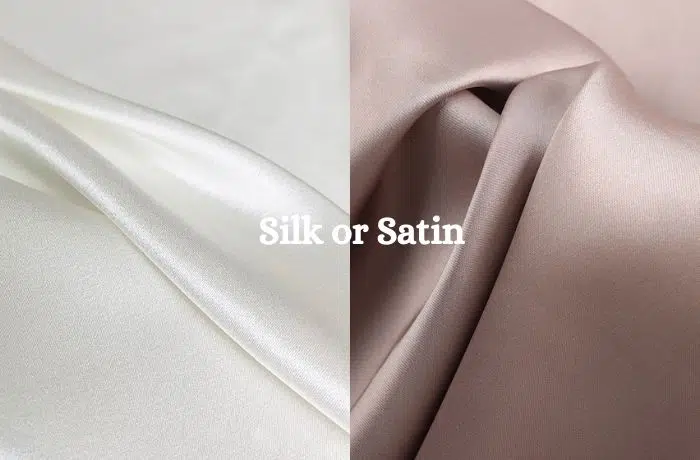
Table of Contents
Silk
Silk is a natural protein fiber produced by silkworms. When people talk about silk bonnets, scarves, or pillowcases, they are generally referring to genuine silk fabric, with mulberry silk being one commonly used type.
Silk has several properties that make it appealing for hair care:
- Its smooth surface creates relatively little friction against the hair.
- It is naturally breathable.
- It tends to retain less heat than many synthetic fabrics.
- It can help reduce the friction that contributes to tangling, frizz, and mechanical damage while you sleep.
- It can be particularly pleasant for dry, curly, coily, textured, or chemically treated hair.
Silk is also luxurious and feels very soft against the skin.
The downside is that genuine silk tends to be considerably more expensive than synthetic satin. It can also require more careful washing and handling.
Satin
Satin is different because satin describes the construction of the fabric rather than the material from which the fibers are made.
The satin weave creates the smooth, glossy surface associated with satin.
A satin bonnet, therefore, doesn’t necessarily contain any silk. Inexpensive satin bonnets are frequently made from polyester or another synthetic fiber.
That doesn’t mean they are ineffective.
A smooth polyester satin surface can still reduce friction between your hair and your bonnet or pillowcase. That is one of the main reasons satin bonnets and pillowcases are popular for preserving hairstyles and reducing unnecessary friction overnight.
Satin also has some practical advantages. It is generally less expensive than silk, widely available, and relatively easy to wash and maintain.
The trade-off is that synthetic satin may not feel as breathable as silk and can sometimes feel warmer, particularly if you sleep hot.
So which is better for hair?
There isn’t one answer that applies to everyone.
If your main objective is reducing friction and protecting your hairstyle while you sleep, a good-quality satin bonnet can do a very good job.
If you value breathability, natural fibers, luxurious feel, and the particular properties of silk, genuine silk may be worth the additional expense.
I’d describe the difference this way:
Satin is the practical option. Silk is the luxury option.
And consistency matters.
A satin bonnet that stays securely on your head all night may be more useful to you than an expensive silk bonnet that slips off after an hour. The best bonnet is ultimately one that fits comfortably, doesn’t put excessive tension on your hair, and actually stays where you put it.
From silk to satin: What’s the difference?
The phrase silk to satin can be confusing because it sounds as though you are moving between two different kinds of fabric. In reality, you’re comparing two different characteristics.
Photo credits: SinoSilk