African American hairstyles are deeply rooted in African traditions and have evolved over centuries into a wide range of styles that reflect identity, creativity, and culture. They’re not just about appearance—they often carry history, meaning, and personal expression.
READ ALSO: Is Black Hair Natural? Is There Such Thing as Natural Black Hair?
Table of Contents
Origins and Cultural Significance of Black American Hairstyles
Many African American hairstyles trace back to ancient African societies, where hair was used to communicate things like age, social status, tribe, and even religion.
Braiding, in particular, has existed for thousands of years across Africa.
Styles such as cornrows and twists were brought to the Americas during the transatlantic slave trade and adapted over time in the African diaspora.
Even today, hairstyles remain tied to identity.
For example, the natural hair movement encouraged many Black Americans to embrace their natural textures after decades of pressure to straighten or chemically alter hair.
Common African American Hairstyles
African American Hair Style #1: Braids
Braided styles are some of the most recognizable.
These include box braids, knotless braids, and Fulani braids.
They involve sectioning the hair and weaving it into patterns, sometimes with extensions added for length or thickness. Braids are valued for their versatility and the ability to style them in different ways, from simple to highly detailed designs.
Afro American Hairstyles #2: Cornrows
Cornrows are braids done very close to the scalp in straight or curved patterns. They can be simple or highly intricate.
Historically, they have been linked to African heritage and, in some accounts, even served as coded communication during slavery. They are also practical and can last for weeks with proper care.
Dreadlocks (Locs)
Locs are formed by allowing hair to mat or by twisting it into rope-like strands. While they exist in several cultures, they are strongly associated with Black identity today.
Some people prefer the term “locs” because it focuses on the style itself rather than historical connotations tied to the word “dreadlocks.”
Afros
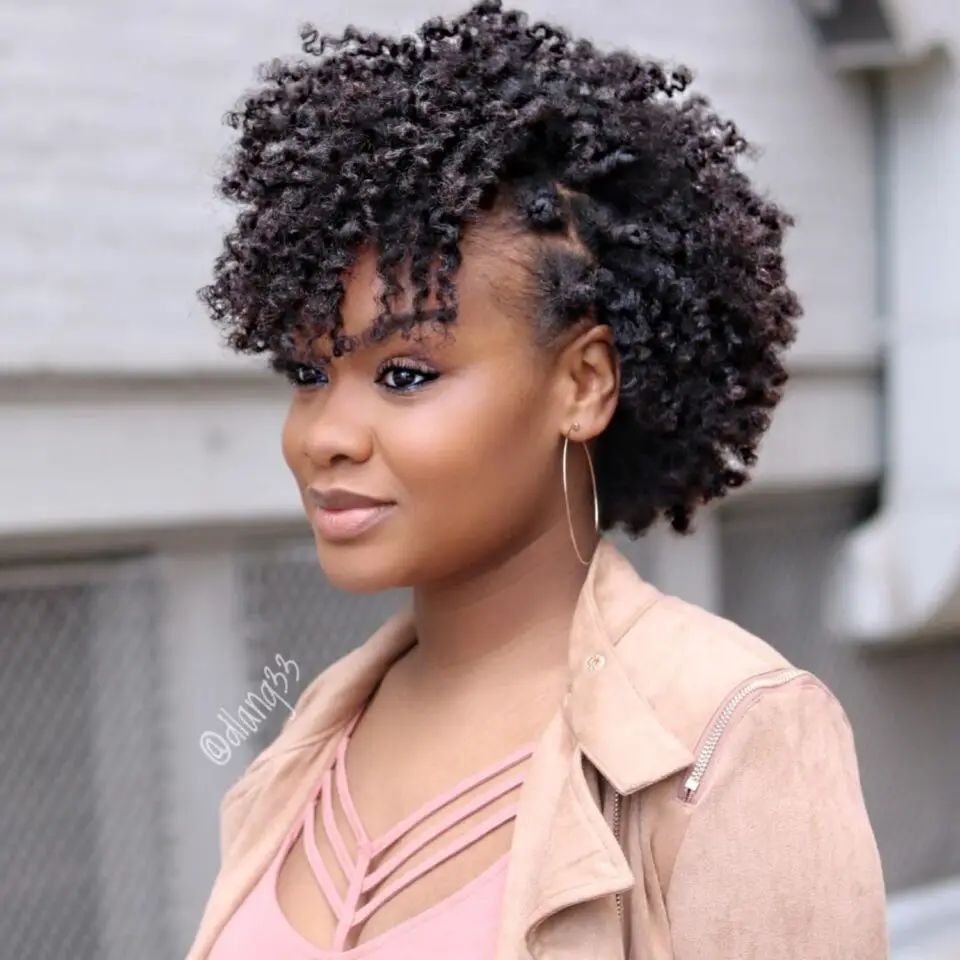
The afro became especially prominent during the 1960s and 1970s as a symbol of pride and resistance. It involves wearing hair in its natural, unstraightened state, shaped into a rounded silhouette. This style highlights the natural curl pattern of African-textured hair.
Twists and Coils
Two-strand twists and other coiled styles are created by wrapping sections of hair around each other.
These can be worn loose or set into more defined shapes.
They are popular because they are relatively easy to install and maintain compared to some braided styles.
Bantu Knots
This style involves sectioning the hair and twisting it into small coiled knots.
It has roots in Southern Africa and is both a hairstyle on its own and a method for creating defined curls when undone.
Function and Versatility
African American hairstyles are often designed to work with tightly coiled or curly hair textures.
Many styles—especially braids and twists—are low-maintenance and can last for weeks. They can also help reduce daily manipulation, though overly tight styling can cause damage if not done carefully.
At the same time, these hairstyles are highly adaptable.
The same base style can be worn casually, professionally, or for special occasions depending on how it’s finished, accessorized, or styled.
Social and Modern Context
In modern times, African American hairstyles have been at the center of conversations about identity, professionalism, and discrimination.
Laws like the CROWN Act in parts of the United States were created to prevent discrimination based on natural hair and traditional Black hairstyles.
Photo credits: Dorese B.