Braided dreads are basically dreadlocks (also called locs) that have been styled with braids.
They combine elements of both braids and traditional dreadlocks, giving a textured, sometimes patterned, look to your locs.
You can braid entire dreadlocks into styles like cornrows, French braids, or partial braids, or you can start dreadlocks by braiding hair and letting it lock over time.
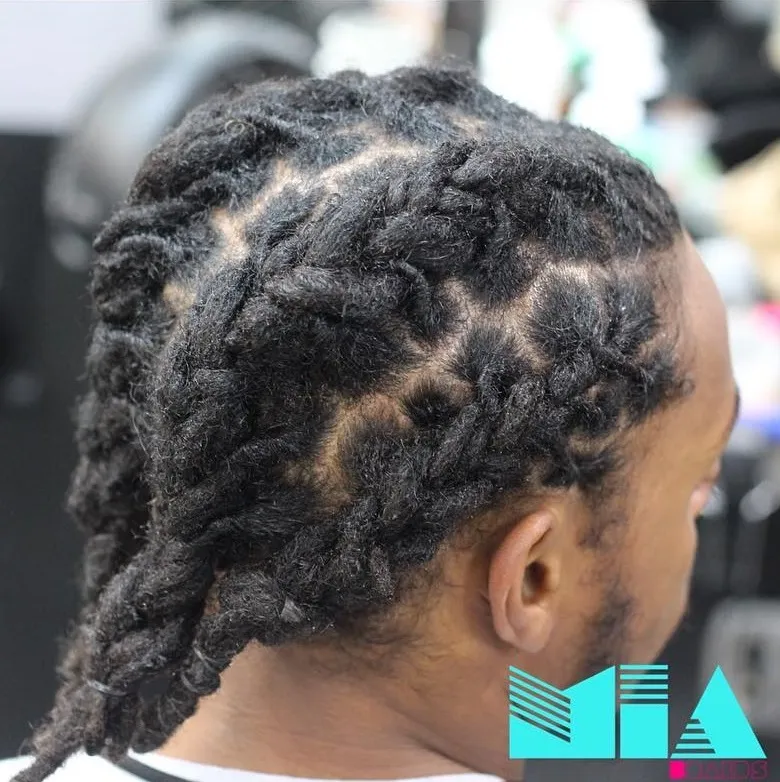
Table of Contents
What Braided Dreads Are and How Braiding on Dreadlocks Works
Braided dreadlocks are different from simple braids because the hair has started or already formed into locs.
That makes them thicker, more cylindrical, and they feel less like regular three-strand braids.
Dreadlocks from Braids
In some methods, hair is sectioned and braided first, then allowed to dry and lock up so the braid pattern becomes the foundation of the locs.
Over time, as hair naturally matures into full dreadlocks, the braid pattern softens and the hair becomes tighter.
You can braid existing dreadlocks for styling, which means just taking finished locs and braiding them into patterns like rows or accent braids on the ends.
Why People Choose Them
• They offer visual detail or pattern to locs in ways that plain locs don’t. Braids, cornrows, or partial braids can frame the face or create shapes and texture.
• Braiding locs can help keep them neater temporarily because the braids hold strands in place, at least until they loosen.
How Braided Dreadlocks Are Made
• Start with clean, sectioned hair. Divide hair into even parts before beginning.
• You can braid each section down the length and secure the ends. Slowly, with time and gentle maintenance, these braids can develop into locs, especially with careful handling and product support.
• If you already have dreadlocks, you can braid the locs themselves into cornrows, patterns, or simply braid them together like regular hair.
Dreadlocks Braided Care and Maintenance
• Dreadlocks generally need regular cleansing, moisture, and retouching of the roots. For braided locs, a touch-up or rebraid every few weeks to a couple of months helps keep the pattern looking fresh.
• Use residue-free shampoo and oils like coconut or argan to keep hair and scalp hydrated without buildup.
• Be gentle with your scalp: pulling too tight can cause tension or breakage.
Styling With Braided Dreads
• You can do intricate cornrows on locs, high or low braided updos, half-braid styles, or braid just the ends of your dreadlocks for a mix of texture and detail.
• Accessories like hair cuffs or beads work well with braided locs if you want extra flair.
In summary, braided dreads give you a blend of structured braid patterns and the organic texture of locs. They can be a foundation for letting your hair lock naturally, a creative styling choice, or a way to refresh your dreadlocks with visual interest.
Dreadlocks (often called “dreads,” “locs,” or “locks”) are a hairstyle where hair strands are formed into rope‑like, matted sections rather than hanging loose.
They can be created in different ways: by backcombing and twisting, by palm‑rolling strands, by braiding and letting hair naturally mat over time, or by other techniques designed to help the hair knot and lock together. Some people let their hair form locs with very little intervention, while others prefer a more uniform look with regular maintenance.
What Dreadlocks Are
Dreadlocks are essentially hair that has been encouraged to mat or lock into individual strands.
They’re sometimes described based on how neat they look: “locs” tends to refer to more uniform, intentionally formed sections, while “dreads” is sometimes used for a more natural, less controlled appearance. The name “dreadlocks” has historical roots in how the hairstyle was viewed and labeled in the past, but many people prefer “locs” because it doesn’t carry negative connotations.
Photo Credits: @M.I.A_Braids