Table of Contents
1. Intonga in South Africa
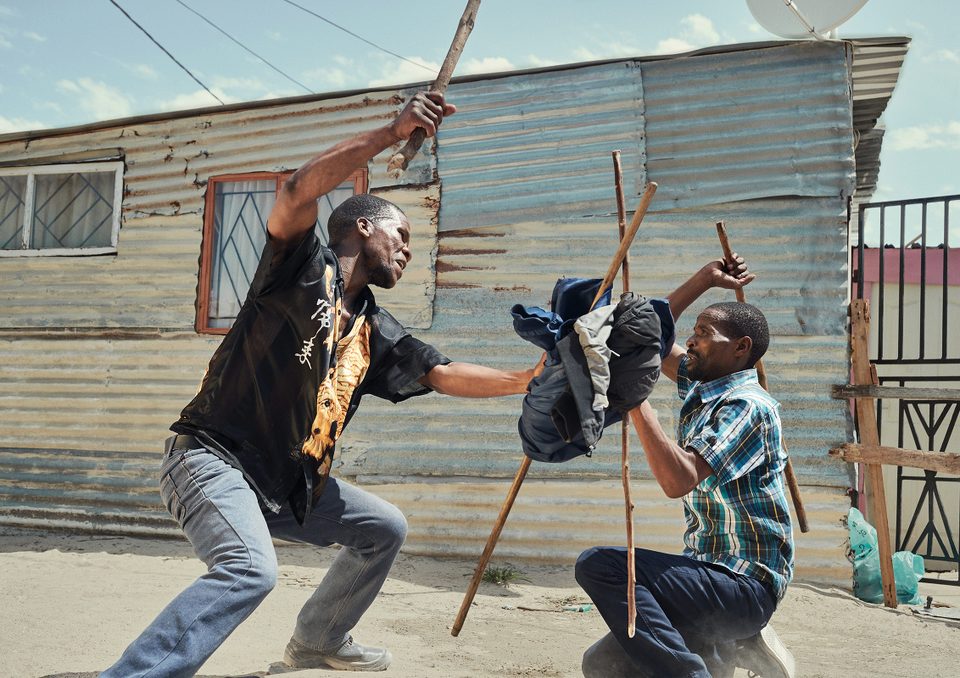
Like in Kenya, South Africa also has traditional forms of stick fighting. One such form is called Intonga.
Intonga is a traditional South African stick-fighting sport with deep cultural roots among the Nguni peoples, particularly the amaXhosa of the Eastern Cape.
It involves two competitors using wooden sticks to attack, defend, parry blows and demonstrate their physical abilities.
Although it is often described as stick fighting, Intonga has a cultural and sporting significance that goes beyond two people exchanging blows. It has traditionally been associated with boys growing up in rural communities, physical training, competition, social relationships and the transmission of cultural knowledge between generations.
Today, Intonga is also recognised as one of South Africa’s indigenous games and forms part of the country’s efforts to preserve traditional sporting practices.
1. What does Intonga mean?
The word intonga comes from isiXhosa and is also found in isiZulu, although the plural forms differ. In isiXhosa, the plural is iintonga, while in isiZulu it is izintonga.
The word refers to a stick or staff. In the context of the traditional sport, it refers to the wooden implements used by competitors.
Intonga is also known by other names, including:
- Iintonga: The isiXhosa name commonly used for the game.
- Melamu: A name used in some southern African communities.
- Iziduku: Another name associated with the indigenous stick-fighting tradition.
- Izinkuku: An alternative name appearing in South African indigenous games documentation.
- Umgangela: Another name recorded in indigenous games literature.
The terminology can vary according to the community and the particular tradition being practised.
It is worth understanding that Intonga is not one completely uniform practice throughout South Africa. Different communities have their own histories, customs and approaches to stick fighting.
2. The Origins and Cultural History of Lingtonga in South Africa
Intonga has a long history among the Nguni-speaking communities of southern Africa.
The practice is particularly associated with the amaXhosa, although related stick-fighting traditions exist among other Nguni peoples, including the Zulu.
Historically, boys in rural communities learned stick fighting while herding livestock. Time spent looking after cattle and other animals provided opportunities for young people to practise physical skills, compete against one another and learn techniques from older boys.
The practice was not necessarily organised in the same way as a modern sporting competition. Informal contests could take place among boys from neighbouring homesteads or villages.
Nelson Mandela, in his autobiography Long Walk to Freedom, recalled learning stick fighting as a young boy growing up in Qunu. He described learning how to parry blows, use feints, strike in unexpected directions and move quickly away from an opponent.
His account illustrates how the activity formed part of everyday childhood experiences in some rural Xhosa communities.
Stick fighting could also serve social purposes. It provided opportunities for young men to demonstrate courage, coordination, physical ability and confidence in front of their peers.
In some historical settings, competitions were associated with rivalries between groups, disputes and courtship. However, these activities should not be confused with every form of organised Intonga competition.
3. The two sticks used in South Africa Sports Lingtonga
One of the defining characteristics of Intonga is that competitors traditionally use two sticks rather than a single weapon.
READ ALSO: Gena Ethiopian Traditional Game
2. Isinaphakade Samathongo
The Isinaphakade Samathongo is an esoteric ancestral combat sport practiced by the Zulus and the Xhosa in South Africa. This system emphasizes powerful combat techniques and an ethical philosophy. It is used as an initiation to the caste of priest-warriors of the two tribes.
Photo credits: Sophie Ebrard