Eritrean food is one of those cuisines that feels simple at first glance, but once you get into it, you realize it’s built around deep flavor, slow cooking, and a very social way of eating.
Most meals revolve around a shared platter, eaten by hand, with everyone gathered around.
At the center of it all is Injera.
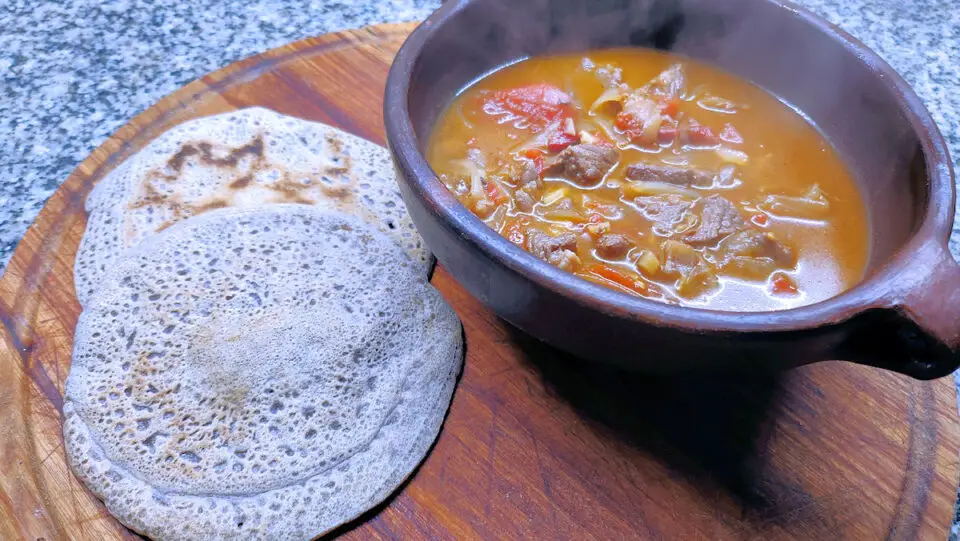
This is a soft, slightly sour flatbread made from fermented teff flour. It’s not just bread—it acts as your plate and your utensil.
You tear off pieces and use them to scoop everything else.
From there, the “best” Eritrean food really comes down to the stews and sides that sit on top of injera.
Table of Contents
The Dishes People Keep Coming Back To
Zigni (Also Called Tsebhi Sga)
This is one of the most iconic Eritrean dishes.
It’s a rich, slow-cooked beef stew with tomatoes, onions, and the spice blend berbere, which gives it that deep red color and heat. It’s bold, slightly spicy, and very satisfying.
Tsebhi Dorho
Often treated as a special-occasion dish. Chicken is cooked slowly in a spicy sauce and usually served with boiled eggs. It’s layered, aromatic, and one of the most traditional meals you can have.
Shiro
A favorite for everyday eating. It’s made from ground chickpeas or lentils and cooked into a smooth, thick stew with garlic, onions, and spices.
It’s simple but very comforting, especially with fresh injera.
Milder and Vegetable-Based Options
Not everything is spicy. Eritrean cuisine balances heat with milder, earthy dishes.
Alicha
A yellow stew made without chili, using turmeric instead. It can include potatoes, carrots, cabbage, or meat.
It’s lighter and good if you don’t want something too spicy.
Hamli
Spinach or kale cooked with garlic and onions. It’s simple but adds freshness and balance to a heavy meal.
Hilbet
A creamy, slightly tangy blend of lentils and fenugreek.
It’s often served alongside tomato-based sauces and adds a different texture to the plate.
Breakfast and Lighter Dishes
Ful Medames
Mashed fava beans with olive oil, tomatoes, onions, and sometimes eggs.
Very common for breakfast.
Kitcha Fit-Fit
Pieces of flatbread mixed with spiced butter or berbere sauce.
Quick, filling, and full of flavor.
Ga’at
A thick porridge served with a spiced butter or sauce in the center.
It’s hearty and often eaten for breakfast.
Meat and Sautéed Dishes
Tibsi
Chunks of meat fried with onions, garlic, and spices.
It’s less saucy than stews and has a slightly crisp edge.
The Italian Influence (Unexpected but Real)
Because of history, Eritrean food also includes Italian-style dishes—but with a twist.
Eritrean Pasta
You’ll find spaghetti, lasagna, and other pasta dishes, often with local spices or tomato-heavy sauces.
What makes Eritrean food stand out
- Meals are shared from one large platter, not served individually
- Food is eaten with your hands using injera
- Flavors come from slow cooking and spice blends like berbere
- There’s a strong balance between spicy, mild, meat, and vegetarian dishes
- Coffee culture is huge, with traditional ceremonies being part of daily life
If someone wanted a proper Eritrean meal, a strong combination would be injera with zigni, shiro, a bit of alicha, and some hamli on the side. That mix gives you the full range—spicy, mild, creamy, and fresh—all on one plate.
Eritrean Food/Eritrean Culture Food/Eritrean Traditional Food
Eritrean cuisine is deeply rooted in the use of injera, a spongy, sourdough flatbread made from teff flour. Injera is not just a staple food but also serves as an edible utensil, used to scoop up stews and side dishes. A meal is often centered around a large communal platter, where different stews and accompaniments are arranged on top of the injera.
One of the most well-known Eritrean dishes is zigni, a spicy and richly flavored beef or lamb stew.
It is slow-cooked with tomatoes, onions, and berbere, a signature spice blend made of chili peppers, garlic, ginger, and other aromatic spices. The heat and depth of flavor in zigni make it a favorite among locals and visitors alike.
Vegetarian dishes are also a significant part of Eritrean cuisine. Shiro, a thick and hearty stew made from ground chickpeas or lentils, is one of the most popular vegetarian options. It is typically seasoned with garlic, onions, and berbere, creating a flavorful yet simple dish. Other vegetarian options include tsebhi hamli (stewed collard greens) and timtimo (a lentil-based dish).
Another common dish is dorho tsebhi, a spicy chicken stew made with a berbere-infused sauce and served with hard-boiled eggs.
This dish is often prepared for special occasions and family gatherings.
Seafood is also part of Eritrean cuisine, especially in coastal areas like Massawa. Asa tsebhi is a traditional fish stew cooked with garlic, onions, and berbere, while grilled or fried fish is also common.
READ ALSO: Making Traditional Ethiopian Coffee
Eritrean Essen
Eritreisches Essen bezeichnet die traditionellen Speisen und Mahlzeiten aus Eritrea. Im Zentrum steht oft Injera, ein weiches, leicht saures Fladenbrot, das als Teller und zum Aufnehmen von Eintöpfen und Saucen dient. Typische Gerichte sind:
- Zigni – ein würziger Fleisch-Eintopf aus Rind, Lamm oder Ziege mit Tomaten, Zwiebeln und Berbere-Gewürzen.
- Shiro – ein dicker Eintopf aus gemahlenen Kichererbsen oder Bohnen.
- Alicha – mild gewürzte Gemüse- oder Linseneintöpfe.
- Hamli – gedünstetes Blattgemüse, das oft zu den reichhaltigeren Eintöpfen serviert wird.
Eritreisches Essen wird oft gemeinsam von einer großen Platte gegessen, wobei man die Speisen mit der rechten Hand direkt vom Injera aufnimmt. Dazu gehört oft Bunna, der traditionelle Kaffee, und bei Festen auch Himbasha, ein leicht süßes Brot.
Eritreisches Essen spiegelt die Kultur, die Geschichte und die Gastfreundschaft des Landes wider.
Top Eritrea Food & Drink Tours
If you will be visiting Eritrea soon and are wondering what some of the best Eritrean food and drink tours are, then browse a selection of those here.
Eritrea, located in the Horn of Africa, offers a unique and flavorful culinary experience shaped by its history, geography, and diverse ethnic groups.
While Eritrean food and drink tours are not as common as they are at some other destinations, travelers can still explore Eritrea’s cuisine through local markets, traditional restaurants, and cultural experiences such as coffee ceremonies.
Eritrean Dining Culture
Eritrean meals are traditionally eaten with the right hand, using pieces of injera to scoop up food. The communal nature of dining is an important aspect of Eritrean culture, emphasizing hospitality and togetherness.
Sharing food from the same platter is a sign of friendship and community.
Many Eritrean restaurants serve food in a traditional style, with low seating arrangements and a relaxed atmosphere.
Food from Eritrea: Tihlo
Visitors can enjoy an authentic dining experience by trying tihlo, small barley dough balls served with a spicy sauce, or ful, a dish of stewed fava beans, often eaten for breakfast.
The Coffee Ceremony – A Central Tradition
One of the most significant cultural experiences in Eritrea is the traditional coffee ceremony.
Coffee plays an important role in social and cultural life, bringing people together for conversation and hospitality. The ceremony is a slow and ritualistic process that begins with roasting green coffee beans over an open flame.
The beans are then ground by hand using a mortar and pestle before being brewed in a jebena, a traditional clay coffee pot.
The coffee is served in small cups, usually accompanied by himbasha, a slightly sweet bread, or popcorn. It is customary to drink three rounds of coffee, each symbolizing different aspects of life and friendship. The ceremony can last for an hour or more, reflecting the Eritrean emphasis on community and hospitality.
Eritrea Restaurant
I have been able to find Eritrean restaurants in most of the cities that I have lived in, but if you are unable to find one where you live, you’ll surely find an Ethiopian restaurant: the food is quite similar.
Photo credits: SaltShaker