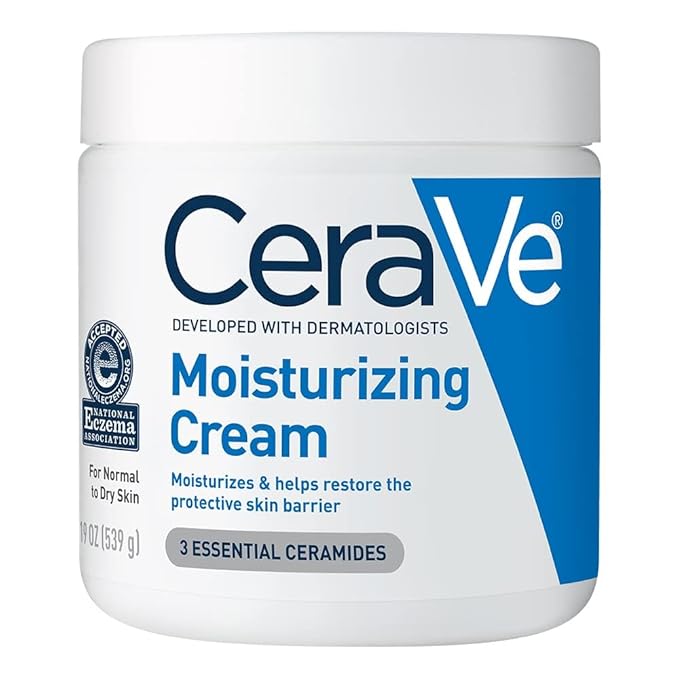
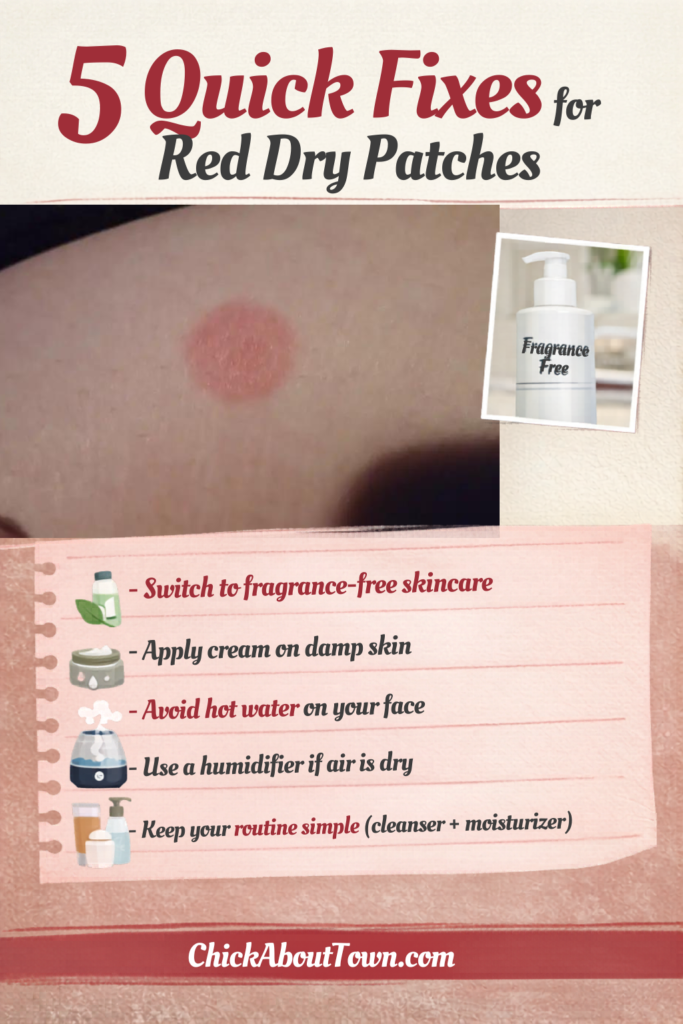
Dry skin patches can be frustrating because ordinary lotion often feels good for a short time but doesn’t seem to actually get rid of the rough, flaky area. The key is usually to use a moisturizer that is rich enough to repair the skin barrier and to apply it consistently, rather than simply looking for something that feels hydrating.
What kind of moisturizer is best for dry skin patches?
For distinctly dry patches, a thick cream or ointment is generally a better choice than a lightweight lotion. Creams and ointments contain more oil and are better at slowing water loss from the skin. (American Academy of Dermatology)
Look for a fragrance-free product containing ingredients such as:
- Petrolatum — excellent for sealing moisture into the skin and particularly useful for very dry or cracked patches.
- Ceramides — help support the skin barrier.
- Glycerin — attracts water to the skin.
- Hyaluronic acid — helps hydrate the skin.
- Dimethicone — forms a protective layer that reduces moisture loss.
- Shea butter — provides emollient, moisturizing benefits.
- Urea — particularly useful for rough, very dry skin, although higher concentrations can sting irritated or cracked skin. (American Academy of Dermatology)
If the patches are extremely dry, rough or cracked, something as simple as petroleum jelly can actually be more useful than an expensive moisturizer. You can apply a cream first and then a thin layer of petroleum jelly over the driest areas to help lock everything in.
How to apply moisturizer to dry patches
Timing makes a surprisingly big difference.
After bathing or washing:
- Use lukewarm rather than hot water.
- Gently pat your skin dry rather than rubbing it.
- Leave your skin slightly damp.
- Apply your moisturizer within a few minutes.
- Reapply whenever the patch becomes dry during the day. (American Academy of Dermatology)
You don’t have to wait until your skin feels painfully dry before moisturizing. For persistent patches, regular application is more effective than occasionally applying a huge amount.
Be careful with “unscented”
This is an important distinction if your patches are sensitive.
Look for “fragrance-free” rather than simply “unscented.” An unscented product can still contain fragrance ingredients used to mask the smell of other ingredients. Fragrance can irritate already-dry or eczema-prone skin. (American Academy of Dermatology)
I’d also be cautious with essential oils, heavily fragranced body butters and products containing drying alcohols if you’re trying to heal a particularly irritated patch. (American Academy of Dermatology)
What if the dry patches are itchy?
If they’re itchy, red, scaly, inflamed or repeatedly coming back, don’t automatically assume they’re simply dry skin.
Dry patches can occur with conditions such as eczema, psoriasis and other skin problems. For example, eczema can produce dry, itchy patches because the skin barrier loses water more readily. Moisturizer is an important part of managing eczema, but the underlying condition may need additional treatment. (American Academy of Dermatology)
Likewise, a single persistent patch, especially if it changes, spreads, becomes painful, oozes, bleeds or doesn’t improve with regular moisturizing, is worth having assessed by a dermatologist or doctor rather than continuing to experiment with moisturizers.
A simple routine for dry patches
If you simply want a straightforward approach, I’d do this:
Morning:
Gentle fragrance-free cleanser if needed → thick fragrance-free cream → sunscreen on exposed areas.
After bathing:
Pat skin until slightly damp → thick cream over the whole dry area → petroleum jelly over particularly stubborn patches if necessary.
During the day:
Reapply moisturizer whenever the patches feel dry or tight.
At night:
Apply a generous layer of cream. For very dry areas, seal it with a thin layer of petroleum jelly.
And try to avoid long, hot showers, aggressive scrubbing, loofahs and exfoliating acids directly on the patches while they’re irritated. Dermatologists specifically recommend short, warm showers and gentle cleansing for excessively dry skin.