What Is 4C Hair?
4C hair is a subtype of Type 4 hair, characterized by its tightly coiled, zig-zag pattern.
It is the most delicate and densely packed of all hair types, often appearing to shrink up to 70% or more of its actual length when dry.
This shrinkage is a sign of healthy, elastic curls, but it can make the hair appear much shorter than it truly is.
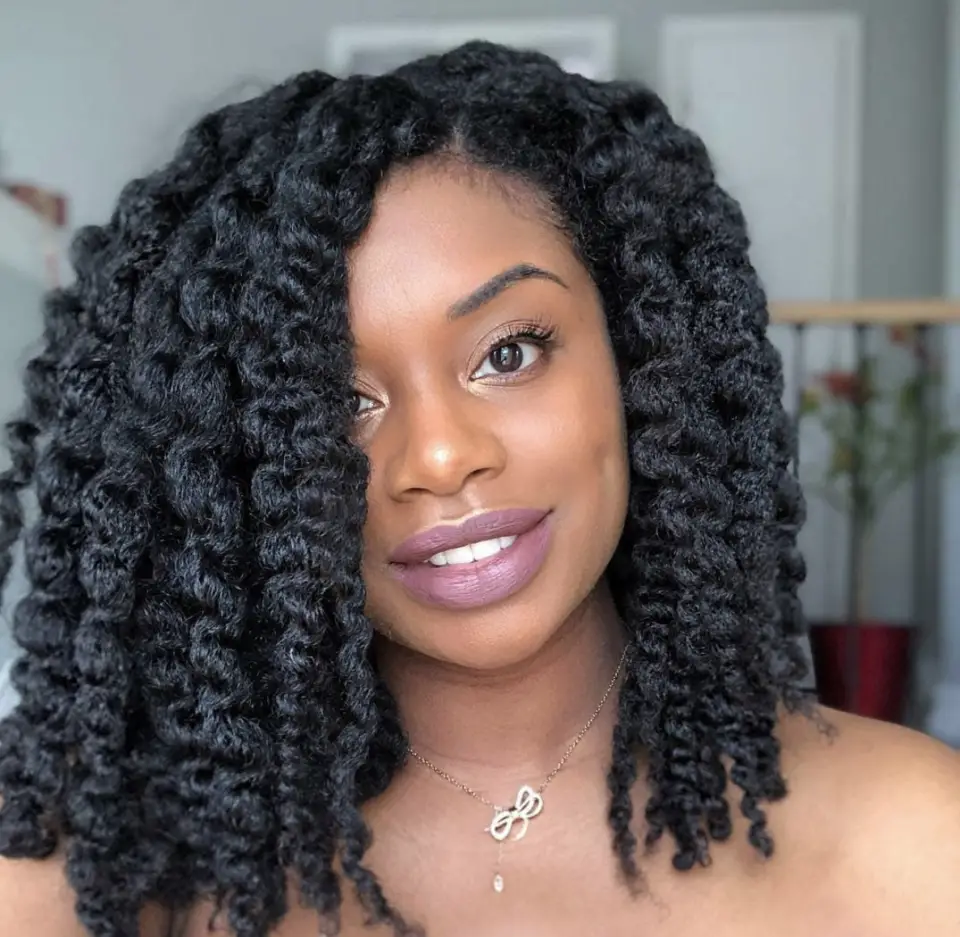
Table of Contents
Key Features of 4C Hair/Facts About 4C Hair
- Curl Pattern: Extremely tight coils with a zig-zag or “Z” shape, often lacking a defined curl pattern when dry.
- Texture: Ranges from fine to coarse; strands are densely packed, contributing to its voluminous appearance.
- Shrinkage: Significant shrinkage is common, making the hair appear shorter than its actual length.
- Fragility: Due to the tight curl pattern, 4C hair is more prone to dryness, tangling, and breakage.
Everything About 4C Hair: Caring for It
Proper care is essential to maintain the health and appearance of 4C hair:
- Moisturization: Regularly hydrate the hair using leave-in conditioners, oils, and creams. The LOC (Liquid, Oil, Cream) or LCO (Liquid, Cream, Oil) method can be effective for sealing in moisture.
- Cleansing: Use sulfate-free shampoos to cleanse the scalp without stripping natural oils. Co-washing (using conditioner to wash hair) can also be beneficial, but occasional shampooing is necessary to prevent buildup.
- Deep Conditioning: Incorporate deep conditioning treatments regularly to nourish and strengthen the hair.
- Detangling: Use wide-tooth combs or fingers to gently detangle hair, preferably when wet and conditioned, to minimize breakage.
- Protective Styling: Styles like braids, twists, and bantu knots can help protect the hair from environmental damage and reduce manipulation.
- Nighttime Care: Sleep on silk or satin pillowcases or use silk/satin hair wraps to reduce friction and prevent moisture loss.
- Trimming: Regular trims every 6–8 weeks help maintain healthy ends and prevent split ends.
Understanding your hair’s porosity (how it absorbs and retains moisture) can further tailor your hair care routine.
Products with good “slip” can aid in detangling, and incorporating steam treatments can enhance moisture absorption.
Despite its unique challenges, 4C hair is versatile and can be styled in various ways, including afros, twists, braids, and updos.
With consistent care and the right products, 4C hair can thrive, showcasing its natural beauty.
Neapolitan 4C Hair
Neapolitan 4C hair refers to 4C hair featuring a Neapolitan-inspired colour combination, usually brown, blonde/cream, and pink or reddish tones.
It is a colour concept rather than a recognized hair-texture classification.
The term Neapolitan comes from Neapolitan ice cream, traditionally made with three flavours: chocolate, vanilla, and strawberry.
In hair, those colours are translated into shades of brown, blonde or cream, and pink, rose, burgundy, or reddish tones.
Searches for “Neapolitan hair” show the term being used for this kind of multicoloured look, including on textured and 4C hair.
What Does Neapolitan 4C Hair Look Like?
On 4C hair, a Neapolitan colour scheme can be particularly striking because the tight coils create lots of texture for the different shades to interact with.
For example, someone might have:
- Chocolate brown or dark brown as the base
- Cream, honey blonde, or pale blonde sections
- Pink, strawberry, rose, or reddish sections
- Dark natural roots with the three colours appearing farther down the hair
- Three colours distributed in blocks, panels, highlights, or smaller sections
The colours don’t necessarily have to be exactly chocolate, vanilla, and strawberry.
“Neapolitan” is generally being used as a visual description rather than as a standardized hair-colour formula.
Neapolitan Colour vs. 4C Texture
This distinction is important.
4C describes the natural curl or coil pattern of the hair.
It is generally characterized by very tightly coiled or angular strands and considerable shrinkage.
Hair can also have more than one curl pattern on the same head.
Neapolitan describes the colour combination.
So someone could have:
4C natural hair + Neapolitan colour
rather than “Neapolitan” being another type of 4C hair.
You may also see people online using Neapolitan hair more loosely for hair that combines three contrasting colours, even when the colours don’t correspond perfectly to traditional Neapolitan ice cream.
Why the Look Works Particularly Well on 4C Hair
The dense, tightly coiled structure of 4C hair provides a lot of movement and texture.
When several colours are placed throughout it, the shades can appear and disappear as the hair is stretched, picked out, twisted, braided, or worn in an afro.
For instance, a Neapolitan colour scheme can look quite different in:
- A rounded afro – the colours blend visually across the coils.
- A stretched 4C style – the individual colour sections become easier to see.
- Twists – different colours can wind around one another.
- Cornrows – colour placement can become part of the geometric design.
- An updo – strategically placed colours can become much more prominent.
- Short 4C hair – small sections of pink, blonde and brown can create a particularly graphic effect.
Is Neapolitan 4C Hair Naturally Occurring?
The Neapolitan part is normally a colouring concept, not a natural hair category.
A person can naturally have different shades within their hair, particularly where sun exposure, age, previous chemical treatment, or natural variation affects the colour.
But deliberately combining chocolate, blonde and strawberry/pink shades to create the Neapolitan effect generally involves colouring the hair.
That is worth considering with 4C hair because lightening dark hair to blonde or other pale shades requires chemical processing.
Maintaining the condition of tightly coiled hair is therefore particularly important when pursuing a heavily coloured look.
Neapolitan 4C hair can be very creative
One of the interesting things about this trend is that you don’t have to colour the entire head.
A person with 4C hair could keep most of the hair its natural dark brown or black and introduce the Neapolitan colours through:
- Face-framing pieces
- Peekaboo sections
- Chunky highlights
- Streaks
- Ombre
- Alternating sections
- Coloured ends
- A single pink or strawberry section surrounded by brown and blonde
That can give you the Neapolitan reference without requiring three colours to cover the whole head.
Dermatologist 4C Hair
Dermatologists play an important role in understanding 4C hair, particularly when it comes to scalp health, hair breakage, thinning edges, hair loss and the effects of chemical treatments.
The main point is that 4C hair is a natural hair texture, not a medical condition.
It does not need to be changed or straightened to be healthy.
Dermatologists can help people with 4C hair understand how to care for their hair fibres, recognize scalp problems and identify conditions that may affect hair growth.
What Do Dermatologists Say About 4C Hair?
4C is a commonly used term for very tightly coiled hair.
Although dermatologists may discuss 4C hair in the context of textured-hair care, the term itself is not a medical diagnosis.
The American Academy of Dermatology (AAD) provides specific hair-care recommendations for Black people and people with curly or coily hair.
These recommendations focus on reducing damage, maintaining a healthy scalp and minimizing hair loss.
Some important points are:
- Tightly coiled hair can be more susceptible to dryness and breakage.
- Gentle detangling and conditioning can help reduce damage.
- Hairstyles that pull excessively on the hair can contribute to traction alopecia, a form of hair loss.
- Changes in hair density, texture or the scalp may warrant an examination by a dermatologist.
1. How Dermatologists Recommend Caring for 4C Hair
The following recommendations apply broadly to tightly coiled hair. Individual needs vary.
Cleanse the Scalp Regularly
The AAD’s guidance for Black hair recommends washing about once a week or every other week. Its broader guidance for curly and coily hair advises washing as needed, with at least every two to three weeks as a general recommendation.
The right interval depends on scalp oiliness, sweat, products and any scalp condition.
Apply shampoo mainly to the scalp and rinse thoroughly.
Condition After Shampooing
Conditioner helps reduce friction, improves manageability and makes detangling easier. Pay particular attention to the lengths and ends, which have experienced more wear than newly grown hair. A leave-in conditioner or detangler may also help reduce breakage.
Detangle gently
Work in manageable sections, using your fingers or a wide-tooth comb. For tightly coiled hair, the AAD recommends detangling when wet or damp, ideally with conditioner, and working from the ends toward the roots.
Avoid forcing a comb through knots.
Minimize Damaging Tension and Heat
Twists, braids, cornrows and locs can all be worn with 4C hair.
The concern is not the style itself but excessive tension, repeated stress and damaging practices.
Use a heat protectant when heat styling, limit high temperatures and change styles if you experience pain or scalp irritation.
2. Which Hair and Scalp Problems Can a Dermatologist Treat?
A dermatologist is a medical doctor specializing in skin, hair and nails. For someone with 4C hair, a consultation may be useful for several reasons.
Traction Alopecia
This type of hair loss results from repeated pulling on hair follicles.
It can affect the hairline and temples, especially when hairstyles are consistently too tight. Early assessment matters because prolonged traction can cause permanent hair loss.
Central Centrifugal Cicatricial Alopecia (CCCA)
CCCA is a scarring form of hair loss that often begins near the crown and may spread outward. It is particularly important to recognize in people of African ancestry.
A dermatologist can assess symptoms and determine whether testing or treatment is needed.
Dandruff, Itching and Scalp Inflammation
Flaking, persistent itching, redness or soreness can have several causes, including seborrhoeic dermatitis, eczema, psoriasis or reactions to hair products.
A dermatologist can distinguish between them and recommend appropriate treatment rather than relying on oils or cosmetic products alone.
Breakage and Thinning
Hair that repeatedly snaps may be damaged by friction, heat, chemical processing or rough detangling.
However, thinning can also result from a medical condition, medication, hormonal changes or nutritional deficiencies. A dermatologist can help distinguish shaft breakage from hair loss originating at the follicles.
Seek a dermatology assessment if you notice progressive thinning, bald patches, a widening area at the crown, a receding hairline, scalp pain or persistent inflammation.
Early assessment can make a difference, particularly with scarring hair-loss conditions.
3. Can a Dermatologist Help 4C Hair Grow Longer?
Yes, when there is a treatable problem affecting growth or causing excessive breakage.
Hair grows from follicles in the scalp. Cosmetic products cannot make follicles produce hair indefinitely faster than their natural growth cycle allows.
However, reducing breakage helps preserve the length that grows.
A dermatologist may:
- Identify and treat a scalp condition that interferes with healthy hair growth.
- Diagnose hair loss and recommend appropriate treatment.
- Investigate possible contributing factors, including iron deficiency or thyroid problems when indicated.
- Recommend changes to styling, chemical treatments and heat exposure.
- Assess whether a medication such as minoxidil is appropriate for a particular type of hair loss.
The treatment depends on the diagnosis. Minoxidil, for example, is not a universal treatment for every kind of hair loss, and scarring conditions may require different management.
4. Does Everyone With 4C Hair Need a Dermatologist?
No. If your scalp is comfortable, your hair is in good condition and you have no unusual shedding or thinning, you may simply need a suitable hair-care routine.
A dermatologist becomes more useful when there is a problem to diagnose, when ordinary changes in care have not helped, or when you want medical advice about hair loss.
If you are looking for a specialist, ask whether they have experience treating tightly coiled or Afro-textured hair and the hair-loss conditions that commonly affect it. This experience can be helpful because styling practices, chemical treatments and the natural structure of tightly coiled hair all matter when assessing damage.
The bottom line: Dermatologists do not need to change the natural 4C texture to improve its health. Their role is to help maintain scalp health, reduce avoidable damage and diagnose or treat problems that interfere with healthy hair growth.
Photo credits: Ziger Naturals