Choosing the right hair products can make a noticeable difference in how African hair looks, feels, and behaves.
From shampoos and conditioners to oils, creams, gels, relaxers, and treatments, each product can affect the hair in a different way.
This is why understanding different products for african hair and its effect can help you make better choices for your particular hair texture and styling routine.
African hair is not one uniform texture.
It can range from loose curls to tightly coiled strands, and it may be natural, relaxed, coloured, braided, locked, heat-styled, or chemically treated.
A product that leaves one person’s hair soft and manageable may make another person’s hair feel heavy, dry, coated, or difficult to style.
So, what do all these different products actually do to African hair? Let’s look at the main types of hair products, the effects they can have, and what to consider when choosing them.

Table of Contents
Different Products for African Hair and Its Effect #1. Shampoos
Shampoo’s main job is cleansing the scalp and hair, removing sweat, sebum, dirt and accumulated styling products.
For African hair, the effect depends greatly on how strongly the shampoo cleanses.
Strong Cleansing Shampoos
Shampoos containing stronger detergents can remove a lot of oil.
That can be useful when the scalp is oily or there is substantial product buildup, but excessive cleansing can leave tightly coiled hair feeling:
- dry
- rough
- tangled
- dull
- more difficult to detangle
- more susceptible to breakage
Sulfates are not automatically “bad,” but some sulfate detergents are considerably stronger than others.
Sodium lauryl sulfate, for example, has stronger cleansing action than sodium laureth sulfate.
Moisturising Shampoos
A shampoo formulated for dry or textured hair may contain milder cleansing agents and conditioning ingredients.
These can leave the hair more manageable after washing.
The bigger point is not simply sulfate-free versus sulfate-containing.
The entire formulation matters.
Dermatology guidance commonly recommends washing Black hair approximately weekly or every other week to help control buildup while avoiding unnecessary dryness.
Different Products for African Hair and Its Effect #2. Rinse-Out Conditioners
Conditioner is particularly useful for tightly coiled hair because it makes the hair easier to detangle and reduces friction between strands.
A good conditioner can make hair feel:
- softer
- smoother
- more slippery
- easier to comb
- less prone to tangling
- less prone to mechanical breakage
Conditioning after shampooing is one of the most useful basic practices for African-textured hair.
The ends deserve particular attention because they are the oldest and most fragile portions of the hair.
African Hair Care Products #3. Leave-in Conditioners and Moisturisers
Leave-ins are designed to remain on the hair rather than being rinsed away.
They can help with moisture retention, softness, detangling and manageability, particularly when the hair is dry or frequently manipulated.
Many products marketed specifically for natural African hair contain combinations of water, humectants, oils, fatty alcohols and conditioning agents.
However, adding more and more moisturiser does not necessarily make hair healthier.
Heavy application can produce buildup, leave the hair coated and make subsequent cleansing more difficult.
This is where individual hair behaviour becomes important. Some hair responds well to rich creams, while other hair becomes weighed down very quickly.
Traditonal Hair Care Method for African Hair #4. Hair oils
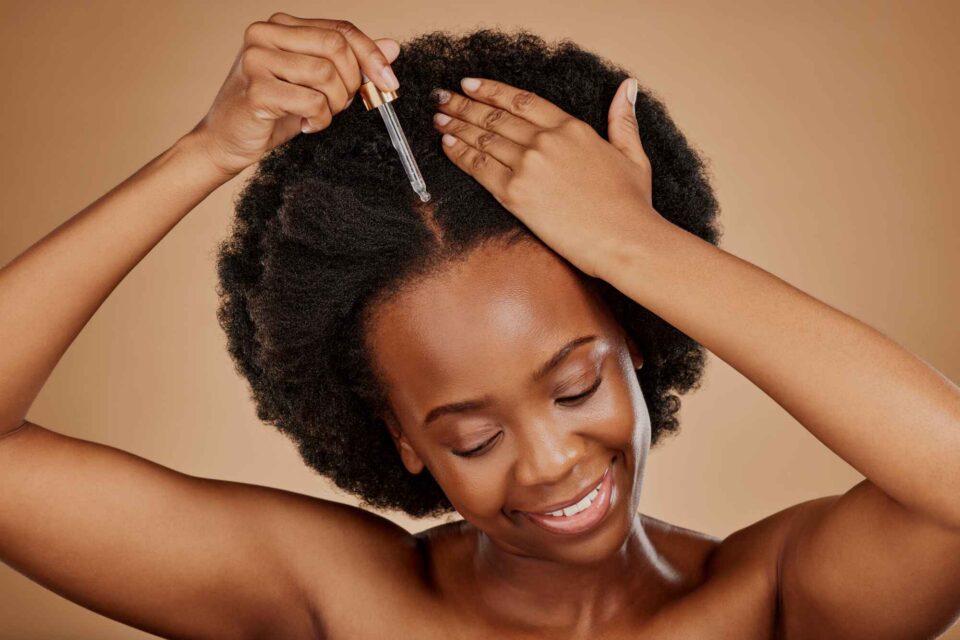
Oils are among the oldest and most widely used products for African hair.
Photo Credits: My Wedding, Èyí Dára