If you’ve ever stood in front of a wine shelf wondering about the difference between pinot grigio and sauvignon blanc, you’re not alone. These two popular dry white wines often get compared, but they offer noticeably different experiences in taste, aroma, and overall style.
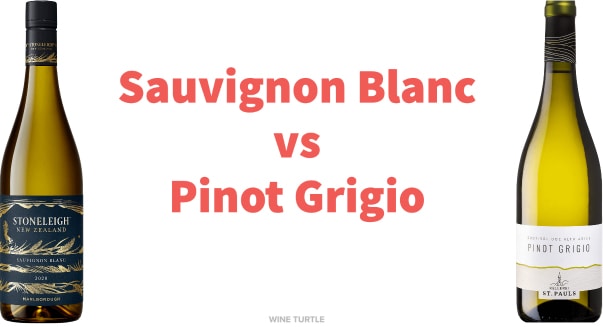
Table of Contents
Pinot Grigio White Wine
Pinot Grigio is usually the more subtle and easygoing of the two. It tends to be light-bodied with soft, clean flavors like green apple, pear, lemon, and sometimes a hint of almond. The aroma is generally mild, and the wine is designed to feel crisp and refreshing rather than intense. It often comes across as smooth and “quiet,” which is part of why it’s so widely used as an easy-drinking white wine.
Sauvignon Blanc is much more expressive. It is typically higher in acidity and more aromatic, meaning you notice it as soon as you smell it. The flavors often lean toward citrus like grapefruit and lime, but also include distinct “green” notes such as fresh-cut grass, gooseberry, or even green pepper. Compared to Pinot Grigio, it feels sharper, zippier, and more punchy on the palate.
Difference Between Pinot Grigio and Sauvignon Blanc: Mouthfeel
The difference in style also shows up in how they feel in the mouth. Pinot Grigio is usually smooth and light with a gentle finish. Sauvignon Blanc is more vibrant and tangy, often leaving a stronger, longer-lasting impression.
Food pairing follows that same contrast. Pinot Grigio works well with lighter, more neutral dishes like simple seafood, chicken, salads, and pasta with light sauces. Sauvignon Blanc stands up better to more strongly flavored foods, especially anything with acidity or herbal notes, like goat cheese, citrus dressings, or grilled vegetables.
In short, Pinot Grigio is about subtle freshness and simplicity, while Sauvignon Blanc is about brightness, aroma, and intensity.
Pinot Blanc vs Sauvignon Blanc
Pinot Blanc and Sauvignon Blanc are both dry white wines, but they sit on quite different ends of the flavour and aroma spectrum.
Pinot Blanc is generally the quieter, softer wine. It is medium to light-bodied, with a gentle, rounded character. The flavours tend to be subtle and smooth, often showing notes like green apple, pear, melon, and a light citrus edge. Some versions can have a slightly creamy or soft texture, especially if they’ve had a bit of oak aging, which adds hints of vanilla or toast. Overall, Pinot Blanc is about understated freshness rather than intensity.
Sauvignon Blanc, by contrast, is much more expressive and aromatic. It is usually high in acidity, which gives it a sharp, zesty character. The flavour profile is more vibrant and distinctive, often featuring lime, grapefruit, passion fruit, and green notes like grass or gooseberry. It tends to feel “louder” in the glass, with a crisp, mouth-watering finish that lingers.
The texture also differs. Pinot Blanc feels smoother and more rounded, sometimes even slightly creamy depending on the winemaking style. Sauvignon Blanc is leaner and more linear, with a bright, cutting edge that makes it feel very refreshing.
Food pairing reflects this difference. Pinot Blanc works well with gentle, delicate dishes like roasted chicken, light pasta sauces, soft cheeses, and mild seafood. Sauvignon Blanc handles more assertive flavours, pairing well with goat cheese, asparagus, salads with citrus dressings, and spicy or herbal dishes.
In simple terms, Pinot Blanc is soft, subtle, and easygoing, while Sauvignon Blanc is bright, punchy, and full of character.
Which Is Drier Pinot Grigio or Sauvignon Blanc?
Neither Pinot Grigio nor Sauvignon Blanc is automatically “drier” in terms of residual sugar, because both are typically made as dry wines.
The difference comes down to perception.
Sauvignon Blanc is usually higher in acidity, which makes it taste sharper and more mouth-watering. That strong acidity often makes it feel drier on the palate, even though the actual sugar level is similar to Pinot Grigio.
Pinot Grigio is also a dry wine, but it has softer acidity and a rounder texture.
Because it is less zippy, it can come across as slightly smoother and less “dry-tasting,” even though it isn’t sweeter.
So in practical terms:
Sauvignon Blanc usually tastes drier because of its higher acidity and sharper profile, while Pinot Grigio feels gentler and more neutral.
Pinot Grigio vs Sauvignon Blanc for Cooking
Pinot Grigio and Sauvignon Blanc can both be used for cooking, but they behave a bit differently in dishes because of their acidity and flavour profiles.
Pinot Grigio is the more neutral and gentle option. It has light citrus, pear, and apple notes without a strong aromatic punch. In cooking, that makes it versatile when you don’t want the wine to dominate the dish. It works especially well in cream-based sauces, light seafood dishes, risottos, and chicken recipes where you want subtle acidity and a clean background flavour. Because it is softer, it blends into the sauce rather than standing out.
Sauvignon Blanc is more assertive. Its higher acidity and distinctive herbal, citrus, and sometimes grassy notes can become a noticeable part of the final dish. This can be a benefit in recipes where you want brightness and lift, such as white wine sauces for fish, shellfish, or vegetable-based dishes like asparagus or green bean preparations. It also performs well in pan sauces where you want a sharper, more aromatic edge.
The key difference in cooking is impact. Pinot Grigio quietly supports a dish, adding structure and mild acidity without changing the flavour profile too much. Sauvignon Blanc actively shapes the flavour, adding brightness and a slightly tangy, herbal character.
One practical tip: always cook with a wine you would be willing to drink. If a Sauvignon Blanc tastes too grassy or intense for your palate, it will come through in the food as well.
Photo credits: WineTurtle