Tuareg women hair is more than a style — it’s a statement of identity, culture, and beauty. Among the Tuareg, the way women care for and adorn their hair carries deep symbolic meaning, reflecting social values, personal pride, and tradition.
Exploring these hair practices reveals a fascinating blend of artistry, cultural significance, and everyday life in the Sahara.
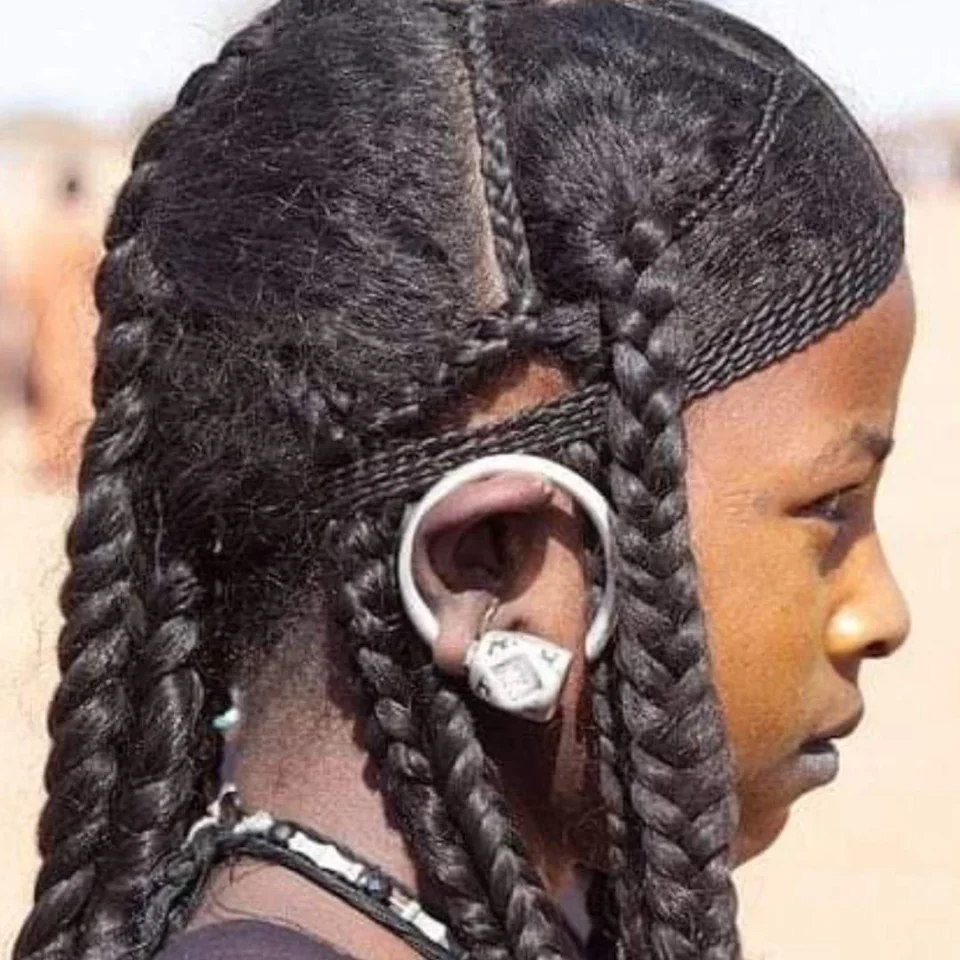
Table of Contents
Tuareg Women Hair Fact #1: Hair as a Sign of Beauty and Intelligence
For Tuareg women, hair is viewed as an external expression of intelligence and nobility. Long, well‑maintained hair is considered beautiful and important. Women traditionally take great care to keep their hair clean, shiny, and healthy, because neglected hair is viewed negatively. Elaborately braided hairstyles are prized and associated with good origins and cultural pride.
Natural Cleansing and Tonics
Tuareg women use resources from their environment to care for their hair. Natural extracts from desert plants — such as crushed leaves from black benniseed or other native plants — are used as cleansing agents.
They also use tonics derived from unusual but traditional sources, such as camel urine, which is believed to perfume the hair, make it glossy, help prevent dandruff, and even lighten it slightly.
Braiding and Styling
Before braiding, the hair is often coated with mixtures made of aromatic pomade and fine sand to enhance its luster.
After this preparation, it is intricately braided into styles that can be quite complex.
These braids are not just everyday hairstyles; they represent skill, cultural tradition, and personal care.
Social Meanings and Ceremonial Hair Care
Girls begin learning the art of hair braiding at puberty, which is a time when their hair becomes a marker of maturity and adulthood.
In special occasions such as weddings or ceremonies, women may go further by weaving jewelry or decorative elements into their braids to signify celebration and beauty.
Covering and Exposure in Daily Life
Unlike Tuareg men, who traditionally wear a tagelmust (a wrapped cloth that covers the head and often the face), women traditionally leave their faces uncovered and do not veil the hair constantly.
Their hair may be covered by a headdress or wrap mainly for protection from the sun or sand, but they enjoy displaying their braided hair as part of their cultural expression and identity.
Cultural context in broader beauty traditions
Tuareg women’s hair practices sit alongside other beauty rituals — such as skincare, henna decoration, and use of cosmetic pigments — that together form a broader aesthetic tradition. The care they take in hairstyling is part of a cultural emphasis on personal presentation and community norms of beauty.
In short, Tuareg women’s hair traditions combine practical care, symbolic meaning, and artistic braiding that reflect both personal and cultural values within Saharan life.
Tuareg hairstyles are a profound expression of cultural identity, social status, and regional heritage.
Among the Tuareg people, hair serves as a canvas for intricate designs and symbolic meanings, reflecting the rich tapestry of their traditions.
Turareg Hairstyles for Women
- Intricate Braids and Tresses: Tuareg women often fashion their hair into elaborate braids and tresses, which are artfully draped and folded over their heads. These styles are not merely aesthetic; they are deeply embedded in the Tuareg’s cultural identity, symbolizing various aspects such as marital status, social standing, and regional affiliation.
- Goffa: A distinctive hairstyle known as the Goffa is traditionally worn by married women, particularly in northern Mali and Niger. This style features braids interwoven with gold or silver adornments, known as Kurkuru, reflecting the perceived affluence of the wearer’s family. Historically, the Goffa was a symbol of prestige and costliness, limiting its use to a select few.
Photo Credits: Electrical_Maybe_394