READ ALSO: Akukulu Ethiopian Traditional Game & More
10 Traditional Games in Ethiopia (Including Segno-Maksegno & Biy Ethiopian Game)

Here are some Ethiopian traditional games:
- Gebeta – Gabata – Gebet’a (a mancala game)
- Lamlameta (another mancala game)
- Akukulu – Kukulu – Acoocoolu (a variant of hide-and-seek)
- Demo – Pepsi
- Segno Maksegno (a form of hopscotch)
- Awo Aydelem
- Kelebosh – Kilibosh – Handaie
- Arenguade
- Suzi
- Leba ena Police
- Teter
- Biy

READ ALSO: Zanzibar Best Places to Stay: Long Stays in Stone Town & More
Table of Contents
Traditional Games in Ethiopia: Bub Cultural Game
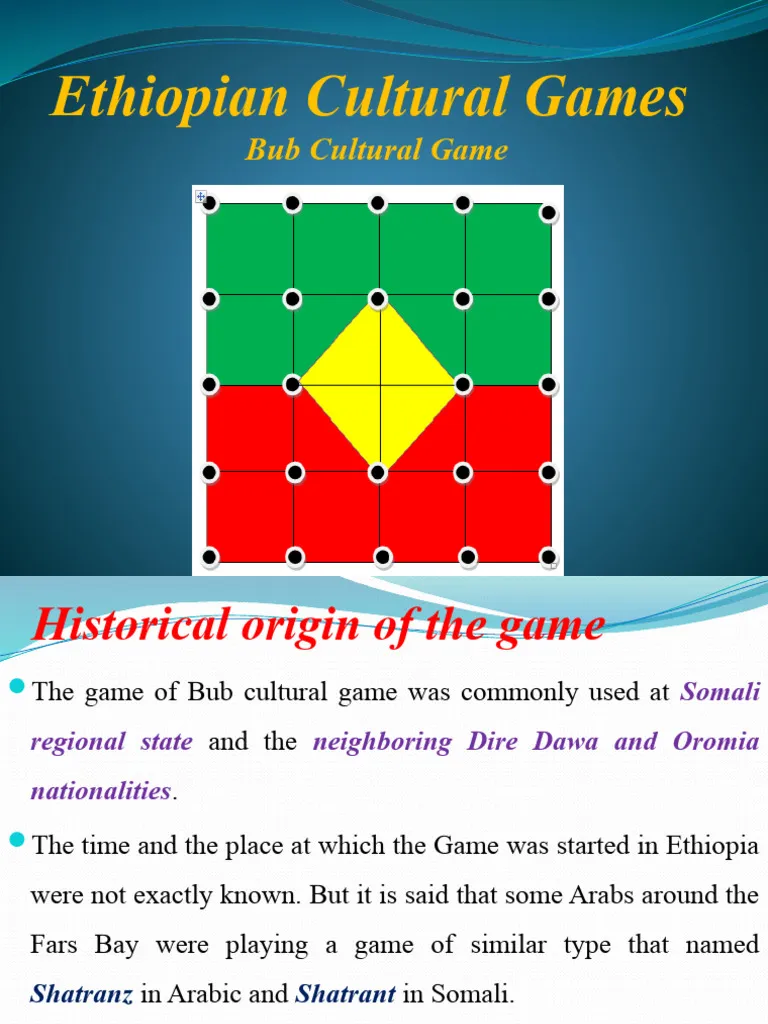
The Bub Cultural Game is a traditional Ethiopian game predominantly played in the Somali Regional State, as well as in neighboring areas such as Dire Dawa and Oromia.
While the exact origins of the game in Ethiopia are not well-documented, it is believed to have similarities with the Arabic game “Shatranz” and the Somali game “Shatrant.”
In Amharic, “Bub” refers to a tabular game, indicating its strategic nature.
Bub is a cultural game enjoyed by individuals of all ages and genders.
It is commonly played during social gatherings and cultural events, serving as both entertainment and a means of fostering community bonds.
The game is typically played on a rectangular board divided into two sections, each containing a series of pits or depressions.
Players take turns moving pieces or seeds between these pits according to specific rules, aiming to capture the opponent’s pieces or achieve a particular configuration.
The strategic depth of Bub requires players to anticipate their opponent’s moves and plan several steps ahead.
While detailed rules and strategies may vary regionally, Bub remains a cherished part of Ethiopia’s cultural heritage, reflecting the country’s rich traditions and communal values.
READ ALSO: Gena Ethiopian Traditional Game
Ethioan Gagome: Gebeta Game Rules
Gebeta (ገበጣ) is an Ethiopian traditional board game belonging to the mancala family. One important thing to know is that there isn’t just one universally fixed set of Gebeta rules.
Different Ethiopian regions and communities have played somewhat different versions. The commonly described version uses two rows of six holes, with four stones in each hole at the beginning, giving 48 stones in total.
Here is a straightforward explanation of the version most often described as Ethiopian Gebeta.
The Board and Starting Position
Gebeta is normally played by two people sitting opposite each other. The board has 12 small holes, six belonging to each player.
Each hole begins with four seeds, pebbles, or other small counters. Some boards also have larger storage areas at the ends for captured pieces.
Each player controls the six holes on their side.
The basic objective is to capture or claim more pieces and, in some versions, more completed “homes” than the other player. This is where Gebeta differs from some of the better-known mancala games.
How a turn works
A player chooses one of the occupied holes on their side and picks up all the stones in that hole.
They then sow the stones one at a time into successive holes around the board.
In the commonly described Gondar version, sowing proceeds anticlockwise.
For example, suppose you pick up four stones. You place:
- one stone in the next hole
- one in the following hole
- one in the next
- one in the next
If the last stone lands in a hole that already contains stones, you pick up all the stones in that hole and continue sowing them.
This is called relay sowing, and it is one of the features that makes Gebeta much more strategic than simply moving four stones around the board.
Amla Site:ChickAboutTown.com
If you would like to know what I have to share about amla on this site, click here.
Photo Credits: AllAboutEthio, Mustefa Mohamed