Plaited hair refers to hair that has been woven or interlaced into one or more braided sections. It is a popular way of styling hair across Africa and many other parts of the world. Plaited hairstyles range from simple three-strand plaits to elaborate cornrows, individual braids, intricate patterns and sophisticated updos.
The term plaited hair is particularly common in British English and is widely understood in countries such as Tanzania, Kenya, Uganda and South Africa. In American English, the more commonly used term is braided hair.
Plaiting can be done using a person’s natural hair alone or with additional hair extensions to create longer, thicker or more elaborate hairstyles. It can also be performed on straight, wavy, curly, coily, relaxed or natural hair.
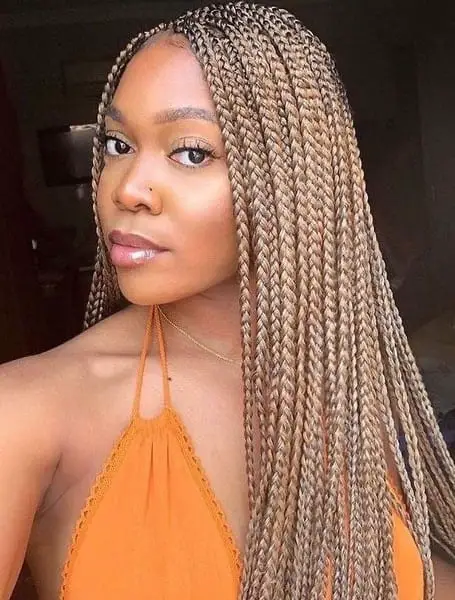
Table of Contents
1. What Is Plaited Hair?
Plaited hair is hair that has been divided into sections and woven together in a particular pattern.
The simplest form of plaiting involves dividing the hair into three sections and crossing the outer sections over one another in an alternating sequence. This produces the familiar three-strand plait.
However, plaiting is not limited to this basic technique. Depending on how the hair is sectioned and woven, it can produce numerous hairstyles.
Some examples include:
- Three-strand plaits.
- French plaits.
- Dutch braids.
- Cornrows.
- Box braids.
- Ghana braids.
- Fishtail braids.
- Crown braids.
- Feed-in braids.
- Micro braids.
Some plaited hairstyles hang freely from the scalp, while others are woven close to the scalp in carefully arranged patterns.
2. Different Types of Plaited Hair
There are many ways to plait hair. The technique, size of the sections, direction of the weaving and use of extensions all influence the final appearance.
Here are some popular types.
Three-Strand Plaits
25 Braided Hairstyles For Every Hair Length And Event
How to Style Wavy Hair: Tips & Tricks
Teaching Men How to Braid Hair : 6 Steps – Instructables
12
Three-strand plaits are among the simplest and most recognisable forms of plaited hair.
The hair is divided into three sections, which are crossed over one another repeatedly until the desired length is reached.
This technique can be used to create one long plait, two side plaits or several smaller plaits.
Three-strand plaits can be worn by children and adults and work on different hair textures and lengths.
French Plaits
French plaits are created by incorporating additional hair into the braid as it progresses down the head.
Rather than starting with all the hair in three sections and leaving the braid hanging freely, the stylist gradually gathers more hair from either side.
The result is a braid that sits close to the head.
French plaits are popular for everyday hairstyles, school hairstyles, sporting activities and occasions where someone wants their hair neatly arranged.
Dutch Braids
Dutch braids are similar to French braids, but the sections are crossed underneath one another rather than over the middle section.
This creates a raised braid that appears to sit on top of the hair.
Two Dutch braids are particularly popular. They can be worn as separate plaits or joined together at the back of the head.
Cornrows
Cornrows are a well-known form of African hair braiding in which hair is woven close to the scalp.
They can be arranged in straight lines, curved patterns, zigzags, geometric designs or more elaborate arrangements.
Cornrows can be made using natural hair alone or with extensions.
Some popular variations include straight-back cornrows, Ghana braids, stitch braids and feed-in cornrows.
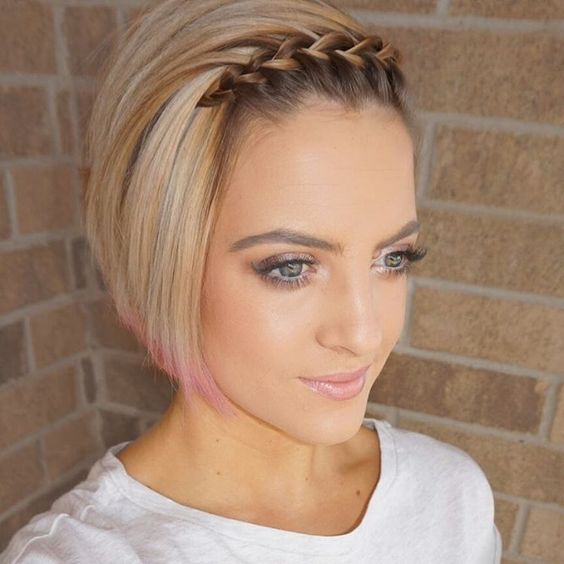
Photo Credits: The TrendSpotter