Have you ever wondered about the male barbers styling women’s hair Ethiopia tradition?
At first glance, a man working on a woman’s hair might seem like a modern salon practice, but Ethiopia has a long and fascinating history of hairstyling that crosses generations, communities, and, in some cases, gender roles.
From intricate braids and traditional hairstyles to today’s professional salons, hair has played an important role in expressing identity, age, beauty, and cultural belonging.
Understanding where male hairstylists fit into this picture opens up an interesting look at how Ethiopian hair traditions have evolved while continuing to influence the way women wear and care for their hair today.
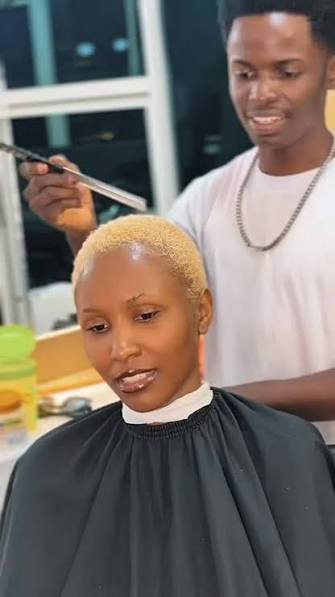
Table of Contents
Men Have Long Been Involved in Ethiopian Hairstyling
It would be misleading to assume that hair work in Ethiopia has always been exclusively women’s work.
Traditional Ethiopian hairstyles include examples worn by men as well as women.
Historical depictions of Ethiopian rulers such as Emperor Tewodros II and Emperor Yohannes IV show men wearing braided hair.
There are also traditions in which men’s grooming requires considerable skill.
Among the Karrayyu Oromo, for example, traditional men’s hairstyles could be carefully shaped and maintained, with hair carrying information about a man’s connection to his community.
So the idea of a man working with hair is not inherently foreign to Ethiopian tradition.
Why Are Female Hair Stylists Men in Ethiopia?
This is where the distinction between traditional hairstyling and modern barbering/salon work becomes important.
Women’s hairstyling has traditionally been strongly associated with women, particularly because braiding could be a communal activity in which women and girls learned techniques from one another. Shuruba, for example, is a traditional Ethiopian braiding practice associated particularly with girls and women.
Today, however, men also participate in Shuruba as a legitimate income-generating activity.
That means a male hairstylist working on women’s hair should not automatically be interpreted as abandoning an Ethiopian tradition.
Rather, it reflects the fact that the person performing the hair work and the person wearing the hairstyle do not necessarily have to be the same gender.
Modern Ethiopian vocational training also explicitly treats women’s hairstyling as a professional skill.
Training materials cover techniques such as blow-drying, straightening, smoothing, curling and creating plaits, pleats, rolls and other women’s hairstyles.
“Barber” Can Be a Slightly Misleading Term
In contemporary usage, a barber is often associated primarily with men’s haircuts, fades, shaving and beard grooming. A stylist or hairdresser may work with women’s hair, including cutting, blow-drying, colouring, braiding and setting.
In Ethiopia, however, the boundaries can overlap.
Research on Ethiopian barbers in East Gojjam, for example, found that the barber workforce was predominantly male but also included women.
A man who styles women’s hair might therefore be better described as a hairdresser, hairstylist, braider or salon worker, depending on exactly what he is doing.
Ethiopia’s Traditions Make the Subject Especially Interesting
One reason this subject can be misunderstood is that Ethiopian hair culture cannot really be reduced to a single “Ethiopian hairstyle.”
Ethiopia contains many different ethnic communities, and hairstyles have historically served different purposes in different societies. In some communities, a hairstyle could communicate whether a person was unmarried, married, at a particular stage of life, or participating in a particular cultural tradition.
For example, among the Borana Oromo, a particular hairstyle called gammee historically had significance for both boys and unmarried girls. Its meaning was connected to age, gender and marital status within the Gadaa social system.
That makes it important not to take a photograph of an Ethiopian hairstylist and assume that the hairstyle being created represents a single nationwide Ethiopian tradition.
Male braiders are not necessarily a modern invention
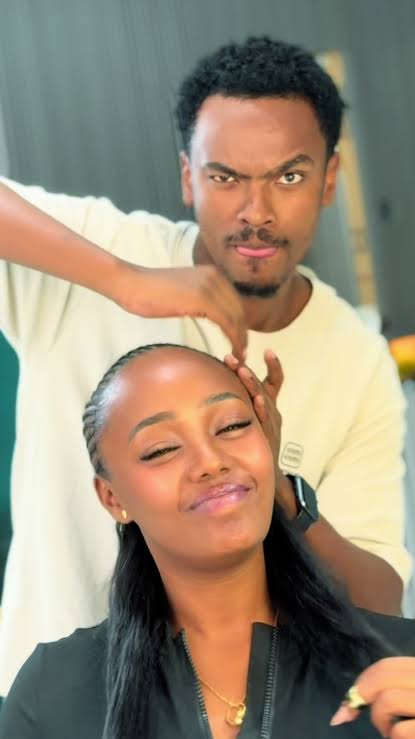
There is also evidence that men participating in braiding is not simply a recent Western influence.
Traditional Ethiopian hair history includes male braided hairstyles, while contemporary accounts document men participating in women’s braiding as paid work.
UNDP’s recent account of Shuruba specifically notes that, although girls and women commonly learn the practice, some men also engage in it as a legitimate business.
So if you encounter the phrase “male barbers styling women’s hair Ethiopia tradition,” there are really two related ideas behind it:
- Ethiopia has longstanding male hairstyling traditions.
- Men can also work professionally on women’s hair, including traditional braiding.
The second point does not necessarily mean that male hairstylists historically dominated women’s hair care. Women’s communal knowledge and women’s participation in braiding remain an important part of Ethiopian hair culture.
The Social Setting Matters
Traditional hairdressing could also be a social experience rather than simply a commercial service.
Women and girls could spend time together while braiding and caring for one another’s hair, allowing techniques and cultural knowledge to pass between generations.
A modern salon changes that relationship.
A customer may now pay a professional—male or female—to reproduce a traditional hairstyle, combine it with contemporary techniques, or create an entirely modern look.
That is one of the interesting developments in Ethiopian hair culture: the technique can remain culturally recognizable even when the setting, practitioner and purpose have changed.
Male Barbers and Ethiopian Women’s Hair Today
Today, an Ethiopian woman may choose a male hairstylist for exactly the same practical reasons she might choose a female one: skill, experience, creativity, availability or personal preference.
And Ethiopian hair professionals may work across a wide range of styles, from traditional braids and Shuruba-inspired arrangements to contemporary cuts, blowouts, extensions, colouring and other salon techniques.
So there is no sound basis for treating a man styling a woman’s hair in Ethiopia as inherently un-Ethiopian.
What is more historically specific is which hairstyle he is creating, which Ethiopian community it belongs to, what the hairstyle traditionally signifies, and whether the setting is a traditional communal practice or a modern commercial salon.
Harmmar Ethopia Hair
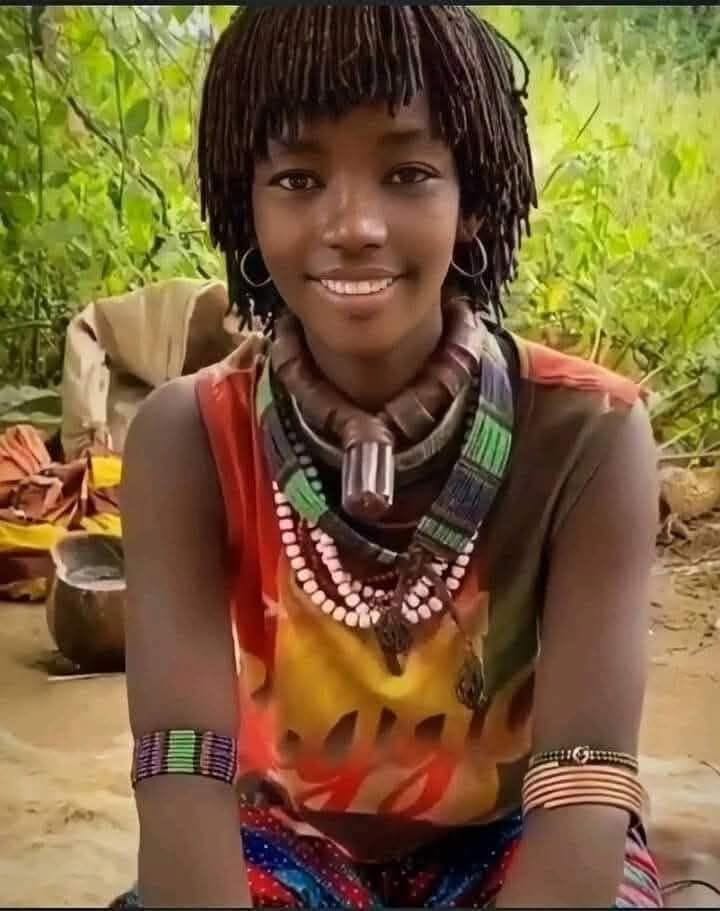
When people talk about Ethiopian hair, they are often referring to the distinctive natural hair textures, traditional hairstyles, and hair-care practices associated with Ethiopia.
But there isn’t one single “Ethiopian hair type.” Ethiopia is extremely ethnically diverse, and hair texture and styling traditions vary considerably between communities and regions.
READ ALSO: Is Black Hair Natural? Is There Such Thing as Natural Black Hair?
What Does Ethiopian Hair Look Like?
Ethiopian hair can range from loose curls and waves to tightly coiled hair. Describing all Ethiopian hair as one particular curl type would be misleading. Even within the same ethnic group, people can have noticeably different textures.
The traditional styling culture is particularly interesting because hair has historically been much more than a beauty feature. Hairstyles could communicate things such as age, marital status, ethnic identity, religion, social position and participation in particular ceremonies.
Traditional Ethiopian Hairstyles
The Name of the Etiopian Traditional Hair Styles #1: Shuruba
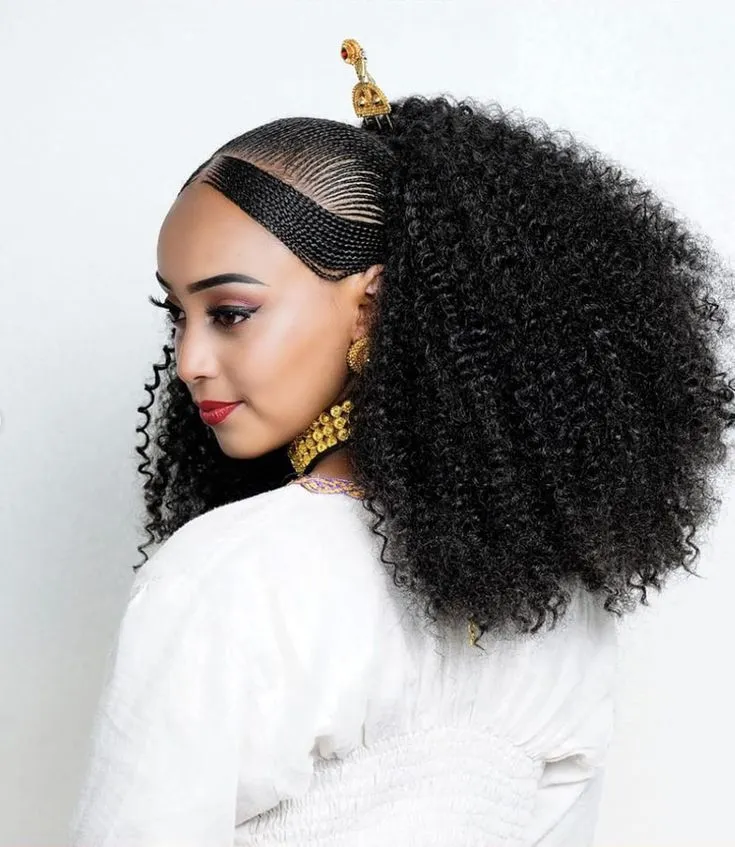
One of the best-known Ethiopian hairstyles is Shuruba (Sheruba). It involves numerous small braids, often arranged close to the scalp.
A description of traditional northern Ethiopian hairstyles specifically identifies Sheruba as a style made up of dozens of plaits.
Ethip]Opian Hairstyles #2: Albaso Braids
Albaso braids are another hairstyle strongly associated with Habesha hair traditions.
The style is commonly characterized by several prominent cornrows at the front, sometimes alternating thicker and thinner rows, with fuller or curly hair toward the back.
Other traditional styles include:
- Eshem – a large, thick cornrow-style braid extending from the front toward the back.
- Mertu – a rope-like braided style associated particularly with Oromo communities.
- Gufta/Goferay – a fuller, rounded Afro-style hairstyle.
- Threaded hairstyles – hair can be stretched and shaped using thread, a technique found in broader African hair traditions as well.
And there are many more. Importantly, “Ethiopian hairstyle” shouldn’t be treated as synonymous with Habesha hairstyle. Ethiopia contains many ethnic communities with their own grooming traditions, including Oromo, Afar, Somali, Guji and others. Historical and contemporary documentation shows considerable regional variation.
Ethiopian hair and the use of butter or oils
Traditional Ethiopian hair care can be quite different from the oil-heavy routines commonly associated with some other African hair cultures.
In some Ethiopian communities, butter or ghee has traditionally been used on the hair and scalp.
It can give the hair a glossy, conditioned appearance and has also been incorporated into particular hairstyles.
Some communities have also used clay, ochre and other natural substances in hair grooming and styling.
These practices aren’t universal among Ethiopians, however.
Ethiopian Braids Are Particularly Distinctive
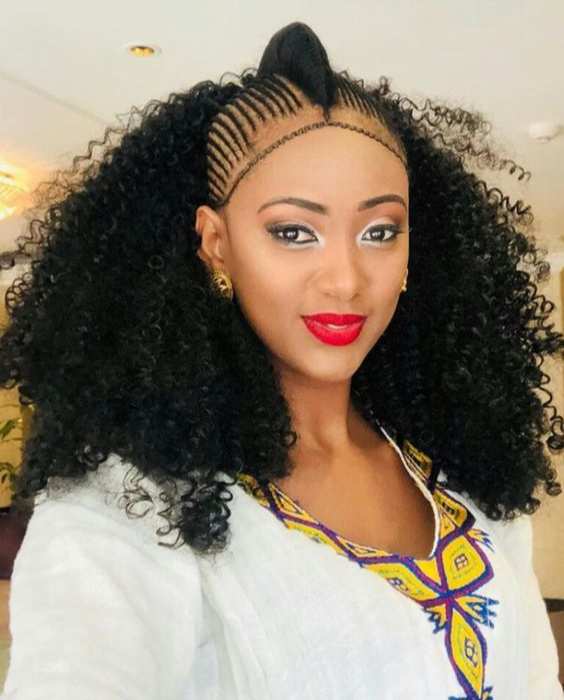
Ethiopian braids can look quite different from the box braids, knotless braids and Ghana braids that dominate contemporary African-American and African salon culture. Traditional Ethiopian styles often emphasize fine, precise braiding, geometric arrangements and sculptural shapes.
The artistry can be remarkable. Historical documentation of Ethiopian hairstyles includes elaborate braided patterns worn by both women and men.
Hairstyles among Ethiopian communities have even been treated as an important form of visual cultural heritage.
Do Ethiopian Men Braid Their Hair?
Yes.
Braiding is not exclusively a women’s hairstyle tradition in Ethiopia.
Historical depictions show Ethiopian men wearing braided hairstyles, including prominent figures such as Emperor Tewodros II and Emperor Yohannes IV.
Different Ethiopian communities have also had their own men’s hairstyles involving braiding, shaping, shaving and other forms of hair decoration.
Ethiopian Hair Today
Modern Ethiopian hair culture combines traditional styles with contemporary African and global trends.
In cities such as Addis Ababa, you can see natural afros, short cuts, braids, extensions, relaxed or straightened hair, wigs and modern salon styles alongside traditional Ethiopian looks.
This means that “Ethiopian hair” today can mean several different things:
- The natural hair textures common among Ethiopians.
- Traditional Ethiopian hairstyles.
- Habesha hairstyles such as Shuruba and Albaso.
- Modern Ethiopian salon hairstyles.
- Hair-care practices associated with Ethiopian communities.
So if you’re looking at the subject from a hair/beauty perspective, the most interesting distinction is between Ethiopian natural hair texture and traditional Ethiopian hairstyles.
They aren’t the same thing.
A woman can have naturally Ethiopian hair and wear a completely modern hairstyle, just as someone with another African hair background can recreate an Ethiopian-inspired braid style.
ሳሎነ ካውያ
ሳሎነ ካውያ የሚለው ቃል በመደበኛ አማርኛ የታወቀ ሐረግ ወይም የፀጉር አሠራር ስም አይመስልም።
በአማርኛ ፊደል አነባበቡ በግምት “ሳሎነ ካውያ” (Salone Kawiya/Kawya) ነው።
ካውያ (ካውያ) ብቻውን የልብስ ማበጠሪያ/ማጠጫ ብረት፣ ማለትም iron ማለት ሊችል ይችላል። ነገር ግን “ሳሎነ ካውያ” በአንድነት ሲነበብ “የልብስ ብረት” የሚል ትርጉም አይሰጥም።
Ethiopian Fulani braids are a traditional hairstyle that blends the techniques of the Fulani people of West Africa with styles common in Ethiopia.
The Fulani people are known for their intricate and symbolic braiding patterns, which often include cornrows braided close to the scalp, long hanging braids, and adornments such as beads and cowrie shells.
In the Ethiopian context, these braids often incorporate larger, sculptural styles seen in regions like Tigray, combined with the signature cornrows and central part that characterize Fulani braids.
This fusion creates a hairstyle that is both artistic and deeply rooted in African heritage.
Key Features of Ethiopian Fulani Braids
The braids are usually symmetrical and can feature a mix of thin and thick plaits.
Adornments are often added for both cultural and decorative purposes, and styles may vary depending on the occasion or personal preference.
These braids are not just aesthetic—they often signify cultural identity, marital status, or social rank.
With proper care, such as regular moisturizing and nightly protection, Ethiopian Fulani braids can last between three to six weeks.
It’s important to avoid braiding too tightly to prevent tension on the scalp and hairline.
As the style has gained popularity globally, many people wear these braids as a way to connect with or celebrate African heritage.
However, it’s important to recognize their cultural significance and to approach them with respect.
site:chickabouttown.com
If you would like to know what this term means, click here.
Photo credits: Clipkulture, Pinterest, Red.Beauty.Salon, Traveling The World ✈️