Thick braids are braided hairstyles created with larger sections of hair, producing bold, chunky plaits that stand out.
They can be made using only natural hair if the hair is dense enough, or with extensions to increase thickness, length, or both.
Thick braids are popular throughout Africa and the African diaspora, where they have long been appreciated for their beauty, practicality, and cultural significance.
Today, they are also embraced worldwide as a fashionable hairstyle for people with a variety of hair textures.

READ ALSO: On Braids
Table of Contents
The Benefits of Thick Braids Hairstyles
One of the biggest appeals of thick braids is that they make a strong visual statement while generally taking less time to install than very small braids.
Because fewer sections are needed, the braiding process is often quicker, although the exact time depends on the style, length, and whether extensions are used.
There are many ways to wear thick braids, including:
Thick Hair Braids Style #1: Large Box Braids
Individual braids created from square or rectangular sections of hair. They can be worn loose, in buns, ponytails, or half-up styles.
Chunky Braids Hairstyles #2: Jumbo Knotless Braids
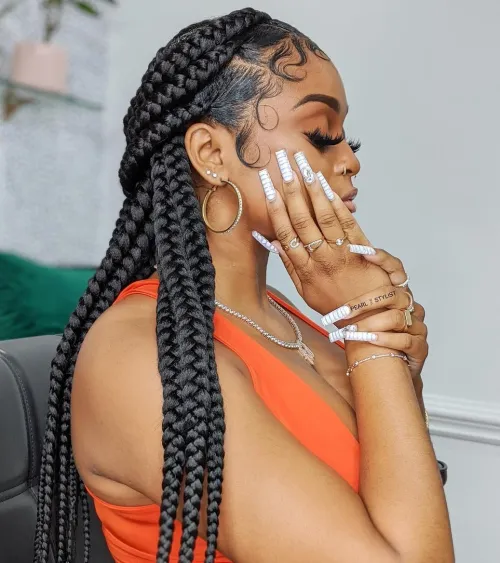
Similar to large box braids but with extensions fed in gradually, creating a flatter, more natural-looking base with less tension.
Thick Plaits Style #3: Thick Cornrows
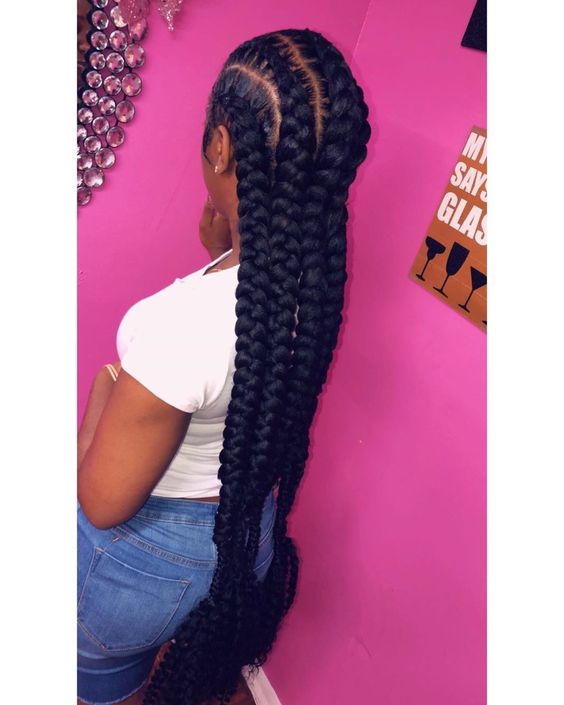
Broad braids woven close to the scalp in straight lines, curves, zigzags, or intricate geometric patterns.
- Fulani-inspired styles: Thick braids combined with neat cornrows, often decorated with beads, cuffs, or rings.
- Goddess braids: Oversized scalp braids that are ideal for elegant updos and special occasions.
- Chunky two-strand twists: While technically twists rather than braids, they create a similarly bold appearance and are often chosen by people who prefer a lighter style.
Many people choose thick braids because they are versatile.
They can suit casual everyday wear, professional settings, weddings, festivals, and formal events. Accessories such as wooden beads, metallic cuffs, shells, colorful thread, or ribbons can personalize the look without changing the basic braid pattern.
When installed with appropriate tension, thick braids can also reduce the need for daily styling.
They help keep hair organized, minimize tangling, and limit frequent brushing or heat styling. However, not every braided style is automatically beneficial for hair.
Braids that are installed too tightly or made excessively heavy with extensions can place stress on the scalp and hairline, potentially leading to breakage or traction alopecia over time.
Proper maintenance helps thick braids look their best and keeps the scalp healthy. A good routine includes:
- Cleansing the scalp regularly with a gentle shampoo.
- Moisturizing the scalp and natural hair with lightweight products.
- Sleeping with a satin bonnet or on a satin pillowcase to reduce friction.
- Avoiding excessive pulling when styling the braids into high ponytails or buns.
- Removing the braids when they become excessively frizzy, heavy, or begin causing discomfort.
The ideal braid size depends on your hair’s density and condition.
Very fine or fragile hair may benefit from medium-sized braids that distribute weight more evenly, while people with thicker, denser hair can often comfortably wear larger, chunkier braids. An experienced braider should always adjust the braid size and extension weight to suit the individual’s natural hair rather than following a one-size-fits-all approach.
Whether worn as jumbo box braids, bold cornrows, goddess braids, or another variation, thick braids remain a timeless hairstyle.
Their striking appearance, styling flexibility, and relatively low day-to-day maintenance make them a favorite choice for anyone looking for a hairstyle that is both practical and eye-catching.
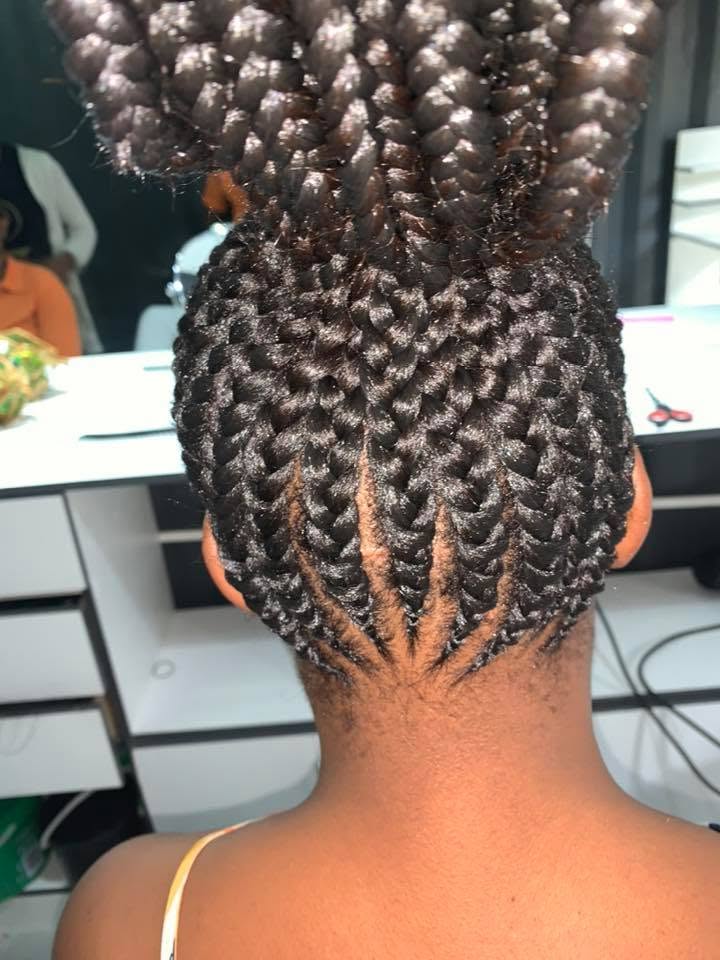
Thick Straight Up Hairstyles
site:chickabouttown.com
If you would like to know what this term means, click here.
Photo Credits: Nigerian Braids Gang, @Hairweave_Kia, @PearlTheStylist_, Kaygie’s Kids Hairstyles Sandton