If you’ve ever wondered about taking the scissors into your own hands, learning how to cut your own hair into a pixie cut for women can be a game-changer.
While it may seem intimidating at first, with the right tools, careful planning, and a bit of patience, you can achieve a stylish, manageable cut from the comfort of your own home.
Here’s a detailed, step‑by‑step guide to help you do it safely and confidently.
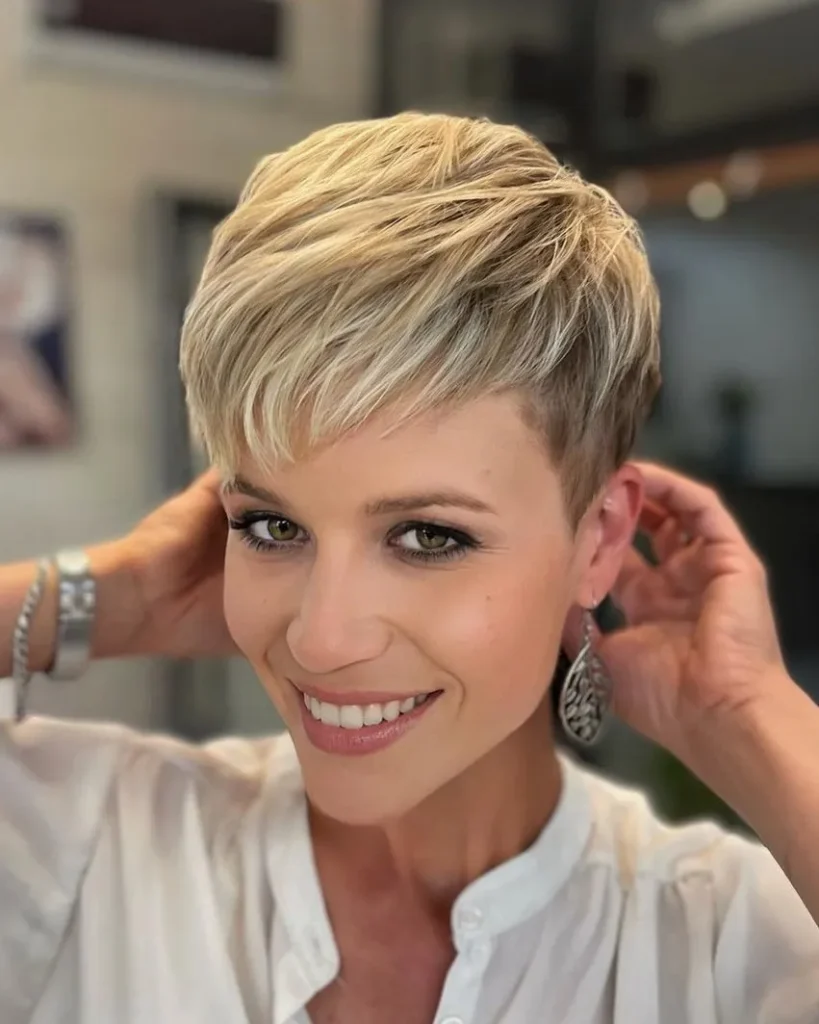
Table of Contents
Tools You’ll Need
- Haircutting scissors (not regular household scissors — they make a big difference in precision)
- Clippers with guards (optional, but useful for the back and sides)
- Comb and sectioning clips to hold hair in place
- Two mirrors so you can see the back of your head
- A cape or towel to keep hair off your clothes
Before You Start
Pixie cuts are short and don’t leave much room for error, so consider watching a detailed video tutorial that shows each step clearly before you begin. Practising on longer hair first or on someone else’s hair (or even a mannequin head) can help you learn the angles and motion. Cutting a pixie is easier if your hair is already somewhat short — going from very long to pixie in one go is harder to do well without professional experience.
Self Hair Cutting Tutorial Woman: How to Cut Your Own Pixie Cut at Home
How to Cut Pixie Cut at Home Step #1: Wash and Detangle Your Hair
Start with clean, dry or slightly damp hair, combed through so there are no knots.
This gives you a smooth foundation for cutting.
How to Cut Your Own Pixie Cut Hairstyle Step 2: Section Your Hair
Use clips to separate the top section from the sides and back.
A common approach is to make a horseshoe‑shaped parting from temple to temple around the crown, clipping the top hair up out of the way.
How to Do a Self Cut Pixie Cut Step 3: Start with the back and sides
If you’re using clippers, attach a guard that’s longer than you think you want the final length.
Run the clippers evenly up from the nape to the transition line you made.
If you’re doing it with scissors instead, gently trim the hair little by little, combing down and cutting a bit at a time.
Show.How to Cut Your Own Short Pixie Cut Step 4: Work on the top
Release the top section of hair.
Decide how much length you want to keep on top — it’s usually longer than the back so you can shape the style.
Comb small sections straight up and trim across with scissors.
Cutting vertically with the tips of your scissors (point cutting) gives softer, more blended layers rather than a harsh straight line.
5: Blend Layers
After you’ve cut the main lengths, use thinning shears or point cutting to soften transitions between layers so the hair doesn’t look blocky.
This makes the style look more natural and polished.
6. Check Symmetry and Refine
Use your two mirrors to check the back and sides for evenness.
Trim carefully until both sides match and the silhouette looks balanced from all angles.
How to Cut the Back of Your Own Hair Female
Cutting the back of your own hair is one of the trickiest parts of doing a DIY haircut because you can’t easily see it and it’s easy to trim unevenly. But if you take it slow, use the right tools, and follow a clear method, you can manage basic trims or length adjustments on your own. Here’s how to approach it step-by-step:
How to Cut Your Own Hair for Women Tip #1: Set Up So You Can See the Back Clearly
Position yourself in front of a large mirror with good lighting. You’ll also need a reliable handheld mirror so you can angle it to see the back of your head while looking in the main mirror.
Some people use two mirrors (one in front, one behind) for the best view.
A three-way mirror or a handheld mirror plus a wall mirror works well. This visual setup is essential for checking symmetry as you go.
2. Gather the right tools
Have these ready before you begin:
- Sharp hair-cutting shears (not kitchen scissors).
- A comb for detangling and sectioning.
- Hair clips or ties to hold sections out of the way.
- A handheld mirror to see the back from different angles. Starting with clean, dry, detangled hair makes trimming easier and helps you judge the final length more accurately.
3. Section Your Hair
Divide your hair into manageable sections so you’re not trying to cut all of it at once. For the back, you can clip the top and sides up and focus on the lower back section first.
If your hair is long, pulling the hair forward into a ponytail or holding it between your fingers as a guide can simplify trimming the ends. A wide, even section makes it easier to see what you’re doing versus randomly snipping where you think you need to.
4. Work in Small Increments
Start by trimming very small amounts at a time. If you pull the back strands forward over your fingers, cut tiny bits first.
You can always take more off later but you can’t put hair back once it’s cut. This is especially important when you’re working on the back where mistakes are hard to see until it’s too late.
5. Use Point-Cutting for Softer Ends
Instead of cutting straight across horizontally (which makes a very blunt line), angle the scissors vertically and make tiny snips into the ends (point-cutting).
This gives the finish a softer look and makes small mistakes less noticeable.
6. Check Symmetry Often
After cutting a small section, shift the handheld mirror so you can check how it actually looks in the back. Compare left and right frequently to catch unevenness early.
Make tiny adjustments where needed.
7. Simple Methods That Help
Some people use a pony tail method for a basic trim: gather the back hair into a low ponytail at the nape of your neck, hold it between your fingers, and trim what’s sticking out.
This gives you a clear, concentrated area to cut and makes it easier to judge how much you’re removing. Tilting your head slightly forward or back changes the shape you’ll get, so be mindful of the angle as you work.
8. Be Patient and Conservative
Only trim what you need — removing split ends or tidying up length. Trying a big style change, heavy layering, or drastic shape change on the back by yourself is much harder and can easily go wrong. If you’re unsure or it gets too confusing, stopping or asking someone to help might save you time and frustration.
How to Cut My Very Long Hair at Home Myself
Cutting very long hair at home by yourself can feel intimidating, especially when you want it to look even and healthy.
It is possible to do safely if you take it slowly, stay organized, and use techniques that help you see what you’re doing and control how much you remove.
Here’s a clear, step-by-step way to approach this:
1. Prepare Your Space and Tools
Find good lighting and mirrors. A well-lit bathroom or bedroom with a full-length mirror helps you see your hair from different angles.
If possible use a handheld mirror to check the back or side views.
- Use proper hair-cutting scissors. Sharp shears made for hair give cleaner, straighter cuts. Kitchen or craft scissors can fray ends and make the style look uneven.
- Have a comb and clips ready. These help separate and manage sections as you cut.
2. Decide What You’re Doing
Are you trimming split ends and maintaining length?
Or do you want to shorten your hair or add layers?
- For a trim of long hair (maintaining overall length), you’ll remove just a little from the very ends to keep them healthy.
- For reducing length or adding layers, the method changes slightly in how you section and guide the hair.
3. Work with Dry, Detangled Hair
Dry hair shows the way it naturally falls and helps you avoid cutting more than you think.
Long hair shrinks as it dries, so cutting on dry hair gives a more accurate sense of the finished length.
Brush or comb through all tangles first so sections lie flat and are easier to manage.
4. Section Your Hair
Breaking the hair into smaller sections makes it easier to handle such heavy length:
- Split down the center from forehead to nape. Clip one side out of the way.
- Divide each half horizontally into top, middle, and bottom sections.
- Work on one section at a time so you’re not overwhelmed by the total length.
5. Trimming vs. Cutting for Shape
For a Simple Trim
- Take a small section of the bottom part of the hair and hold it gently between your fingers.
- Cut just a tiny bit at the ends — start with less than you think you need.
- Many people twist a strand slightly and snip off stray split ends that stick out. This technique removes damage without reducing overall length much.
For a Balanced Haircut Shape
- Once you’ve trimmed the base length in the bottom section, release the next section above it.
- Compare lengths by pulling hair forward over your fingers and snipping only the tiniest amount if you want a gentle shape.
- For a subtle texture (so it doesn’t look blunt), point-cut the ends: hold scissors vertically and snip lightly at the ends so the line looks softer rather than straight across.
Photo credits: Lace Hair Studio NY