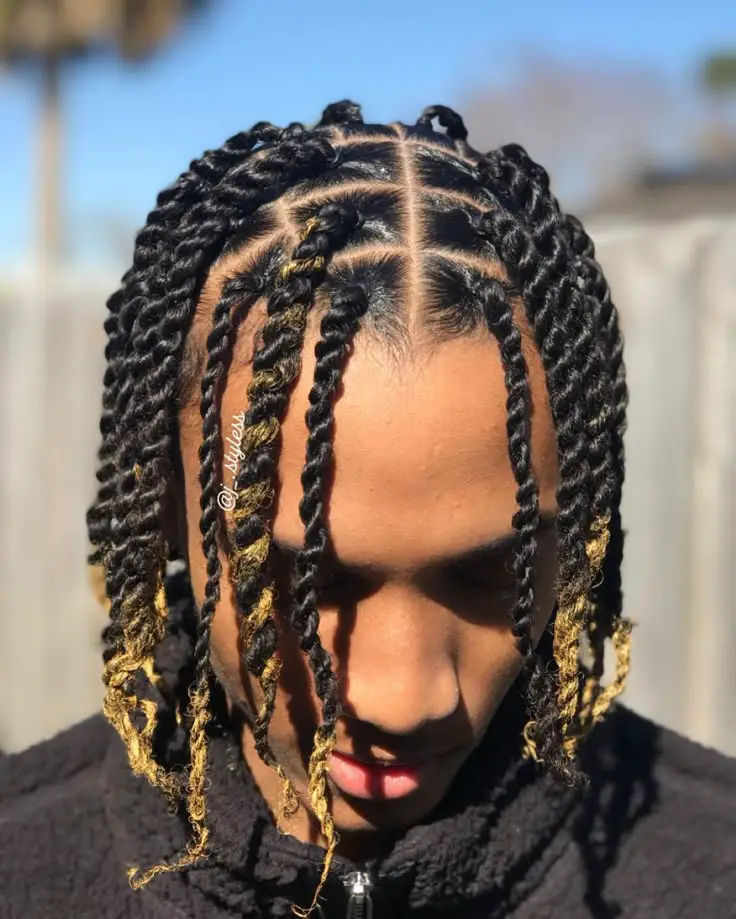
If you’ve been wondering how long can I safely leave in my two strand twist before my hair starts to lock, you’re probably trying to find that sweet spot between enjoying your twists and making takedown unnecessarily difficult. Two-strand twists can be a convenient, low-maintenance hairstyle, but leaving them in for longer periods can allow shed hair, frizz and tangling to build up.
The good news is that your twists don’t suddenly become locs after a certain number of days. Locking is a gradual process, and the timing can vary depending on your hair’s texture, the size of your twists, how often you manipulate or wash them, and how much your hair naturally tangles. Knowing what to look for can help you decide when it’s time to take your twists down before matting becomes a problem.
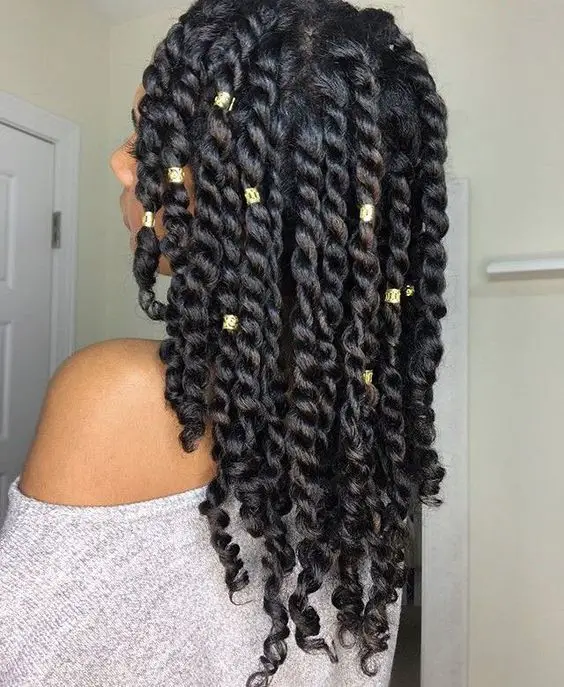
Table of Contents
How Long Can I Safely Leave in My Two Strand Twist Before My Hair Starts To Lock?
There isn’t a precise day when two-strand twists suddenly “start locking.” Matting and tangling can begin gradually, particularly at the roots and ends.
How quickly this happens depends heavily on your hair’s curl pattern, how small the twists are, how much you manipulate them, how often you wash them, and how your hair behaves naturally.
For many people, 2–4 weeks is a comfortable window for wearing two-strand twists while still expecting a reasonably straightforward takedown.
Around 4–6 weeks, the possibility of significant matting increases, particularly with tightly coiled hair.
If your hair is tightly coiled, such as 4B/4C, I would be more conservative if you specifically do not want your twists to begin locking. Your hair can start forming little knots and joining together sooner than someone with a looser curl pattern.
The locking process itself, however, normally takes months, not a few weeks. Two-strand twists used intentionally as starter locs commonly take roughly 6–12 months or longer to become substantially locked.
A practical timeline
| Time in twists | What you might notice |
|---|---|
| 1–2 weeks | Usually easy to undo, although some frizz and root tangling can develop |
| 2–4 weeks | Generally still a good takedown window; some root matting may appear |
| 4–6 weeks | More tangling and matting, especially with tightly coiled hair |
| 6+ weeks | Greater chance of knots, merging at the roots and difficult takedown |
| Several months | If left relatively undisturbed, the twists can progressively mature toward locs |
One important distinction: frizz does not mean your hair is locking. A two-strand twist can become very fuzzy and still come apart perfectly well. The thing I’d watch for is the hair inside or between the twists becoming one tangled mass.
If you want to keep them in for a long time but NOT lock
I’d aim for about 3–4 weeks, then take them down, gently detangle, wash and restyle. If your hair is very tightly coiled and you notice that the roots are already beginning to mat together, take them down earlier.
And when you take them down, don’t wait until after the hair has been thoroughly soaked if it is already tangled. Work through each twist carefully from the ends upward, separating any shed hair that has wrapped around the living strands.
Shed hair remaining trapped in twists is one reason an old twist set can suddenly seem much more difficult to remove.
READ ALSO: Silk to Satin: Understanding the True Difference for Your Hair Today in 2026
Photo credits: Coils & Glory, Jen!