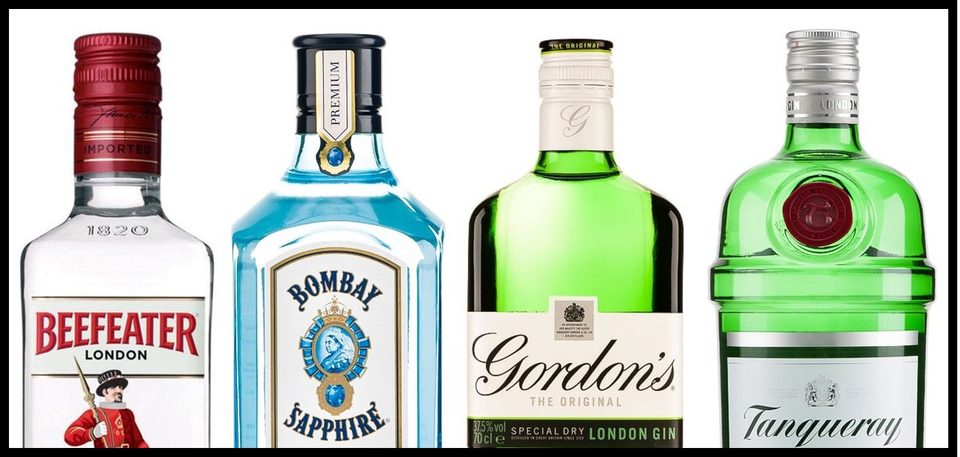
Choosing between Gordon’s, Tanqueray, Beefeater and Bombay Sapphire can be tricky when all four are popular gin brands with their own distinctive flavour profiles.
If you have ever wondered which one tastes best, which offers the best value for money, or which works best in a gin and tonic, comparing Gordon’s • Tanqueray • Beefeater • Bombay Sapphire is a good place to start.
Although these four gins share a foundation of juniper and other botanicals, they differ in character.
Gordon’s is known for its classic dry-gin flavour, Tanqueray delivers a bold juniper-led taste, Beefeater balances juniper with noticeable citrus notes, and Bombay Sapphire stands out for its aromatic blend of ten botanicals.
So, which gin deserves a place in your drinks cabinet?
Let’s compare their flavours, ingredients, alcohol strengths, prices and best uses to help you understand what sets each brand apart and decide which one suits your preferences.
READ ALSO: Gordon’s vs Beefeater Gin & More
Table of Contents
Meet the Four Gin Brands: Gordon’s • Tanqueray • Beefeater • Bombay Sapphire
1. Gordon’s London Dry Gin: Classic and Juniper-Led
Gordon’s dates back to 1769. Its traditional recipe features juniper, coriander, angelica and liquorice, with triple distillation part of the brand’s production description.
It is a familiar option for a straightforward gin and tonic.
Best for: People who enjoy a traditional dry gin without needing an especially elaborate botanical profile.
2. Tanqueray London Dry Gin: Bold and Botanical
Tanqueray’s classic London Dry recipe centres on four botanicals: juniper, coriander, angelica and liquorice.
Its flavour is notably juniper-forward, with peppery, herbal and slightly sweet liquorice notes. The original gin is also a popular choice for martinis.
Best for:People who want a pronounced gin flavour that stands up well in cocktails.
3. Beefeater London Dry Gin: Crisp, Citrusy and Juniper-Forward
Beefeater has its roots in London and uses nine principal botanicals, including juniper, lemon peel, Seville orange peel, coriander, angelica, orris root, liquorice and almond.
The result is a dry gin with a clear juniper flavour balanced by bright citrus notes.
Best for: People who like a traditional gin with a noticeable lemon and orange character.
4. Bombay Sapphire: Aromatic and Complex
Bombay Sapphire uses ten hand-selected botanicals.
Rather than boiling them in the spirit, the brand uses vapour infusion to extract their flavours.
Its profile is aromatic, with herbal, spicy and citrus elements that create a different balance from the more directly juniper-led styles.
Best for: People who want an aromatic gin with a more layered botanical character.
Gordon’s vs Tanqueray vs Beefeater vs Bombay Sapphire
Here is a side-by-side comparison of their main characteristics.
| Feature | Gordon’s | Tanqueray | Beefeater | Bombay Sapphire |
|---|---|---|---|---|
| General character | Classic and dry | Bold and juniper-led | Dry and citrusy | Aromatic and complex |
| Principal botanicals | Four highlighted in its classic recipe | Four | Nine | Ten |
| Juniper flavour | Traditional | Pronounced | Pronounced | Balanced with other botanicals |
| Citrus character | Present | Present but not the main emphasis | Particularly noticeable | Part of a broader aromatic profile |
| Distillation approach | Triple distillation in its classic recipe description | Four times distilled | Botanicals steeped before distillation | Vapour infusion |
| Well suited to | Gin and tonic | Martinis and gin and tonic | Gin and tonic and classic cocktails | Gin and tonic and botanical cocktails |
These descriptions refer to the original or classic versions, not every flavoured or special edition.
The precise alcohol content and recipe can vary by market.
Which Gin Tastes Best?
Taste is subjective, but the differences between these four gins can help you narrow down your choice.
Gordon’s: Familiar and Sraightforward
If you enjoy the classic gin taste without wanting to explore a particularly elaborate mix of botanicals, Gordon’s is a sensible starting point.
Its juniper, coriander and liquorice profile gives it the familiar dry-gin character.
Tanqueray: Bold and Assertive
Tanqueray is worth considering if you want the juniper and herbal flavours to stand out in a cocktail. Its concentrated botanical character works particularly well in drinks with relatively few ingredients
Beefeater: a citrus-forward balance
The combination of lemon and Seville orange peel gives Beefeater a clear citrus dimension alongside its juniper flavour. It is a good option if you enjoy a dry gin that has a fresh, zesty character.
Bombay Sapphire: aromatic and layered
Bombay Sapphire is a strong candidate if you appreciate the combined effect of different herbs, spices and citrus botanicals rather than a flavour profile dominated by juniper alone.
4. Which is the strongest gin?
The word strongest can mean two different things. It can refer to alcohol content or to how powerful the gin tastes.
- Alcohol strength: The standard version of each brand may have a different ABV depending on the country in which it is sold. Check the label on the bottle you are buying.
- Flavour intensity: Tanqueray has a notably pronounced juniper character. Beefeater also has a clear juniper profile, with more obvious citrus notes. Bombay Sapphire has a broader aromatic profile, while Gordon’s offers a familiar classic dry-gin taste.
A gin that tastes stronger is not necessarily higher in alcohol. Likewise, a smoother-tasting gin can contain just as much alcohol as one that tastes sharper.
The alcohol percentage matters more than the brand name when comparing how much alcohol you consume.
A standard 40% ABV gin contains 40 ml of pure alcohol per 100 ml of liquid.
Which Is the Most Expensive?
The price ranking depends on the country, retailer, bottle size, taxes and promotions.
There is no reliable universal order that applies to every market.
In Tanzania, it is worth comparing the prices of the same bottle size, such as 750 ml or 1 litre, rather than comparing bottles of different sizes.
You should also distinguish between the standard versions and premium expressions.
For example, Tanqueray No. Ten is a different product from the original Tanqueray London Dry Gin, so their prices should not be treated as interchangeable.
Which Is Best for Gin and Tonic?
All four can be used to make a gin and tonic.
The choice depends on the flavour you prefer.
- Gordon’s: A straightforward, traditional gin and tonic.
- Tanqueray: A more pronounced juniper and herbal profile.
- Beefeater: A dry gin and tonic with noticeable citrus notes.
- Bombay Sapphire: A more aromatic drink that lets the different botanicals contribute to the overall flavour.
For a basic gin and tonic, combine a measured serving of gin with chilled tonic water and ice.
Lemon, lime or orange can be used as a garnish depending on the gin and the taste you want.
My Overall Comparison
There is no single winner for every drinker, but each brand has a clear reason to be considered.
Gordon’s
A good choice for a familiar, traditional dry-gin profile.
Tanqueray
A strong candidate for those who prefer bold juniper flavour and classic cocktails.
Beefeater
A good choice for a traditional dry gin with pronounced citrus notes.
Bombay Sapphire
A good choice for those who prefer a layered, aromatic botanical profile.
One final point: none of these brands is automatically better simply because it costs more.
The best comparison is between the flavour you enjoy, the price you are willing to pay and the specific cocktail you intend to make.
Since all four are alcoholic spirits, their effects depend on the amount consumed, the ABV and individual factors, not on whether the bottle is marketed as premium.
Gordon’s Gin vs Tanqueray

Gordon’s and Tanqueray are both produced by the same company, Diageo.
These gins are also both London Dry Gins.
Unlike Gordon’s, the recipe for Tanqueray includes only 4 botanicals, delivering a gin that is juniper-heavy, fresh on the nose, and dry on the palate with juniper and citrus.
The highest alcohol by volume option among the gins mentioned in this post, Tanqueray makes an excellent gin and tonic.
What are your thoughts on Gordon’s vs Tanqueray?
Gordon’s Gin vs Tanqueray is an interesting comparison because both are classic London Dry gins from the same broad Diageo family, but they have noticeably different personalities in the glass. Gordon’s dates back to 1769, while Tanqueray was established in the 1830s. Both are built around juniper and traditional gin botanicals, so neither is a radically modern or heavily flavoured gin.
Gordon’s Gin vs Tanqueray: Gordon’s Gin
Gordon’s London Dry Gin has a straightforward, recognisable gin profile. Its recipe uses juniper, coriander, angelica and liquorice, along with other botanicals, and it is triple distilled. The dominant impression is juniper with a dry, slightly citrusy character. It is the sort of gin that works particularly naturally in a classic gin and tonic because its flavour remains recognisable even when combined with tonic water.
Gordon’s is also generally bottled at a lower strength than standard Tanqueray in many markets, although Gordon’s has different strength versions depending on the market. This matters because alcohol strength affects how strongly you perceive the botanicals and the overall weight of the drink.
Gin Tanqueray X Gin Gordons: 2. Tanqueray
Tanqueray London Dry is more assertive. Its classic recipe is built around four key botanicals: juniper, coriander, angelica and liquorice. It is distilled four times, and its flavour profile is particularly associated with piney juniper, peppery coriander, herbal notes and a dry finish.
The standard Tanqueray sold in some markets is 43.1% ABV, while the US version listed by the brand is 47.3%, so the exact bottle matters when comparing the two.
Read Also: Gordon’s Gin vs Tanqueray & More Site:ChickAboutTown.com: how they differ
| Gordon’s | Tanqueray | |
|---|---|---|
| Overall character | Classic, straightforward | Bolder, more pronounced |
| Juniper | Prominent | More pronounced |
| Citrus | Present but restrained | More noticeable alongside juniper |
| Herbal/spice notes | Moderate | More apparent |
| Finish | Dry and relatively simple | Longer and more substantial |
| Gin & tonic | Excellent classic option | More assertive G&T |
| Martinis | Works well | Particularly well suited |
| Negroni | Works well | Its stronger botanical profile stands out |
The difference becomes especially noticeable if you drink them with relatively little mixer. In a gin and tonic with plenty of tonic, ice and garnish, Gordon’s can come across as uncomplicated and refreshing. Tanqueray tends to push its juniper, coriander and herbal character forward more strongly. Tanqueray’s combination of juniper, citrus, pepper and herbal notes also gives it enough structure to stand up well in cocktails such as Martinis and Negronis.
The Strongest Gin in % Gordons
If you are looking for the strongest Gordon’s gin in terms of alcohol percentage, the key figure to look for is 47.3% ABV.
Gordon’s London Dry Gin is sold in different strengths depending on the market, and 47.3% versions have been exported to Tanzania.
However, this is not the strength of every Gordon’s bottle currently available.
The familiar Gordon’s London Dry Gin sold in many markets is 37.5% ABV, while some versions sold in other countries are 40% ABV.
Always check the alcohol percentage printed on the particular bottle rather than assuming that every Gordon’s gin has the same strength.
1. Gordon’s Gin Alcohol Percentage Compared
| Gordon’s gin version | Alcohol content |
|---|---|
| Gordon’s London Dry Gin | 37.5% ABV in some markets |
| Gordon’s London Dry Gin | 40% ABV in some markets |
| Gordon’s London Dry Gin export-strength version | 47.3% ABV |
| Gordon’s Premium Pink | 37.5% ABV in the Irish range |
| Gordon’s alcohol-free spirit | 0.0% ABV |
The 47.3% version is particularly relevant if you are looking for Gordon’s gin in Tanzania.
Import records list Gordon’s London Dry Gin at this strength, although they do not confirm that it is currently available in local shops.
2. What Does 47.3% ABV Mean?
ABV stands for alcohol by volume. A gin labelled 47.3% ABV contains 47.3 ml of pure alcohol per 100 ml of gin.
For comparison, here is the amount of pure alcohol in a 50 ml serving of each strength.
Gordon’s at 37.5% ABV
18.75 ml
Gordon’s at 40% ABV
20 ml
Gordon’s at 47.3% ABV
23.65 ml
Pure alcohol in a 50 ml serving. The higher the ABV, the more alcohol the same volume of gin contains.
3. Is Gordon’s 47.3% gin stronger than regular Gordon’s?
Yes. A 47.3% ABV version contains more alcohol per millilitre than Gordon’s at 37.5% or 40% ABV.
Compared with the 37.5% version, the 47.3% version contains approximately 26% more alcohol in the same volume. Compared with the 40% version, it contains approximately 18% more.
This does not necessarily mean it tastes stronger. Alcohol strength and perceived flavour intensity are different things.
4. How can you identify the strongest Gordon’s gin?
If you are shopping for Gordon’s in Tanzania, check the ABV printed on the label, usually near the bottom of the front label or on the back of the bottle.
- 47.3% ABV: The strongest of the versions compared here.
- 40% ABV: Stronger than the 37.5% version.
- 37.5% ABV: A common strength for Gordon’s London Dry Gin in some markets.
Do not rely on the bottle colour, bottle size or the words London Dry Gin to determine alcohol strength.
The bottom line: If you want to identify the strongest Gordon’s gin by alcohol percentage, look for 47.3% ABV. Confirm the label on the bottle available to you, since Gordon’s recipes and strengths vary between markets. A higher ABV also means that a smaller serving contains a given amount of alcohol, so measure servings carefully.
Difford’s Guide Gin Brand Reviews Tanqueray Beefeater Gordon’s
If you are looking specifically at Difford’s Guide’s reviews of Tanqueray, Beefeater and Gordon’s, the interesting thing is that all three sit firmly in the classic London Dry gin camp, but Difford’s tasting notes show quite different personalities.
Tanqueray
Difford’s Guide describes the original-strength Tanqueray London Dry Gin at 47.3% ABV as strongly juniper-led, with piney juniper followed by lemon zest, coriander and rooty notes. There is also a noticeable peppery character, partly associated with its higher alcohol strength.
The finish is described as lingering, with piny juniper and light pepper.
That makes Tanqueray the most obviously juniper-forward and punchy of the three in Difford’s tasting descriptions.
It has a clean, dry profile but plenty of flavour, which helps explain why it works particularly well in gin-forward cocktails.
Interestingly, Difford’s also lists a 41.3% Tanqueray bottling. Its description remains crisp and dry with rich juniper, although the lower strength naturally changes the intensity.
Beefeater
Beefeater has a somewhat broader botanical profile. Difford’s notes mention clean pine-fresh juniper accompanied by lemon and orange zest on the nose. On the palate, orange becomes more prominent, alongside coriander and subtle Parma-violet notes.
The finish brings back orange together with peppery coriander.