Indigenous tagging games in Kenya are part of a wider tradition of children’s play built around chasing, evasion, and quick reactions. At the most basic level, a tagging game is any game where one person tries to touch or “tag” another player, who then either becomes the new chaser or is eliminated depending on the rules.
What makes the Kenyan versions interesting is how they’ve been adapted into local culture, with unique rules, names, and meanings that reflect everyday life.
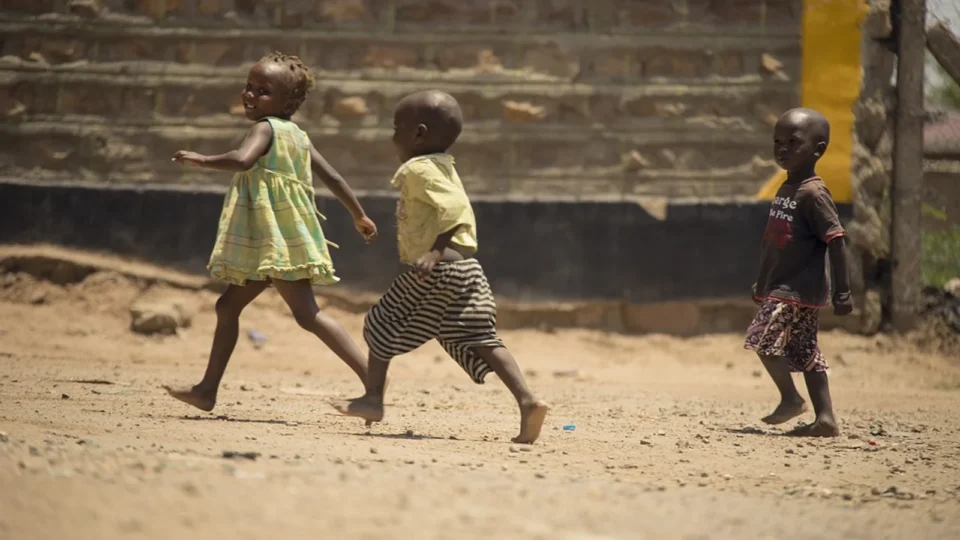
Table of Contents
What Tagging Games in Kenya Are
In the Kenyan context, tagging games are usually traditional playground games passed down informally across generations. They don’t need equipment, and they’re often played in open spaces like schoolyards, village compounds, or streets.
They tend to be:
- Simple to start, with minimal setup
- Played in groups, sometimes with teams
- Flexible, with rules that can change depending on the players
Even though they look like simple children’s games, they carry social and cultural meaning.
Common examples
Two well-known tagging-style games in Kenya are:
Kati (or Kati-Kati)
This is a mix of tagging and dodgeball. One group stands in the middle while players on the ends throw a ball trying to hit them. If you’re hit, you’re out. (Chick About Town)
It adds a layer of strategy because you’re not just running, you’re also dodging and anticipating throws.
Cha Mama (Mother’s Game)
One player acts as the “mother” and tries to tag the others. Once tagged, you take over the role. (Chick About Town)
It’s closer to classic tag, but with a social twist that reflects family roles and hierarchy.
You’ll also find variations depending on region and community. The names, chants, or small rule changes can differ between groups like the Kikuyu, Luo, or coastal Swahili communities.
Why these games matter
Tagging games in Kenya are not just for fun. They serve several purposes:
Physical development
Running, dodging, and chasing build speed, balance, and coordination.
Social skills
Players learn teamwork, turn-taking, and how to follow shared rules.
Cultural learning
Some games reflect family roles, community structure, or daily activities.
Quick thinking and strategy
Players have to decide when to run, where to move, and how to avoid being tagged.
How they differ from modern games
Compared to organized sports or digital games, tagging games in Kenya are:
- More spontaneous
- Less structured
- Open to creativity (rules can change mid-game)
- Rooted in oral tradition rather than written rules
“Africa Spirits”

If you would like to know about “Africa Spirits”, click here.
READ ALSO: Dodgeball Wrestling Bull & 8 Interesting Traditional Games in Kenya
Kenyan Indigenous Board Games: More on Bao
Bao is an ancient mancala board game played by the Swahili community in Kenya and Tanzania.
Bao is the Swahili word for board or board game.
A person who masters bao well is referred to as bingwa (master) or fundi (technician).
Bao is still popular today at the Kenyan coast, especially in Lamu, where bao tournaments are held regularly.
These bao tournaments may not be popular enough to get listed on platforms such as Betway, but they attract considerable attention.
READ ALSO: Is the Fun Red7 Card Game Suitable for Kids Too? & More
Bao usually attracts scholars because of the strategic and complex thinking required to win the game.
Scholars of disciplines such as psychology, complexity theory, and game theory are fascinated by bao.
Kenyan communities, other than the Swahili, also have their own versions of bao, including the Turkana, Luhya, Luo, and Samburu.
Photo credits: artsysolomon / pixabay