READ ALSO: Akukulu Ethiopian Traditional Game & More
Table of Contents
READ ALSO: Amla Site:ChickAboutTown.com
Ethiopia Games: Akukulu Game/Akukulu Traditional Game in Ethiopia
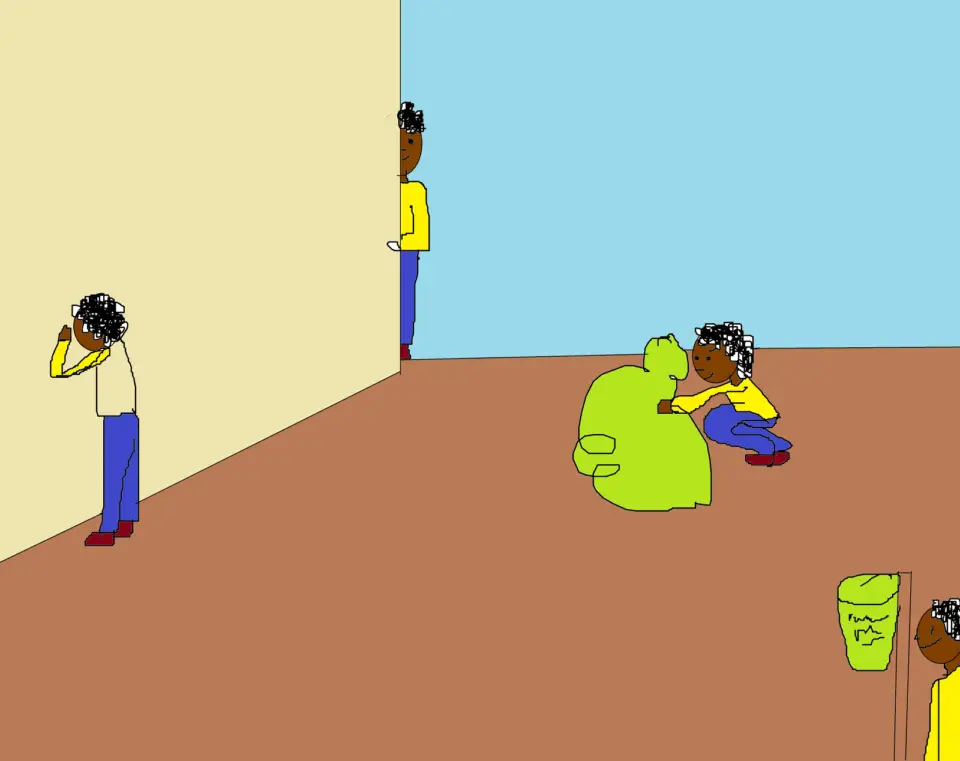
This traditional Ethiopian game, usually played with about 6-15 people, is similar to hide-and-seek.
The Akukulu game begins with one player in the group (the seeker) staring at a wall (known as his/her house, home base, or the Mariam), avoiding eye contact with the other players.
The others, in the meantime, have to find hiding places.
After a while, the seeker on the wall will begin to make the “coocoolu” sound, imitating the sound hens make in the morning.
The others attempting to hide will reply “alnegam” or it is not morning yet, implying that the hen (seeker) should not leave his/her house.
The seeker will continue to make the sound till everyone in the group trying to hide has hidden themselves and start to reply “nega” or the sun has risen.
At this point, the seeker will actively attempt to find those in the group that are now hidden.
In the meantime, the hidden have to make it stealthily to the seeker’s wall or “home” and place their hand on it and kiss their own hand. This makes them safe.
The seeker will have to find the hidden before they reach the wall, and call out their name and go to his wall “home” and touch the wall while kissing his hand.
If the seeker arrives before the hidden whose name was called out, then the hidden will be “captured”, and remain waiting at the seeker’s wall.
The winners are those that make it safely to the wall.
The Role of Community in Akukulu & Other Ethiopia Games
Like many traditional games, Akukulu emphasizes the importance of community and teamwork. While the game is competitive, it is also a social activity that encourages children to play together, form bonds, and develop physical skills. Running, quick reflexes, and strategy are key to avoiding the catcher, but the game also promotes fun and lightheartedness.
The communal aspect of choosing the catcher through singing and chanting fosters a sense of inclusion and participation.
In Ethiopia, children often play games like Akukulu in their villages or neighborhoods, using the available natural landscape as their playground. Whether it’s an open field, a patch of dirt, or even the space between houses, the game adapts to the environment, making it a flexible and accessible form of play.
Cultural Significance
Traditional Ethiopian games like Akukulu hold deeper cultural significance as well.
These games are often played during social gatherings, festivals, or school breaks, providing an opportunity for children to engage in physical activity while learning about the values of cooperation and respect.
In many ways, Akukulu and other games serve as a bridge between generations. Grandparents, parents, and older siblings pass down these games, along with their rules, songs, and rhymes, ensuring that the tradition continues. Through these simple yet meaningful activities, Ethiopian children gain a sense of identity and belonging.
Modern Relevance
In today’s fast-paced world, where technology often dominates children’s playtime, traditional games like Akukulu remind us of the joy of simple outdoor activities. In rural areas of Ethiopia, where access to digital entertainment is limited, games like Akukulu still thrive as essential parts of daily life.
However, even in urban settings, efforts are being made to preserve these games as part of the country’s cultural heritage.
Famous Card Games in Ethiopia
Ethiopia has a small but interesting group of card games that are associated particularly with Ethiopian and broader Habesha communities. Unlike countries where games such as poker or bridge dominate the card-playing tradition, Ethiopia has several rummy-style and matching games with local names and rules.
Fun Games in Ethiopia #1. Konker
Konker, also spelled Conquer or Konker card game, appears to be one of the better-known Ethiopian card games.
It is essentially a matching and melding game. Players arrange their cards into combinations such as:
- Three or more cards of the same rank
- Three or more consecutive cards of the same suit
- Other combinations depending on the particular local rules
A version described by Ethiopian players uses two standard 52-card decks plus four Jokers, with players receiving 13 cards.
The objective is to arrange the cards into valid groups and go out.
There can be differences in the rules from one group of players to another, which is common with games learned informally from family and friends.
Ethiopian Minor Games #2. Seka
Seka is another Ethiopian card game reported as being popular in Ethiopia. Interestingly, it is described as a type of rummy game, rather than being related to the Russian card game that happens to have the same name.
Because Seka is generally passed from player to player rather than through a standardized rulebook, you may encounter variations in how it is played.
3. Business
Business is another Ethiopian rummy-style card game, reported particularly in Addis Ababa.
It has similarities to 500 Rummy. In the version documented for Ethiopia, each player receives eight cards, while eight cards are placed face up to form the beginning of the discard pile.
Players then draw, form combinations and discard as they try to accumulate the highest score.
The name “Business” is particularly interesting because it is not simply the name of an internationally standardized card game. It refers to this particular Ethiopian game.
4. Injera Be Wat
Injera Be Wat is a distinctly Ethiopian-themed card game whose name comes from injera and wat, the famous combination of Ethiopian flatbread and stew.
The game uses a standard 52-card deck and can be played by two to six players.
Its layout is arranged in a pattern that resembles injera with wat in the middle, which explains the name.
The game belongs to the fishing family of card games, meaning players capture cards from the table according to particular matching rules.
There is also evidence of the game being remembered and played within Ethiopian communities. Ethiopian players discussing traditional games have mentioned Injera Be Wat as a childhood card game.
5. Ordinary Playing-Card Games
Ethiopians also play more internationally recognizable card games.
Standard French-suited playing cards are widely available in Ethiopia, and card-playing is sufficiently established that Ethiopian-themed decks have been produced over the years.
For example, there have been Ethiopian and Habesha-themed playing-card decks featuring Ethiopian cultural imagery and Amharic writing.
So when someone in Ethiopia says they are playing karta (cards), that does not necessarily mean one particular game. The exact game can depend on the family, community or group of friends.
Are these traditional Ethiopian games?
This is where a distinction is useful.
Some Ethiopian card games are locally developed or locally adapted games, but playing cards themselves are not an ancient Ethiopian invention in the way that gebeta (mancala) is associated with traditional Ethiopian board gaming.
Historical and contemporary accounts indicate that Ethiopians have played locally made cards as well as imported playing cards.
In parts of Ethiopia, cards were even made from reused cardboard and thick paper.
Kate Ethiopian Game
If by “Kate” you mean an Ethiopian game called Kate, I’m not finding reliable evidence that there is a well-documented Ethiopian game by that exact name.
There is, however, a possible source of confusion: kete is a term associated with Bao, a traditional East African mancala game. In Bao, the playing pieces can be called kete, referring to shells or seeds used as counters. That usage is associated particularly with the Swahili/East African tradition, rather than being the name of an Ethiopian game.
I also found kete used in Ethiopia in an entirely different context. In some Ethiopian communities, kete refers to a form of cooperative agricultural labour, rather than a recreational game. (J-STAGE)
Could “Kate” be a different Ethiopian game?
Quite possibly. Ethiopian games can have names that are written differently in English because names may be transliterated from Amharic, Oromo, Tigrinya or another Ethiopian language. For example, a name that sounds like Kate, Kete, Kati or Katy in English could have several possible spellings.
The established Ethiopian card games I mentioned earlier include Konker, Seka and Business, while Injera Be Wat is a distinctive Ethiopian fishing-style card game. I would not add “Kate” to that list without stronger evidence.
If you encountered “Kate Ethiopian game” on a particular website, TikTok, YouTube video, Pinterest pin, book, or elsewhere, send me the wording or a screenshot and I can identify exactly which game it refers to.
Photo credits: Origins