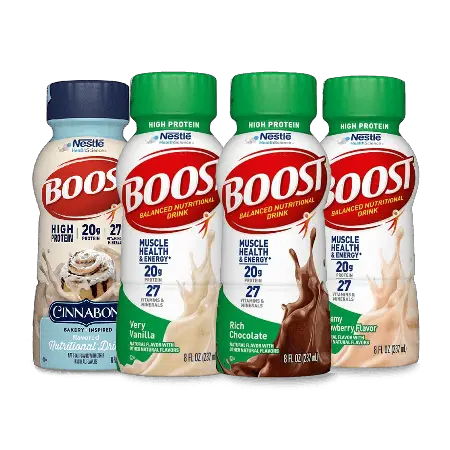
Nutritional supplements have become increasingly popular, especially for people looking for quick, convenient ways to boost their daily intake of calories and vitamins.
One product that often comes up in these conversations is the Boost drink — a ready-to-consume nutritional beverage widely used by adults, caregivers, and even healthcare providers.
But what exactly is a Boost drink, and who is it really for?
While it’s often marketed as an easy nutrition fix, there’s more to understand about what it contains, how it’s used, and whether it’s a good fit for everyday health.
In this article, I take a closer look at Boost drinks, what they offer nutritionally, and what you should know before adding them to your routine.
Table of Contents
What Boost Nutritional Drinks Are
Boost is a line of ready‑to‑drink nutritional beverages made by Nestlé.
They’re designed to provide calories, protein, vitamins, and minerals in a liquid form that’s easy to drink, especially when eating solid food is difficult or appetite is low.
They’re often used as a supplement rather than a regular everyday drink.
Different Formulas and What Boost Protein Drink Offers
- Boost Original: About 240 calories and around 10 g of protein per serving, with 27 vitamins and minerals to help fill nutrition gaps. It’s often used as a mini‑meal or snack.
- Boost Plus: Higher in calories (around 360 per serving) with 14 g of protein and many vitamins and minerals, aimed at helping people gain or maintain weight.
- Boost High Protein: Around 250 calories and 20 g of high‑quality protein for muscle support, along with a broad range of vitamins and minerals.
- Boost Glucose Control: Lower in sugars (about 4 g added) and calories (around 190) with 16 g protein, formulated to have a gentler impact on blood sugar levels.
Who Uses Them and Why
Boost drinks are often recommended when:
- Appetite is low or food intake is limited
- People need extra protein and calories (for recovery, aging, or medical needs)
- There’s increased nutritional need or slow weight gain
They’re sometimes used under guidance from a healthcare provider, particularly in medical or post‑surgery settings.
Ingredients and What That Means
Most Boost drinks contain water, carbohydrates (like sugar and glucose syrup), fats, milk and soy protein, and added vitamins and minerals.
Some formulas include thickeners like carrageenan and sweeteners like stevia, depending on the product.
Things to Keep in Mind
- Because these drinks are nutrient‑dense, they’re not meant to replace balanced meals regularly unless a health professional advises it.
- They contain added sugars, so people monitoring their sugar intake (such as those with diabetes) may prefer specific lower‑sugar formulas like the Glucose Control version.
- Some individuals find the drinks very filling or heavy, and a few report digestive discomfort if they drink more than one at a time. Personalized tolerance varies.
Nutritional drinks like Boost by Nestlé are often marketed as an easy way to get quick calories, protein, and vitamins, especially when appetite is low or meals are skipped. For many people, they feel like a practical solution in a busy day.
But convenience does not automatically mean risk-free. Questions about ingredients, sugar content, digestion, and long-term use come up often, and they matter.
Understanding Boost drink side effects is important for anyone who uses these products regularly or is considering adding them to their routine.
This article takes a closer look at the potential downsides of drinking Boost, explains who may need to be cautious, and offers practical guidance to help you decide whether it truly fits your nutritional needs.
Photo Credits: Nestlé
One of the ingredients in Boost is Carrageenan> Is there
any danger with this ingr
Hi Stephen,
Welcome to Chick About Town! I am not a doctor, so I can’t answer your question directly, but here is what ChatGPT had to say about that:
Carrageenan is a **common thickener and stabilizer** made from red seaweed. It’s used in many products, including some formulas of Boost. The safety question usually depends on *which type* of carrageenan is being discussed.
Here’s the clearest way to understand it:
—
## 1. There are two forms of carrageenan
**a) Food-grade carrageenan**
* This is the type used in drinks like Boost.
* It’s purified and approved for use in foods.
* Regulatory bodies (including the FDA and the EU) consider it safe at the levels used in beverages.
**b) Degraded carrageenan (also called poligeenan)**
* Not used in food.
* Lab studies show it can cause inflammation, but it is **not** the same as food-grade carrageenan.
Much of the controversy comes from studies done on *degraded* carrageenan, which is not allowed in food products.
—
## 2. So is food-grade carrageenan dangerous?
**Most evidence says it is safe for the general population**, but there are a few things worth noting:
### Potential concerns
* Some people report **digestive sensitivity** (bloating, cramps, or loose stools).
* Certain lab studies suggest food-grade carrageenan *may* trigger inflammation in the gut in very high doses, but human evidence is inconsistent.
* People with conditions like **IBS, IBD (Crohn’s, ulcerative colitis)** sometimes feel better avoiding it.
### For most people
* Consuming it occasionally or regularly in normal amounts (like 1 bottle of Boost a day) is generally not considered harmful.
—
## 3. Should you avoid it?
You might consider avoiding carrageenan **if**:
* You have a history of gut sensitivity.
* You notice discomfort after drinking products that contain it.
* You prefer minimal additives.
Otherwise, it’s generally fine.
—
## 4. Does Boost offer carrageenan-free versions?
Yes — some Boost products do not contain carrageenan, depending on the formula and region.
I hope you find that helpful!
Biche