Black and red Egyptian henna refers to two different colours of henna used for body decoration, temporary tattoos, and, in some cases, hair colouring.
The two colours can look quite striking together, particularly in intricate hand and foot designs.
However, there is an important distinction between natural red henna and products sold as black henna.
The latter can contain chemicals that cause serious skin reactions.
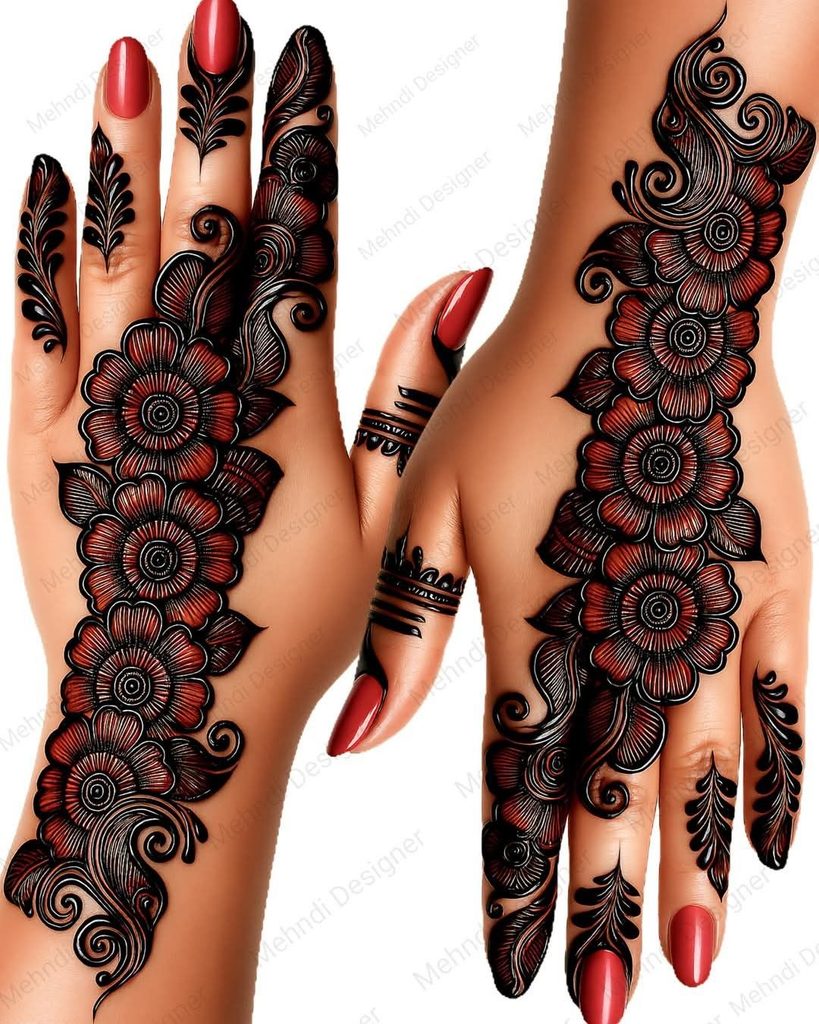
Table of Contents

1. What is Egyptian henna?
Egyptian henna is associated with the henna plant, Lawsonia inermis, a flowering shrub whose dried leaves are ground into powder.
Henna has a long history of use in Egypt and other parts of North Africa, the Middle East and South Asia.
It is traditionally used for:
- Decorating hands and feet.
- Creating temporary skin designs.
- Colouring hair.
- Decorating nails.
- Celebrations, weddings and other cultural occasions.
Natural henna powder is usually greenish, but the dye it produces on skin is reddish, orange-brown or deep reddish-brown.
2. Red Egyptian Henna
Red henna is the natural colour produced by the henna plant.
Its active colouring compound is called lawsone.
This binds to keratin in the skin, hair and nails, producing a stain.
Depending on the henna quality, application and skin chemistry, the resulting colour can range from:
- Bright orange.
- Copper.
- Rust red.
- Reddish-brown.
- Deep burgundy-brown.
The colour also develops over time.
A freshly removed henna paste may leave an orange stain that becomes darker and browner over the following 24–48 hours.
Natural red henna is generally well tolerated, although allergic reactions are possible.
3. Black Egyptian Henna
Black henna is marketed as a darker alternative to traditional reddish-brown henna.
It is often used to create:
- Black floral patterns.
- Dark geometric designs.
- Intricate finger decorations.
- Bold temporary tattoos.
- High-contrast hand and foot designs.
However, there is no naturally black henna plant.
Products sold as black henna often contain para-phenylenediamine (PPD), a chemical commonly used in oxidative hair dyes.
PPD can produce a very dark stain quickly, which is why it is sometimes added to henna mixtures.
The problem is that applying PPD directly to skin can cause severe allergic reactions, including blistering, swelling, chemical burns and permanent scarring.
It can also leave someone sensitised to PPD in hair dyes later in life.
For this reason, black henna containing PPD should not be applied to the skin.
4. Black and red Egyptian henna designs together
Combining black and red creates a noticeable contrast.
Traditional designs can use:
- Red-brown patterns with darker outlines.
- Red floral motifs surrounded by black geometric details.
- Contrasting finger decorations.
- Large central hand motifs with contrasting borders.
One important qualification: a design advertised as black and red henna does not necessarily use two natural henna colours.
The black component may be a synthetic dye.
If you want this colour combination for skin decoration, a safer approach is to use natural red henna alongside a separately verified skin-safe cosmetic colourant, rather than PPD-containing black henna.
5. How to distinguish natural red henna from black henna
| Feature | Natural red henna | Black henna |
|---|---|---|
| Source | Henna plant | Usually added synthetic dye |
| Natural colour | Orange to reddish-brown | No natural black version |
| Paste colour | Greenish-brown | Often very dark |
| Staining time | Several hours | Sometimes less than an hour |
| Skin colour | Orange to brown | Dark brown to black |
| Main concern | Occasional allergy | Potentially serious PPD reactions |
6. Is Egyptian henna safe?
Natural, pure henna is generally considered much safer than black henna containing PPD.
Statement Earrings Site:ChickAboutTown.com
Statement earrings are earrings designed to attract attention and become a noticeable feature of an outfit.
They can be oversized, colourful, sculptural, elaborate, or simply distinctive in shape.
They are a way to express personal style through jewellery, whether you prefer dramatic pieces for special occasions or bold earrings that you can wear with ordinary clothes.
What Do Statement Earrings Look Like?
There are many different types of statement earrings.
Some are large and elaborate, while others are relatively small but have unusual shapes or striking details.
1. Popular Types of Statement Earrings
- Oversized hoops: Large circular or oval earrings in gold, silver, wood, or other materials.
- Chandelier earrings: Elaborate, multi-tiered earrings with dangling elements.
- Geometric earrings: Squares, triangles, circles, rectangles, and architectural shapes.
- Sculptural earrings: Artistic designs inspired by abstract forms, folds, and unusual structures.
- Tassel earrings: Earrings featuring dangling threads, beads, or chains.
- African-inspired statement earrings: Designs incorporating African prints, beads, brass, wood, cowrie shells, and other decorative elements.
- Floral statement earrings: Flowers and botanical designs in metal, resin, fabric, or other materials.
- Asymmetrical earrings: Two earrings that intentionally differ in shape, length, or design.
- Pearl statement earrings: Oversized pearls, elaborate pearl clusters, or unconventional pearl arrangements.
- Drop earrings: Long earrings that hang below the earlobe, sometimes reaching the neck or shoulder.
2. Statement earrings and African fashion
Statement earrings have a particularly interesting place in African fashion because jewellery can incorporate locally available materials, traditional techniques, cultural influences, and contemporary design.
Henna Recipe for Red Hair on Black Hair
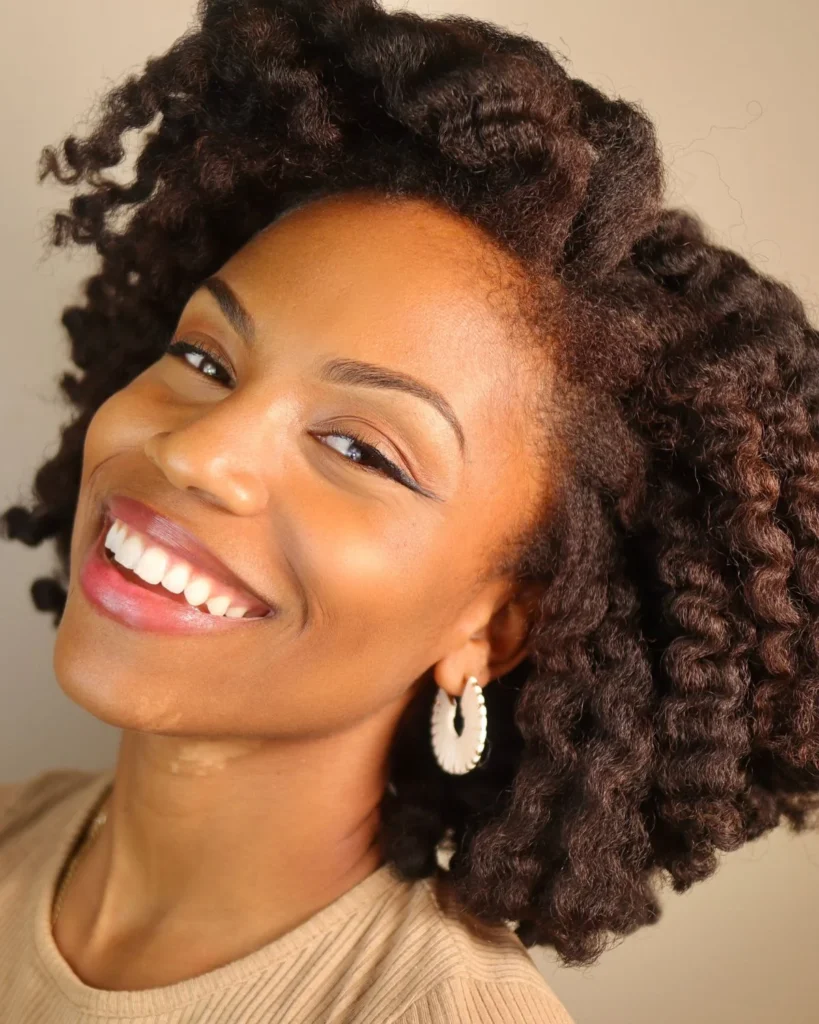
If you have naturally black hair and want to give it a reddish tint using henna, the good news is that you can do this with pure, natural henna powder.
However, there is one important thing to understand.
Henna will not turn naturally black hair bright red.
It deposits a red-orange dye onto your hair without lightening its natural pigment.
The result is usually a subtle red or coppery sheen that becomes more noticeable in sunlight.
1. The Basic Red Henna Recipe
Ingredients
- 100 g pure red henna powder (Lawsonia inermis), depending on hair length and thickness
- Warm water
- 1–2 teaspoons of amla powder (optional)
- 1 teaspoon of aloe vera gel (optional, for a smoother paste)
Preparation
- Place the henna powder in a non-metallic bowl.
- Gradually add warm water, mixing until you achieve a thick, creamy consistency similar to yoghurt.
- Cover the bowl and leave it to rest for approximately 4–8 hours at room temperature. This allows the dye to release.
- If using aloe vera gel, stir it in before application.
- Apply the paste generously to clean hair, ensuring that every strand is covered.
- Cover your hair with a plastic cap.
- Leave the henna on for approximately 2–4 hours.
- Rinse thoroughly with water. Avoid shampooing immediately.
- Allow 24–48 hours for the colour to deepen and settle.
Important: Amla can help modify the tone and reduce some of henna’s bright orange character, but it may also reduce the intensity of the red.
For your first application, I would try pure henna without amla.
2. Ingredients That Can Enhance the Red Tones
You can experiment with these additions:
| Ingredient | What it may contribute |
|---|---|
| Hibiscus powder | A deeper, warmer red appearance |
| Rooibos tea | A warm reddish-brown tone |
| Beetroot juice | A red tint to the paste, but limited lasting colour on black hair |
| Amla powder | May tone down some of the orange-red |
| Pure henna | The primary and most reliable source of red dye |
Keep in mind that the colour of the mixture itself is not a reliable indication of the final hair colour.
3. What if You Want a More Noticeable Red?
There are three different results you might be aiming for:
- Red undertones: Pure henna on black hair. The result is subtle and most noticeable in sunlight.
- Burgundy or mahogany undertones: Henna combined with other botanical ingredients may give a warmer appearance, although pure henna alone cannot produce a true burgundy colour on black hair.
- Visible bright red hair: This is not achievable with henna alone on naturally black hair. You would need some degree of lightening before applying a red dye.
4. Important Precautions
- Buy pure henna powder. Avoid products labelled black henna or those promising instant, intense red or black colour without disclosing their ingredients.
- Perform a skin patch test 48 hours before applying the mixture, following the product’s instructions.
- Conduct a strand test on a small, hidden section of hair to see the actual colour.
- Wear gloves because henna stains skin and nails.
- If your hair has previously been chemically dyed, relaxed or bleached, test a strand first.
Burgundy Hair Site:ChickAboutTown.com
If you would like to read more about what I have to share about burgundy hair on this site, click here.
Color 350 Site:ChickAboutTown.com
If you would like to know more about what I share on color 350 hair on this site, click here.
Photo credits: Henna Sooq, Zainab Ahmad