4B hair is one of the textures in the widely used Andre Walker hair typing system, which classifies hair from Type 1 (straight) to Type 4 (coily). Type 4 hair is the tightest curl category, and it is divided into 4A, 4B, and 4C based on the shape and tightness of the curl pattern. 4B sits in the middle of this group and has features that distinguish it from the others.
Table of Contents
What 4B hair looks like
The most recognizable trait of 4B hair is its zigzag or “Z-shaped” curl pattern. Instead of forming rounded ringlets like some other curly hair types, the strands bend at sharp angles. These angles create a dense, fluffy appearance that often looks like a soft, full afro when the hair is not stretched. (STYLECRAZE)
Some typical visual and structural characteristics include:
- Z-shaped curl pattern with sharp bends rather than spiral curls
- Dense and voluminous strands that grow outward and upward
- Less visible curl definition compared with 4A hair
- Soft or cotton-like appearance when dry
- Fine, medium, or coarse strand thickness, depending on the person (naturalhair-products.com)
Because the strands bend sharply, the hair often appears fluffy and compact rather than hanging down in curls.
Shrinkage
Shrinkage is one of the defining features of 4B hair. The tight bends cause the hair to contract significantly when it dries.
It is common for 4B hair to appear around 50–70% shorter than its true length unless it is stretched through braiding, twisting, or blow-drying.
Shrinkage is not a flaw. It is usually a sign that the hair still has elasticity and has not been damaged by heat or chemical processing.
Moisture and fragility
The structure of 4B strands makes moisture management important. Natural scalp oils have difficulty traveling down the length of tightly coiled hair, which means the ends can become dry. (blackhairtribe.com)
As a result, people with 4B hair often notice:
- Dryness if the hair is not moisturized regularly
- Tangling or knots when the hair is handled roughly
- Breakage at the sharp bends along the strand (Perfect Locks)
Gentle detangling, conditioning, and moisturizing routines are commonly used to keep this texture healthy.
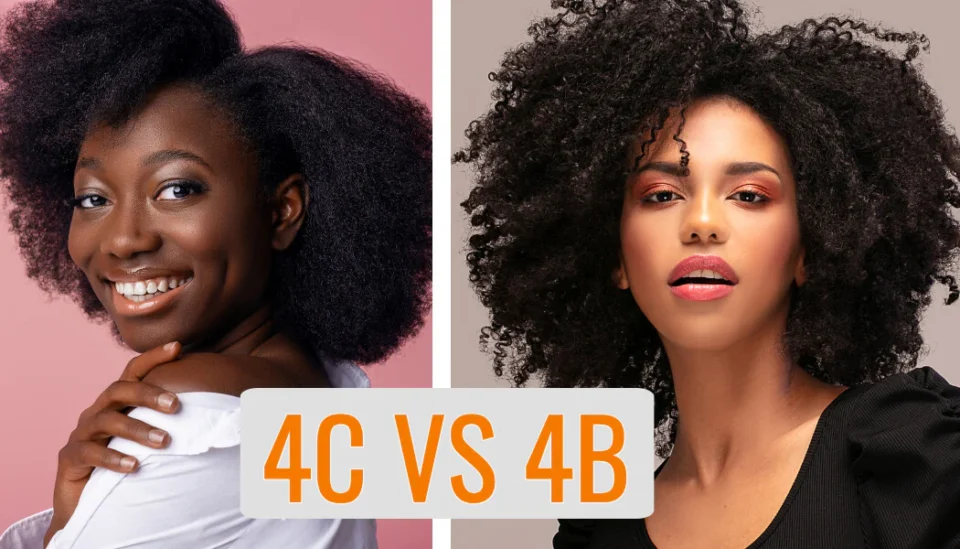
Difference between 4A, 4B, and 4C hair
Although these textures are closely related, their patterns differ slightly.
- 4A hair: defined, springy coils shaped like small “S” curls.
- 4B hair: zigzag or “Z” bends with less visible curl definition.
- 4C hair: extremely tight coils with very little visible pattern when dry. (Perfect Locks)
Many people actually have a mix of these textures on different parts of their head.
Common styling options
4B hair is very versatile and can hold structured styles well because of its density and texture. Popular styles include:
- Twist-outs and braid-outs
- Bantu knots
- Afros and shaped cuts
- Cornrows and box braids
- Two-strand twists or locs (STYLECRAZE)
These styles can stretch the hair, reduce tangling, and make it easier to manage.
A final note about hair typing
Hair typing is only a rough guide. Many people do not fit neatly into one category, and factors like porosity, strand thickness, and density often matter more than curl pattern when it comes to caring for hair.
For many with natural hair, the journey to embracing 4B and 4C hair textures can be a path of both discovery and self-love.
These tightly coiled curls are often misunderstood and require a unique approach to care and styling. But once you get to know your hair and its needs, you’ll see just how versatile and beautiful it is.
READ ALSO: 5 Best Black Hair Salons in Las Vegas Nevada
READ ALSO: 5 Remarkable Actresses With Grey Hair
Photo credits: Ballice Mink Hair Vendor