Plaiting hair is one of the oldest and most versatile ways of styling hair, with different techniques and designs developing across cultures and communities around the world.
From simple everyday plaits to intricate braided patterns, these hairstyles can be both practical and beautifully expressive.
With so many styles to choose from, it can be difficult to know the differences between them or which one might work best for you.
In this guide, I’ll look at the different types of plaits, what makes each style unique, and some products that can help you create and maintain the look.
READ ALSO: Sexy Waist Length Small Box Braids 2026
Table of Contents
READ ALSO: What Is the Hair Style? Find the Best Answer in 2025
Plaiting Hair Styles #1: Box Braids
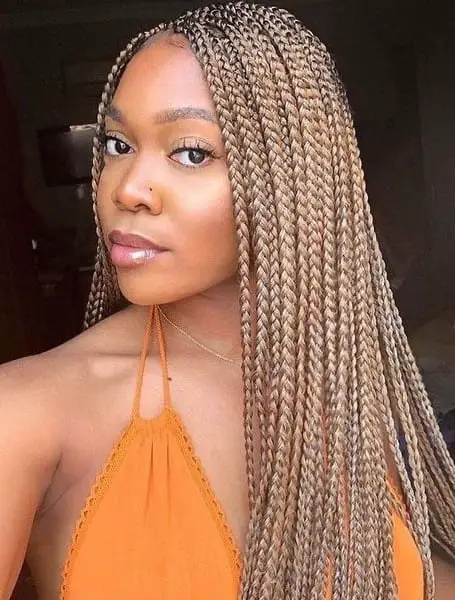
One of the most popular braiding styles, box braids are characterized by small, square-shaped sections.
This style not only protects natural hair but also allows for creative expression through different lengths and colors.
Achieving a flawless set of box braids requires patience and precision.
To make the process smoother, consider using a lightweight, non-greasy hair moisturizer to ensure each section is well-hydrated before braiding.
Different Plaiting Styles #2: Cornrows
Cornrows, originating from African traditions, involve braiding hair close to the scalp.
This timeless style can be simple or intricate, forming patterns that range from straight lines to elaborate geometric designs.
To achieve neat and long-lasting cornrows, a good styling gel or edge control product is essential for smooth and defined braids.
Plait Types #3: Fishtail Braid
The fishtail braid is a chic and elegant style that looks intricate but is surprisingly easy to achieve.
This braid involves dividing the hair into two sections and crossing small pieces from each side over the other.
The result is a stunning, textured braid that works for both casual and formal occasions.
To enhance the texture and prevent frizz, a lightweight texturizing spray can be your go-to product.
Different Types of Braids and Plaits #4. Dutch Braid
The Dutch braid, also known as an inverted or reverse braid, is created by crossing strands under rather than over each other.
This style adds volume and texture to the hair, making it perfect for those who want a bold and eye-catching look.
To keep the Dutch braid in place all day, a strong-hold hair spray is your secret weapon.
Different Types of Plait Hairstyles #5. Ghana Braids
Ghana braids, also referred to as banana or pencil braids, are characterized by their unique and raised appearance.
This style involves using an upward braiding technique, creating a raised pattern that resembles cornrows but has its distinct charm.
To maintain the neatness and shine of Ghana braids, a lightweight hair oil can be applied to keep the scalp moisturized.
Plait Hairstyles #6. Waterfall Braid
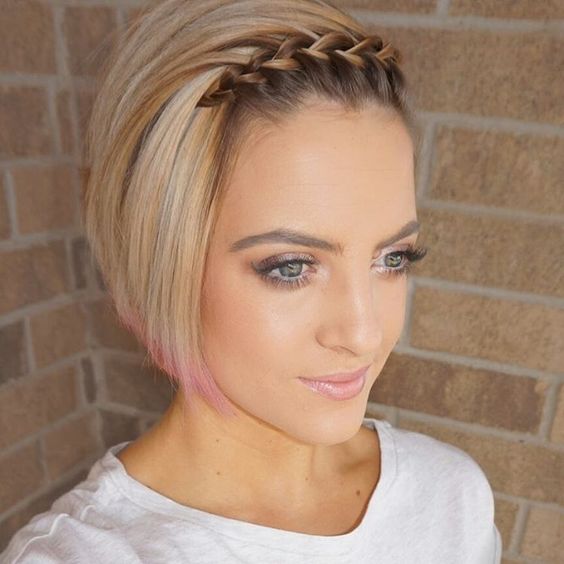
The waterfall braid is a romantic and whimsical style that creates the illusion of strands cascading down like a waterfall.
This braid works well with both straight and wavy hair, adding a touch of femininity to any look. To achieve a sleek and polished waterfall braid, a smoothing serum can help control flyaways and give your hair a glossy finish.
7. Micro Braids
Micro braids involve tiny, delicate braids that can be worn loose or styled into various updos.
This intricate style requires precision and patience but yields a stunning result.
To ensure the longevity of micro braids, a leave-in conditioner can be applied to keep the hair moisturized and prevent breakage.
What Is Plaiting Hair?
Plaiting hair is the process of weaving or interlacing sections of hair together to create a braid or plait.
In its simplest form, the hair is divided into three sections, which are crossed over one another in a repeating pattern to form a single braided strand.
The terms “plaiting” and “braiding” generally describe the same technique, although plait is used more commonly in British English, while braid is more common in American English.
How Does Plaiting Hair Work?
A basic three-strand plait involves:
- Dividing the hair into three sections.
- Crossing the outer sections over the middle section in an alternating pattern.
- Repeating the process until you reach the ends of the hair.
- Securing the finished plait with a hair tie or another suitable method.
However, not all plaits are simple three-strand braids. Hair can be woven into many different patterns and structures, including French braids, Dutch braids, cornrows, fishtail braids, French-style crown braids, and numerous other designs.
Why Do People Plait Their Hair?
Plaiting can be used simply to create a hairstyle, but it can also be a practical way to keep hair organized and contained.
Depending on the technique, plaits can create anything from a neat everyday hairstyle to an elaborate look for a special occasion.
For textured and natural hair, braiding can also be incorporated into protective styling. Some plaited styles use extensions or added hair to increase length, volume, or styling possibilities.
Is Plaiting the Same as Braiding?
Essentially, yes. Plaiting is another term for braiding, particularly in British English.
A plait can refer both to the technique of interweaving strands and to the finished braided length of hair.
So, if someone asks “What is plaiting hair?”, the simple answer is: it is the technique of interlacing sections of hair to create a braid or plait.
site:chickabouttown.com
If you would like to know more about what this term means, click here.
Photo Credits: The TrendSpotter