If you’re looking for a hairstyle that combines intricate patterns with a bold, polished finish, the ghana braids braid style is definitely worth a closer look. Often referred to as Ghana braids or Ghana weaving, these striking cornrow styles can be created in everything from sleek straight-back rows to dramatic curves, zigzags, and sculptural updos. With endless possibilities for changing the size, pattern, length, and color, Ghana braids offer plenty of inspiration for anyone ready to switch up their look.

Table of Contents
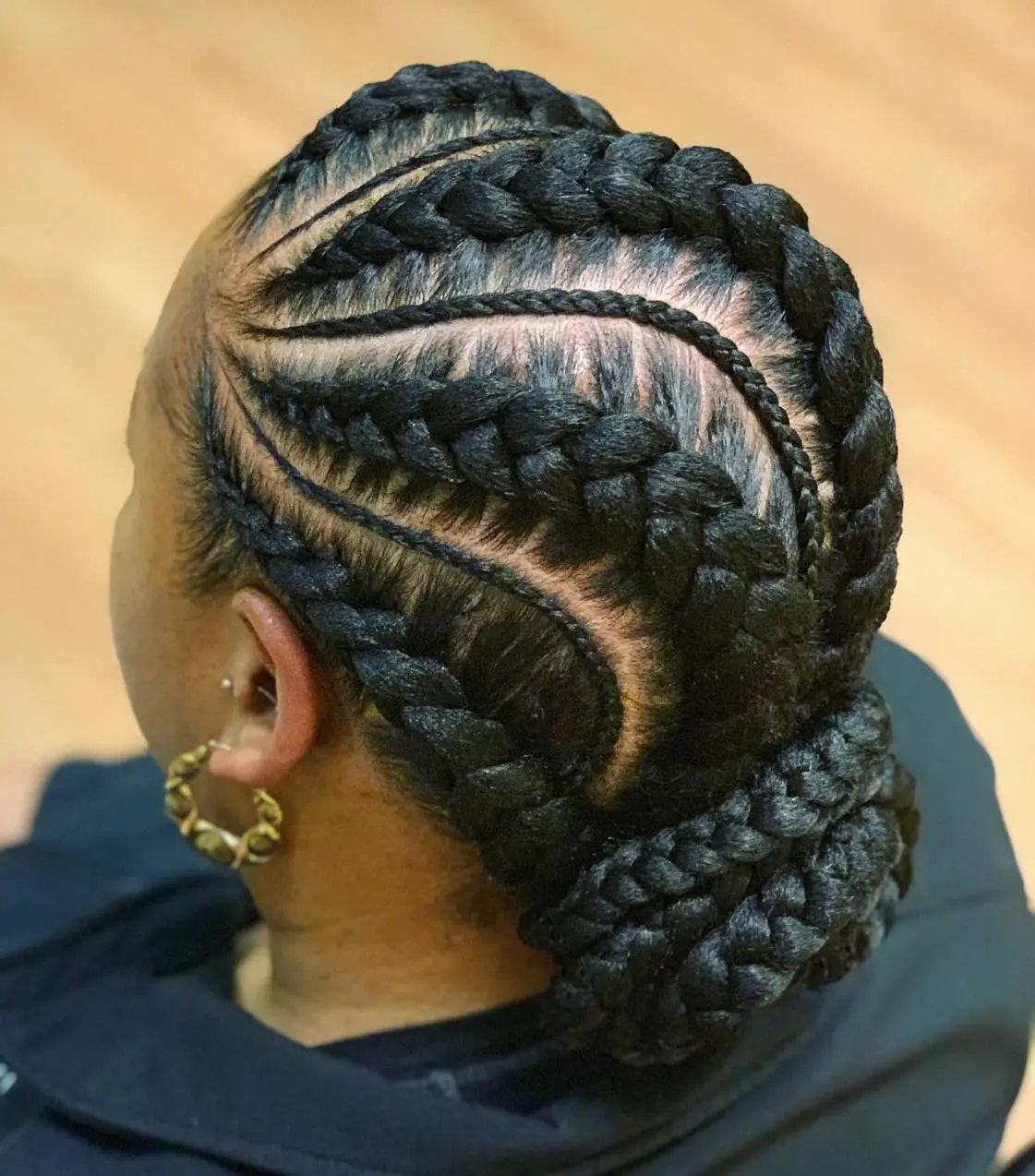
What the Ghana Braids Braid Style actually looks like
The classic version is usually braided close to the scalp, from the hairline toward the back, with the braid beginning relatively narrow and becoming noticeably thicker as additional extension hair is incorporated.
That gradual increase in thickness is probably the feature that most clearly distinguishes the style from an ordinary cornrow.
You may also hear the style called:
- Ghana weaving
- Ghana cornrows
- Ghana braids
- banana braids
- Cherokee braids
- sometimes fishbone braids, although terminology varies considerably between countries and hairstylists.
And this terminology is important because “Ghana braids” doesn’t describe one single hairstyle.
It is more like a family of styles made using a particular braiding technique.
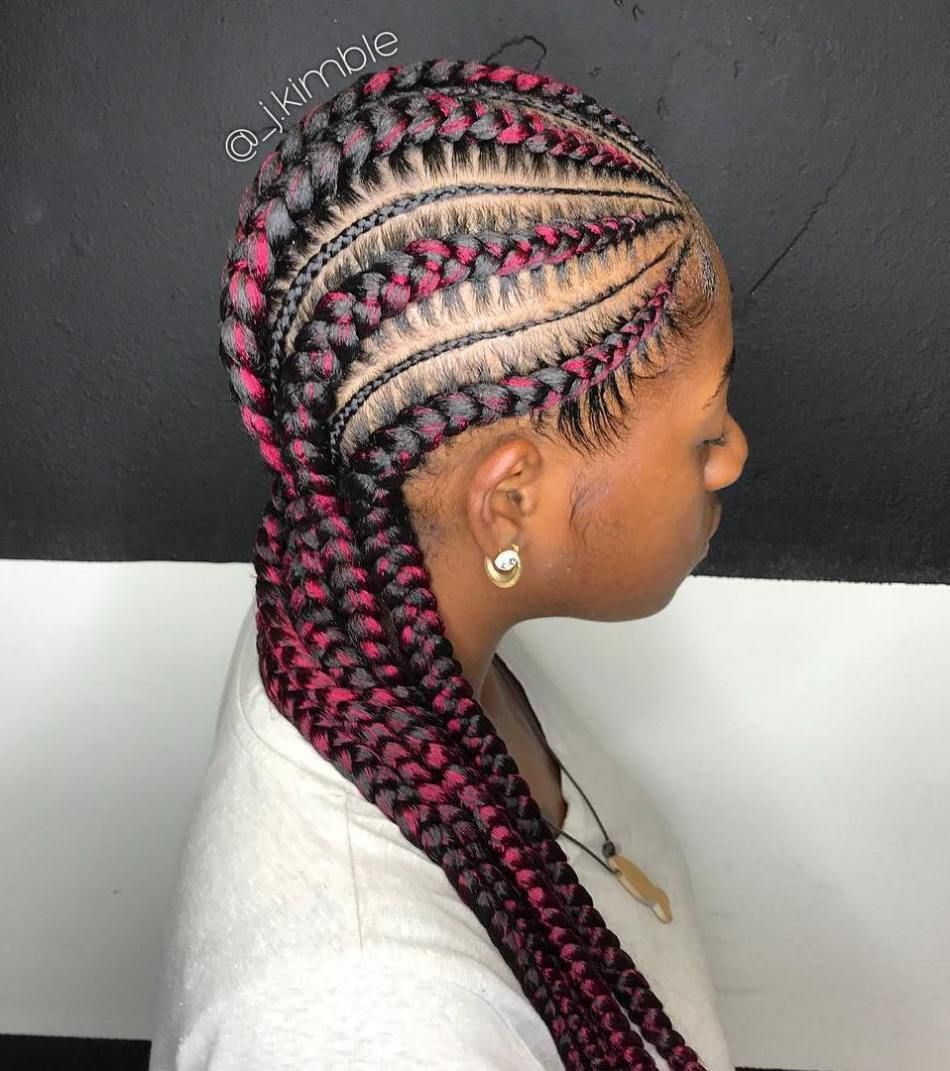
African Ghana Braids Braid Style vs. Ordinary Cornrows
Think of it this way:
Traditional cornrow:
Your natural hair is braided close to the scalp, producing a relatively consistent braid.
Ghana braid/weaving:
The braid starts relatively small, and the stylist progressively incorporates extension hair so that the braid becomes much fuller and thicker.
That’s why Ghana braids can have that distinctive thin-at-the-front, thick-as-it-goes-back appearance.
The Beautiful Thing About Ghana Braids Site:ChickAboutTown.com Is the Parting
This is where the style becomes much more interesting than simply “straight-back braids.”
The stylist can create:
African Ghana Hairstyles for Grdauations #1: Africa Braid Hair Going Toward the Back Line
The classic version, with parallel rows running from the forehead toward the back.
Curved Ghana braids
The rows sweep gracefully around the head rather than following straight lines.
Zigzag Ghana braids
The partings themselves become part of the design.
Fishbone Ghana braids
Rows are arranged in a more intricate, branching pattern.
Side-swept Ghana braids
The braids travel diagonally across the scalp toward one side.
Criss-cross Ghana braids
Rows intersect to create a geometric pattern.
Ghana braid ponytails
The braids converge toward the crown and are gathered into a high ponytail, sometimes called shuku in African hairstyling contexts.
Ghana braid buns and updos
The braids are directed toward the center or crown and gathered into a bun.
So when someone searches for “Ghana braids,” they can actually be looking at a huge variety of hairstyles.
Why They’re So Popular
Part of the appeal is the graphic quality of the hairstyle.
Unlike loose individual braids, Ghana braids create a design directly on the scalp.
The combination of clean partings, progressively thicker braids and geometric patterns can make the hairstyle look almost sculptural.
They can also be dressed up with:
- beads
- gold or silver hair rings
- colored extensions
- ombré extensions
- cuffs
- decorative threads
Some versions are extremely elaborate, while a simple set of straight-back Ghana braids can look quite understated and polished.
Are Ghana Braids a Protective Hairstyle?
They are often worn as a protective style, because much of the natural hair is tucked into the braids and doesn’t require daily manipulation.
But I wouldn’t equate “protective” with automatically “healthy.”
The tension matters enormously.
A beautifully done Ghana braid that is pulled extremely tightly around the hairline can put considerable stress on the edges. High ponytails can be particularly demanding because all those braids are being pulled toward one point.
Ghanian Lines With Braids Styles

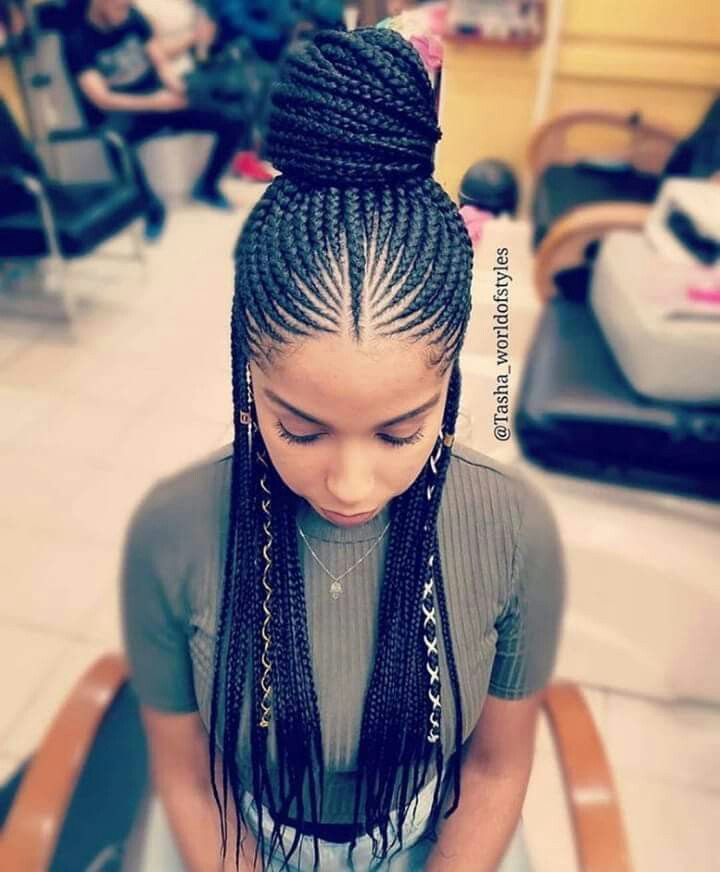
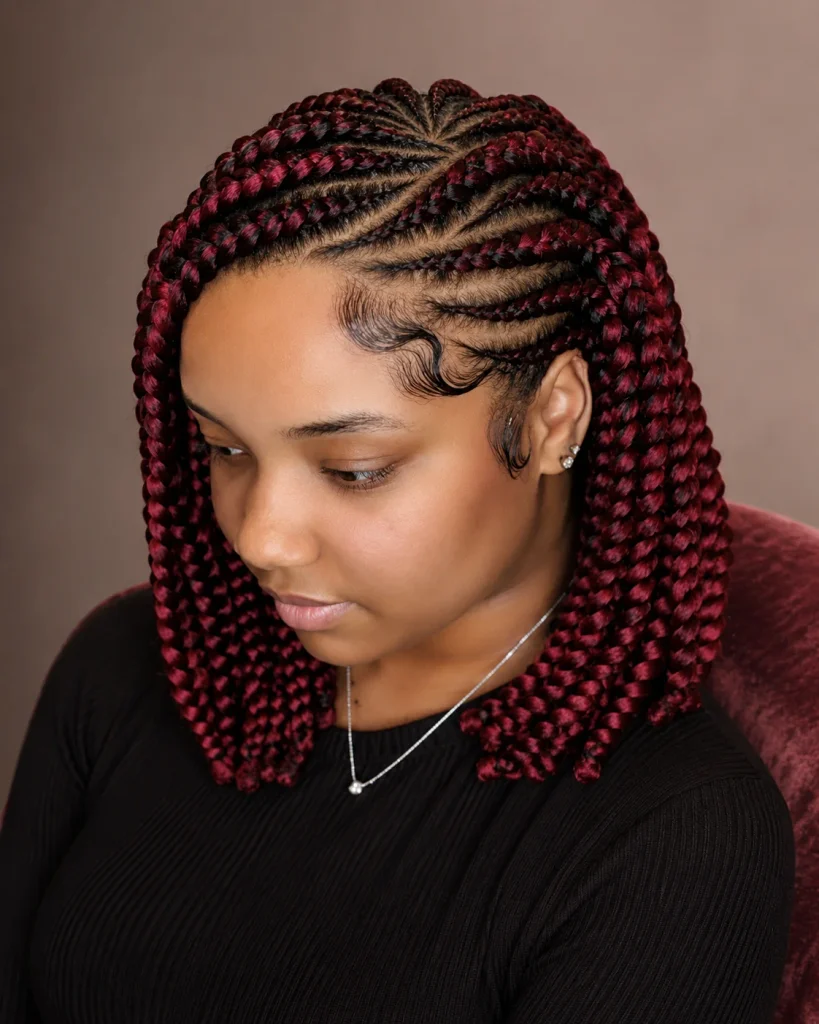
Photo credits: NaturallyCurly, Luemas Hair and Beauty Store, @GazaGirl100